
What to See in the Valley of Death
Intro paragraph
Anyone wondering what to see in Death Valley usually gets overwhelmed by the sheer size of this California park, the largest national park in the lower 48 states. Between rolling sand dunes, blinding salt flats, and canyons painted in colors that seem almost fake, the Valley of Death feels like another planet.
This guide covers the attractions you genuinely cannot skip, including Scotty’s Castle, which reopened in January 2026 after a decade-long flood restoration. You will also find the updated 2026 entrance fees, exact GPS coordinates for every stop, and two ready-made itineraries, one for a single day and one for travelers with more time. Pack extra sunscreen, because this desert does not joke around.
RECENT POST
What to See in Death Valley: The Complete Guide
Quick answer: the top spots for anyone asking what to see in Death Valley are Zabriskie Point, Badwater Basin, Artist’s Palette, Dante’s View, and the Mesquite Flat Sand Dunes. A full day, starting early in the morning, is enough to cover them all. Entrance costs $30 per vehicle (valid for 7 days), and payment is card-only.
The name alone does not exactly scream “dream vacation.” Yet every year hundreds of thousands of travelers choose to visit Death Valley as part of a California road trip, drawn by a landscape so extreme it barely looks real. Striped mountains, endless salt pans, and an almost unnatural silence make this national park worth the detour, even with record-breaking heat.
Visitors who show up unprepared often end up stuck in the car with the AC on full blast for the whole day. With the right planning, though, what to see in Death Valley becomes a question with clear answers: seven, ten, or twelve stops, depending on how much time you have.
How Much It Costs to Enter and How to Pay (2026 Rates)
Entrance to Death Valley costs $30 per vehicle, a fee that covers seven consecutive days and every passenger on board. Visitors arriving on foot or by bike pay $15 per person, while motorcycles cost $25.
The park accepts card payments only, so leave the cash at home. If you plan to visit several national parks in the same year, the America the Beautiful Pass costs $80 for U.S. residents and $250 for international visitors starting in 2026. Good news for travelers coming from abroad: Death Valley is not one of the 11 parks with the extra $100 surcharge, unlike Yosemite or the Grand Canyon.
How to Get to the Valley of Death
The main road crossing the park is Highway 190, and the central reference point is the Furnace Creek Visitor Center. From Las Vegas, the distance is roughly 230 km, covered in a little over two hours through Pahrump and Death Valley Junction.
From Los Angeles, expect around 430 km and four and a half hours of driving, while travelers coming from Yosemite or the Eastern Sierra head down US-395 to Lone Pine before joining Highway 190. Whichever direction you take, fill up the tank before you leave, since the only gas stations inside the park are at Furnace Creek and Stovepipe Wells.
What to See in Death Valley: 12 Must-See Stops
Here is the full list of attractions, organized along the natural route most visitors follow entering from the eastern side of the park. Each one includes GPS coordinates, handy for setting up your navigation without surprises.
| Attraction | GPS Coordinates | Recommended Time |
|---|---|---|
| Zabriskie Point | 36.4229° N, 116.8113° W | 20-30 minutes |
| Twenty Mule Team Canyon | 36.4297° N, 116.8067° W | 30 minutes (scenic drive) |
| Dante’s View | 36.2258° N, 116.7267° W | 30-40 minutes |
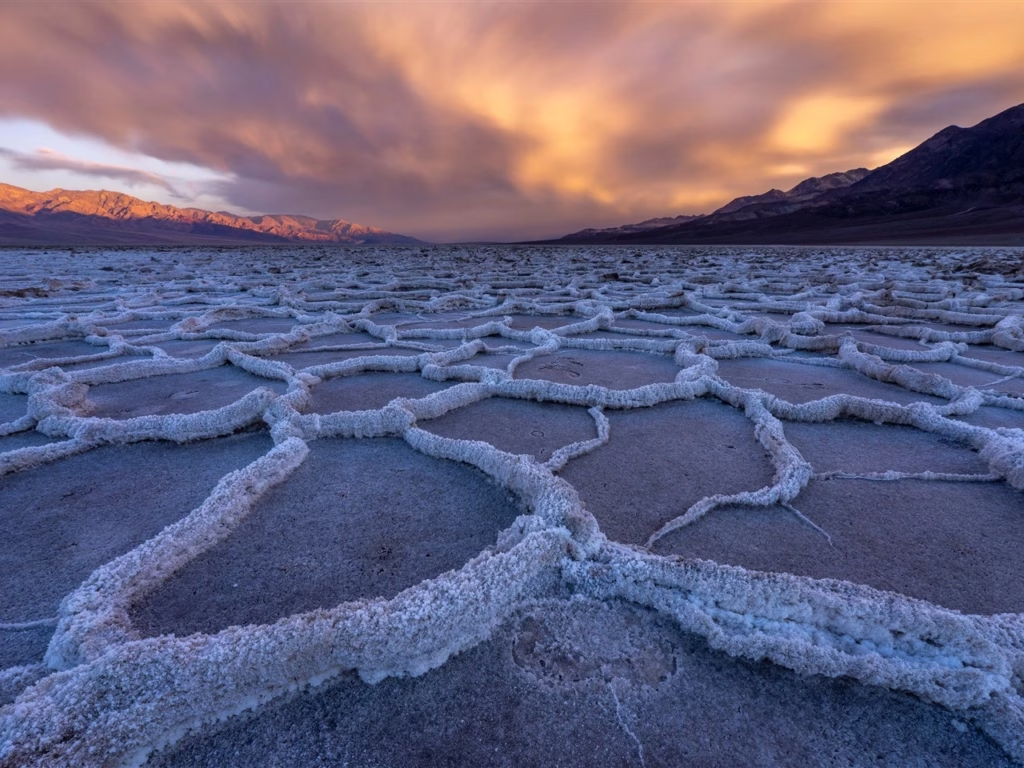
| Badwater Basin | 36.2500° N, 116.7666° W | 30-45 minutes |
| Devil’s Golf Course | 36.2830° N, 116.8394° W | 15-20 minutes |
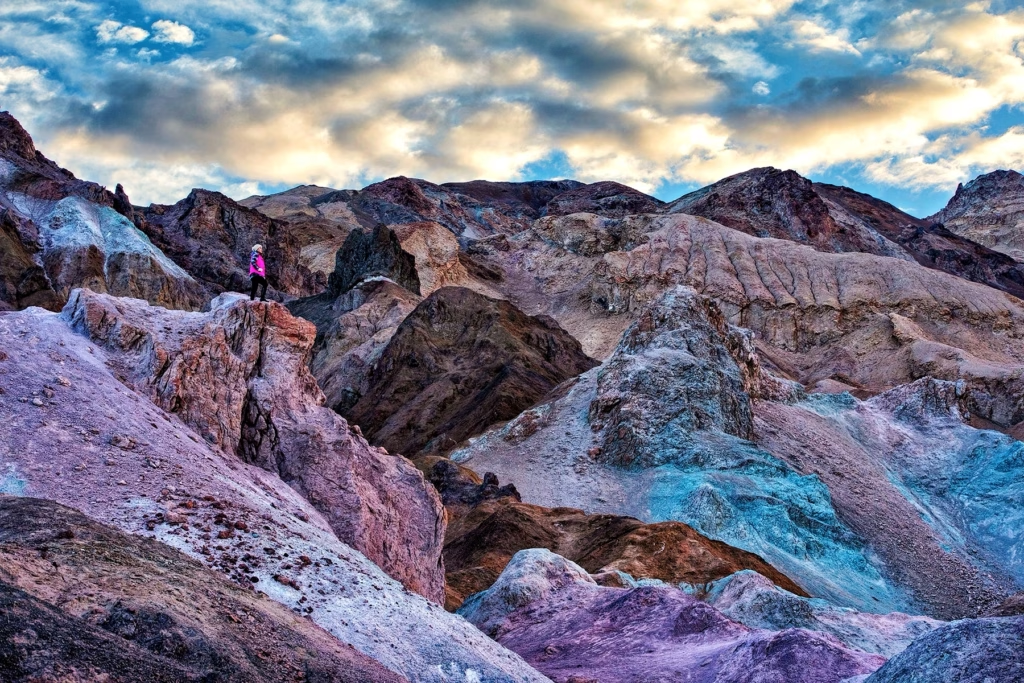
| Artist’s Drive and Artist’s Palette | 36.3897° N, 116.8394° W | 30-40 minutes |
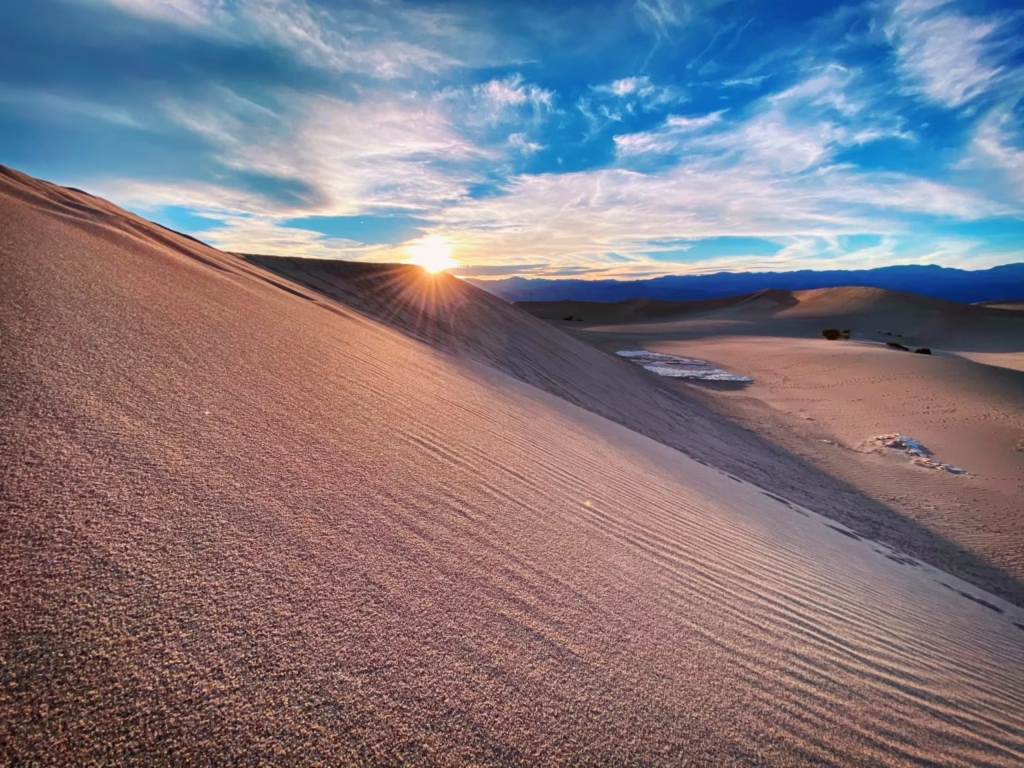
| Mesquite Flat Sand Dunes | 36.6844° N, 117.1067° W | 45-60 minutes |
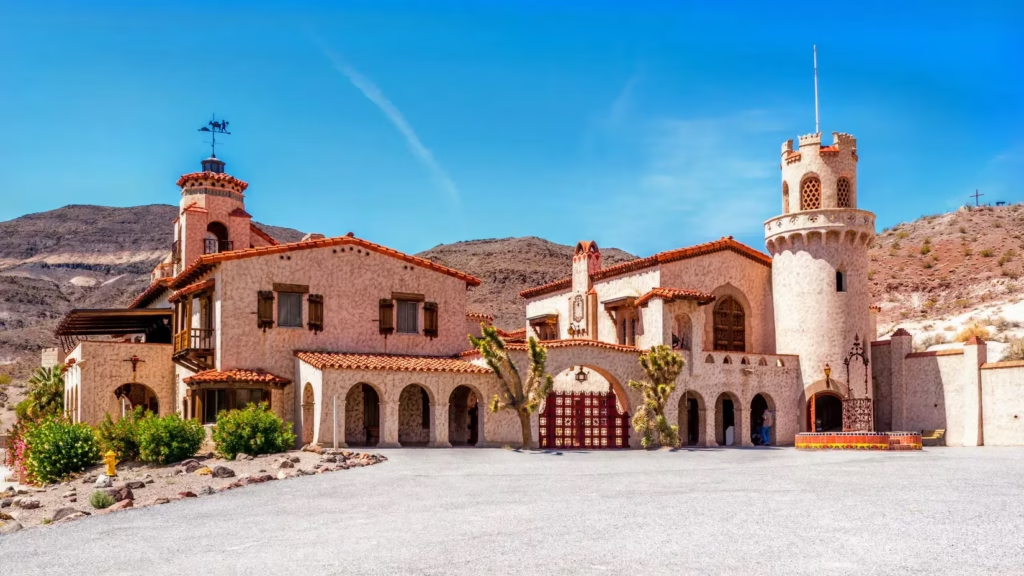
| Scotty’s Castle | 37.0139° N, 117.3378° W | 60-90 minutes (limited tours) |
| Ubehebe Crater | 37.0194° N, 117.4489° W | 20-30 minutes |
| Golden Canyon and Natural Bridge | 36.4386° N, 116.8503° W | 60-90 minutes hiking |
| Racetrack Playa | 36.6772° N, 117.5622° W | half a day (4×4 required) |
| Rhyolite Ghost Town | 36.9047° N, 116.8317° W | 30-45 minutes |
1. Zabriskie Point
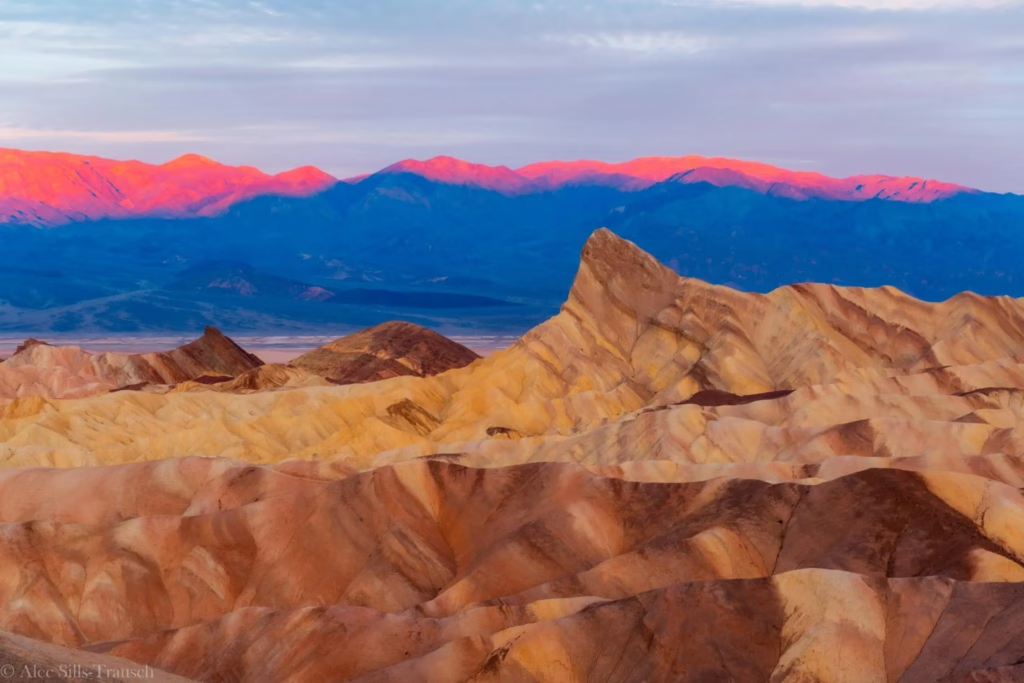
The most photographed viewpoint in the park, made famous by Antonioni’s film of the same name. The gold and beige hills, shaped by sediment from a long-dried lake, look spectacular at sunrise, when low light brings out every shade.
2. Twenty Mule Team Canyon
A one-way dirt loop road of about 4 km, drivable in any car, that winds through narrow, colorful badlands. This is one of the least mentioned stops among Italian and American travel blogs, but it absolutely deserves a half-hour detour.
3. Dante’s View
Perched at over 1,600 meters, this overlook offers the widest view of the entire Badwater salt basin. The best time to go up is early morning, when the Panamint Mountains turn pink and gold in the rising sun.
4. Badwater Basin
The lowest point in North America, sitting 86 meters below sea level. Walking across the white salt crust that stretches to the horizon feels almost surreal, especially when you look up and spot the sign marking sea level on the mountainside.
5. Devil’s Golf Course
A stretch of jagged, pinnacle-shaped salt crystals. The name comes from an old park guidebook that said “only the devil could play golf here.” It is reached via a short dirt detour off Badwater Road.
6. Artist’s Drive and Artist’s Palette
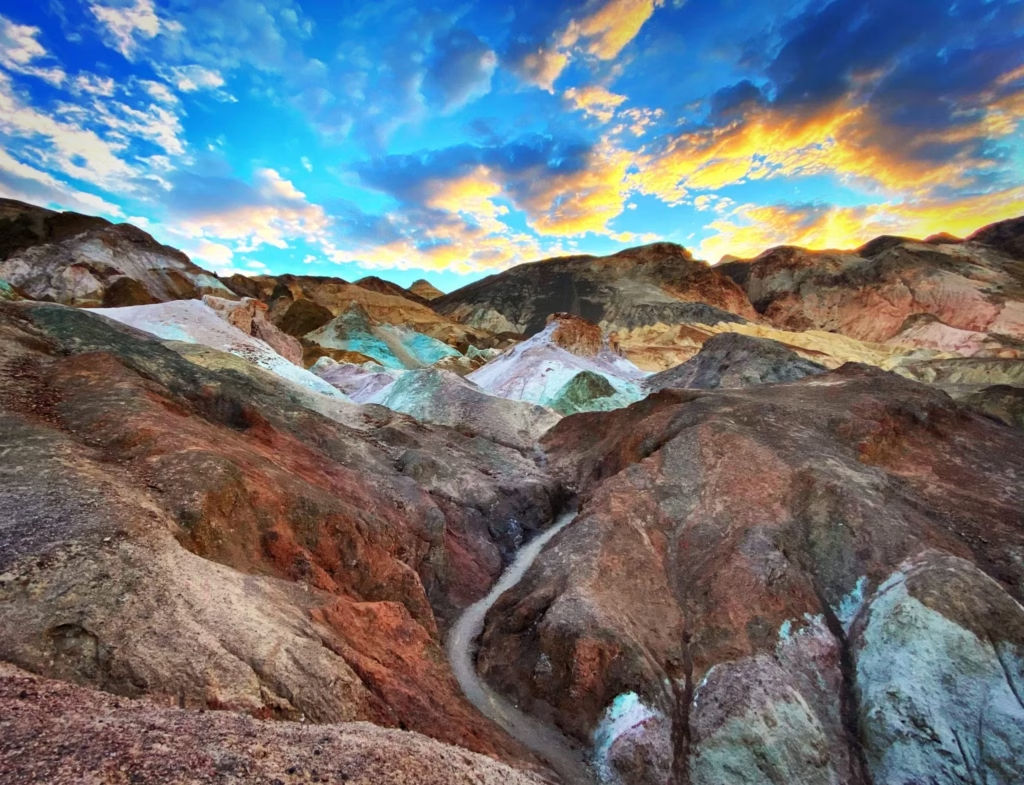
A one-way scenic road about 15 km long that cuts through mountains streaked with mineral oxides in shades of pink, green, and purple. The Artist’s Palette overlook, halfway along the route, is the most popular photo stop in the area.
7. Mesquite Flat Sand Dunes
Nearly 40 square kilometers of rippling dunes near Stovepipe Wells. These are the most accessible dunes in the park, and with the right light at sunrise or sunset, they cast shadows that look almost hand-drawn.
8. Scotty’s Castle: the 2026 update
After ten years of closure due to flash flood damage, this 1920s Spanish-style mansion reopened in January 2026 with limited tours tied to the ongoing restoration, priced at $35 per person. The full restoration, estimated at $90 million, will still take a few more years, but visitors can now access the grounds and part of the structure.
Demand is extremely high, and tours often sell out well in advance, so book through recreation. gov long before your trip.
9. Ubehebe Crater
A volcanic crater about 800 meters wide, formed by an explosion just a few hundred years ago. It sits in an out-of-the-way corner of the park, often skipped by day-trippers, but the rim trail offers a different view with every step.
10. Golden Canyon and Natural Bridge
Two trails are worth it if you have extra time and energy. Golden Canyon leads right into the golden badlands seen from above at Zabriskie Point, while Natural Bridge takes you to a rock arch wedged between narrow canyon walls.

11. Racetrack Playa
One of the park’s strangest phenomena happens here: rocks slide across the dried lakebed on their own, leaving long tracks in the cracked mud. Reaching it requires a 4×4 and several hours on rough dirt roads, so it is a stop best saved for travelers with at least two days.
12. Rhyolite Ghost Town
An abandoned mining town from the early 1900s, now reduced to a handful of crumbling structures in the desert. Nearby, the Goldwell Open Air Museum displays outdoor art installations, including a ghostly reinterpretation of the Last Supper.
What to See in Death Valley in 1 Day or 3 Days: Two Itineraries
| Itinerary | Recommended Stops | Practical Notes |
|---|---|---|
| 1 day | Mesquite Flat Dunes, Devil’s Golf Course, Badwater Basin, Artist’s Palette, Zabriskie Point, Dante’s View | Leave before 7 a.m. If time runs short, skip Dante’s View, which adds a 30 km round trip |
| 3 days | Day 1: classic stops as above. Day 2: Scotty’s Castle, Ubehebe Crater, Rhyolite. Day 3: Golden Canyon, Natural Bridge, Racetrack Playa (4×4 needed) | Stay in Furnace Creek or Stovepipe Wells to cut down on driving time |
When to Go and How to Handle the Heat
Spring, between March and April, is the best time to visit, with milder temperatures and, in some years, a wildflower bloom that colors the desert floor. In summer, the thermometer regularly climbs past 45°C, with an all-time record of 56.7°C set in July 1913.
Anyone visiting during peak summer should check the car’s air conditioning, pack far more water than seems necessary, and fill the tank, since gas stations inside the park exist only at Furnace Creek and Stovepipe Wells. Avoid hikes longer than thirty minutes during the hottest hours of the day.
Frequently Asked Questions About What to See in Death Valley
A full day, starting early in the morning, covers the seven main stops: Mesquite Dunes, Devil's Golf Course, Badwater Basin, Artist's Palette, Zabriskie Point, and Dante's View. Fitting in Scotty's Castle, Ubehebe Crater, and Racetrack Playa takes at least three days.
The park's core attractions include Badwater Basin, the lowest point in North America, the colorful Artist's Palette drive, the Mesquite Flat Sand Dunes, and viewpoints like Zabriskie Point and Dante's View. History lovers can also add Scotty's Castle and the Rhyolite ghost town.
Beyond the salt flats and dunes, the park holds volcanic craters like Ubehebe, slot canyons such as Golden Canyon and Mosaic Canyon, a rare moving-rock phenomenon at Racetrack Playa, and small pockets of desert wildlife, including pupfish that survive in a few spring-fed creeks.
Extreme heat is the biggest risk, with summer temperatures regularly above 45°C and little to no shade along most trails. Dehydration and car trouble are the most common emergencies, so carry more water than you think you need, keep the fuel tank full, and avoid strenuous hikes in the middle of the day.
Yes. After a ten-year closure due to flood damage, it reopened in January 2026 with limited tours priced at $35, often sold out well in advance. The full restoration will still take a few more years.
Entrance costs $30 per vehicle, valid for seven days. Payment is card-only, since the park has not accepted cash since 2023.
Spring, between March and April, offers the most comfortable temperatures and occasional desert wildflower blooms. Summer remains visitable with the right precautions against extreme heat.
No, most of the main attractions are reachable in a regular car. Only Racetrack Playa and a few backroads like Titus Canyon Road require a 4x4 vehicle.