
Best Destination
Cape Town is the best all-round choice for a first trip to South Africa, and once you see it in person, you understand why. Table Mountain rises straight behind the city, the Atlantic coastline runs along the western edge, and the Cape Peninsula stretches south toward penguins and dramatic cliffs. A good Cape Town itinerary mixes beaches, hiking, food, and history rather than sticking to one theme. You could ride the cableway one morning and stand beside African penguins the next. This guide covers where to stay in Cape Town, the best things to do in Cape Town, realistic day-by-day itineraries, current 2026 pricing, and the safety habits that make a trip go smoothly.
RECENT POST
Cape Town: Best Overall Destination for First-Time Visitors
Cape Town does something few cities manage well: it makes a city break feel like a nature trip. Table Mountain rises directly behind the city, the Atlantic Ocean stretches along the western edge, and vineyards begin just beyond the southern suburbs.
Beaches sit beneath mountains, penguins live along the peninsula, and historic neighborhoods mix easily with cafés, galleries, markets, museums, and restaurants. You can wake up in the city, take a cable car up a mountain, eat lunch beside the ocean, walk along a beach, and then watch the sun disappear behind the Atlantic. The next day can feel completely different, with a drive south toward Cape Point, a stop at Boulders Beach to see African penguins, a walk through Simon’s Town, and a return along one of the peninsula’s scenic coastal roads.
That variety makes Cape Town the best all-round South African destination for many first-time visitors. Cape Town Tourism describes the city as a modern, cosmopolitan destination surrounded by nature, with beaches, biodiversity, food, wine, and a wide range of experiences forming the core of its appeal.
If you’re planning your first trip to South Africa, give Cape Town real time. Four days is workable, five days is better, and six or seven days rarely feels excessive.
Cape Town at a Glance
Travel Question | Quick Answer |
Best for | First trips, beaches, food, mountains, culture, couples |
Recommended stay | 4–6 days |
Minimum stay | 3 days |
Best summer weather | December–February |

Good shoulder season | March–April and September–October |
Rainiest/coolest period | June–August |
Must-see attraction | Table Mountain |
Best wildlife experience | Boulders Beach penguins |
Best scenic day trip | Cape Peninsula and Cape Point |
Best beach for atmosphere | Camps Bay |
Best beaches for scenery | Clifton |
Best beach for beginner surfing | Muizenberg |
Best area for first-time convenience | V&A Waterfront / City Bowl |
Best seaside base | Sea Point |
Best luxury beach area | Camps Bay |
Best nearby wine trip | Stellenbosch + Franschhoek |
Airport | Cape Town International Airport |
Ideal first visit | Around 5 full days |
Quick answer: Cape Town suits first-time South Africa visitors because mountains, beaches, food, history, wildlife, and easy day trips all combine from one base. Plan at least four days, or five to six if you want Cape Point and the Winelands without rushing.
Why Is Cape Town Worth Visiting?
Cape Town isn’t famous because of one monument. Its strength comes from how many strong experiences are packed into a relatively small region, and you can build a trip around mountains, beaches, hiking, food, history, museums, markets, wildlife, wine, road trips, photography, surfing, gardens, and coastal towns.
That range also makes Cape Town useful for groups with different interests. One person can want beaches, another can want hiking, and someone else may be more interested in restaurants. A history-focused traveler can visit Robben Island while a wildlife lover heads to Boulders, so nobody needs to spend the entire trip doing the same thing.
How Many Days Do You Need in Cape Town?
3 Days
Three days is the minimum I’d plan for a first visit. You could cover Table Mountain and the city on day one, the Cape Peninsula on day two, and the Waterfront, a beach, and one additional attraction on day three, but something would be missed.
4 Days
Four days works much better. It leaves room for Kirstenbosch, Bo-Kaap, Robben Island, more beach time, Sea Point, and additional food experiences.
5 Days
Five days is the sweet spot for many first-time visitors, since you have enough flexibility to move Table Mountain around if the weather changes. That matters, because Cape Town weather can change quickly.
6–7 Days
Stay this long if you want to include Stellenbosch, Franschhoek, Constantia, slower beach days, hiking, markets, museums, and more of the Cape Peninsula. Cape Town stops feeling rushed at this pace.
1. Table Mountain: Cape Town’s Essential First Stop
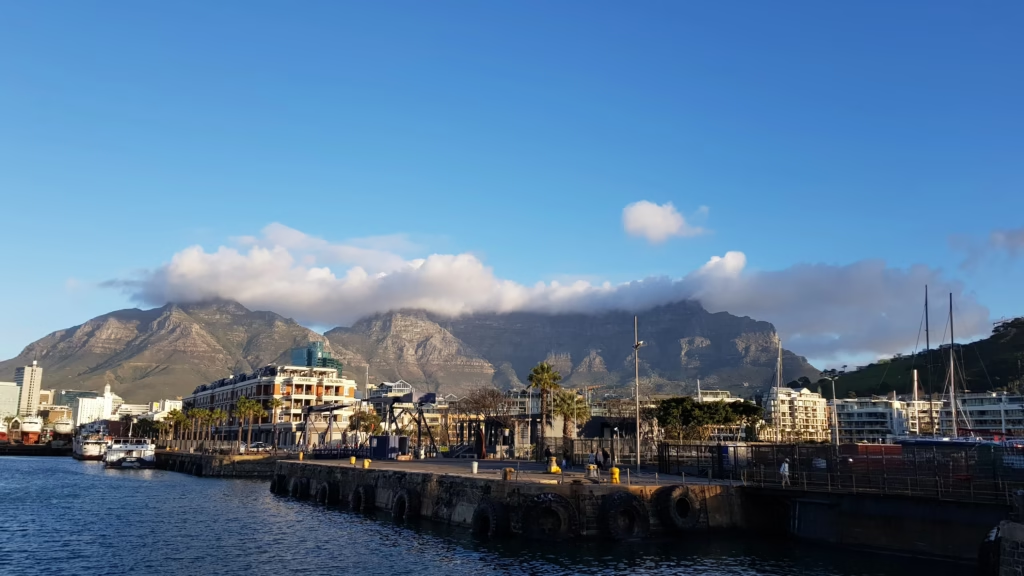
Table Mountain isn’t simply another city viewpoint. It shapes Cape Town, and you’ll see it while driving, from beaches, from the waterfront, and between city buildings. Eventually, you should see Cape Town from it.
Table Mountain lies inside Table Mountain National Park, which runs from the northern part of the peninsula toward Cape Point and protects a much larger mountain-and-coast environment than the summit alone.
Cable Car or Hike?


Taking the cableway is the simplest choice for most visitors. As of August 2026, the official Table Mountain Aerial Cableway rate for an online adult return ticket is R475, while an adult one-way ticket is R300. Those prices apply from July 1, 2026, through June 30, 2027, and both prices and operating hours can change, so always check on the day. Weather can also stop operations entirely.
Hiking creates a very different experience, but don’t treat Table Mountain like an urban park. Weather can change quickly, routes vary in difficulty, and some involve exposed terrain.
Cape Town Tourism recommends carrying water, weather protection, a charged phone, and suitable footwear and advises travelers to stick to marked routes and avoid hiking alone.
Best Table Mountain Tip
Don’t assign Table Mountain to one fixed day and refuse to change it. Give yourself a weather window instead. If the summit is clear on your first morning, consider going, since clouds can arrive later and wind can stop cableway operations. Flexibility is more valuable than a perfect spreadsheet itinerary.
2. Lion’s Head: Best Hike for City and Ocean Views
Lion’s Head is smaller than Table Mountain, but the views feel different. Cape Town, Table Mountain, Camps Bay, and the Atlantic can all be seen from the summit.
Cape Town Tourism currently lists Lion’s Head access as free, and it’s especially popular around sunrise and sunset. That popularity doesn’t remove the normal mountain risks, since routes can become dark and weather changes quickly, and sections near the upper mountain may feel uncomfortable for inexperienced hikers.
Cape Town Tourism recommends hiking with others, carrying water, keeping to marked paths, and returning before dark.
Best for active travelers, photography, mountain views, sunrise, and sunset. It’s not ideal for travelers uncomfortable with heights, exposed terrain, or steep hiking, though there’s nothing wrong with enjoying Lion’s Head from below. Cape Town has enough viewpoints.
3. V&A Waterfront: Best Easy First-Day Area
The V&A Waterfront is one of Cape Town’s busiest tourism areas. Some travelers dismiss places like this because they feel polished, but that misses its usefulness: everything is close, restaurants are plentiful, shopping is easy, and harbor views are everywhere.
Cape Town Tourism specifically highlights the Two Oceans Aquarium and Robben Island Museum among the Waterfront’s attractions, and the area is also a major base for sightseeing services.
Good options here include walking around the harbor, eating, shopping, visiting the Two Oceans Aquarium, browsing the Watershed, taking a harbor cruise, starting a Robben Island tour, photographing Table Mountain, or simply spending an easy evening after arrival. The Waterfront isn’t the whole of Cape Town, but it’s a very convenient introduction.
4. Robben Island: Best for Understanding Cape Town’s History
Cape Town becomes much more meaningful when its history is included, and Robben Island shouldn’t be treated simply as another attraction to photograph.
The island has a layered history spanning centuries. Robben Island Museum describes it as a place closely tied to adversity, injustice, and South Africa’s struggle for freedom.
Tours depart by ferry from the Nelson Mandela Gateway at the V&A Waterfront. The standard experience takes about 3.5 hours, including ferry travel, according to the Robben Island Museum, although sea and operational conditions can affect timing. Current tour schedules
commonly list departures around 09:00, 11:00, 13:00, and 15:00, but schedules and pricing vary, so confirm the official booking details for your travel date.
Don’t put Robben Island immediately before an important flight. Ferry services can be weather-sensitive, so leave flexibility in your schedule.
5. Bo-Kaap: More Than Colorful Houses
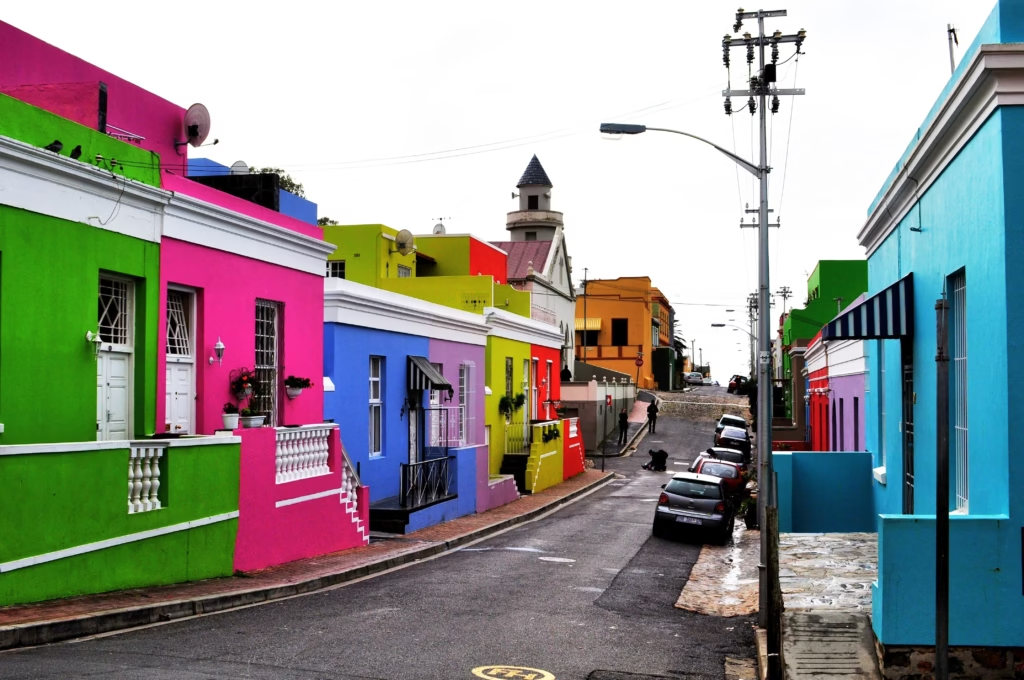
Bo-Kaap is one of Cape Town’s most photographed neighborhoods, but the bright houses shouldn’t become the whole story.
Cape Town Tourism describes the area as historically associated with descendants of freed enslaved people and notes the importance of Cape Malay heritage and food within the neighborhood. Walk respectfully, since people live here. Doorways aren’t photo props, and homes aren’t studio sets.
Worthwhile activities include walking through the neighborhood, learning some of its history, exploring Cape Malay food, joining a responsible walking or cooking experience, and photographing architecture without disrupting residents. Cape Malay cooking experiences in the area commonly introduce visitors to dishes and techniques involving masala, roti, samoosas, and curries, according to Cape Town Tourism.
6. Company’s Garden: Easy Culture in the City Center
Company’s Garden is useful when you want an easy city day. It covers about 3.2 hectares in central Cape Town and sits close to several important cultural institutions, according to Cape Town Tourism, including the Iziko South African Museum, the South African National Gallery, the Slave Lodge, St. George’s Cathedral, and the Parliament precinct. This makes the area useful on cooler or less beach-friendly days.
7. Kirstenbosch National Botanical Garden: Best Relaxed Nature Experience
Kirstenbosch sits against the eastern slopes of Table Mountain and feels removed from the city even though Cape Town is close. SANBI describes Kirstenbosch as one of the world’s great botanical gardens, with its setting beneath Table Mountain forming a major part of its appeal.
You don’t need to be passionate about botany to enjoy it. Go for the walking, mountain views, gardens, picnics, photography, indigenous plants, and a slower afternoon.
For the 2026–27 period, SANBI lists the standard adult rate for visitors from outside Africa and SADC at R270, while children aged 6–17 pay R40 and children under six enter free. The garden is generally open 08:00–19:00 from September to March and 08:00–18:00 from April to August.
8. Camps Bay: Best Beach for Atmosphere
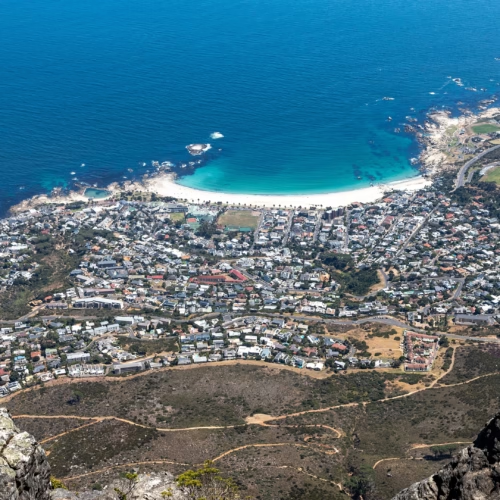
Camps Bay delivers one of the classic Cape Town scenes: wide sand, cold Atlantic water, palm trees, restaurants, and the Twelve Apostles rising behind the suburb.
Cape Town Tourism describes Camps Bay as a family-friendly beach area with restaurants, grassy picnic space, and a tidal pool at the southern end. You don’t have to swim, and many first-time visitors are surprised by how cold the Atlantic water can be.
Go for sunset, lunch, beach time, people-watching, mountain views, or a walk along Victoria Road. Late afternoon into sunset works beautifully, but parking can become difficult during peak summer.
9. Clifton Beaches: Best for Classic Atlantic Scenery
Clifton isn’t one beach. There are four, separated by granite rocks, and the setting feels more tucked away than Camps Bay.

Cape Town’s 2026 coastal guide from Cape Town Tourism describes Clifton’s four beaches as some of the most sheltered from the strong southeasterly wind. Clifton 4th is particularly popular, and lifeguards are generally on duty during the Blue Flag summer season, roughly December through March.
Come here for sunbathing, photos, sunsets, beach picnics, and a sheltered Atlantic beach atmosphere. Parking is limited, so arrive earlier during busy summer days.
10. Muizenberg: Best for Beginner Surfing
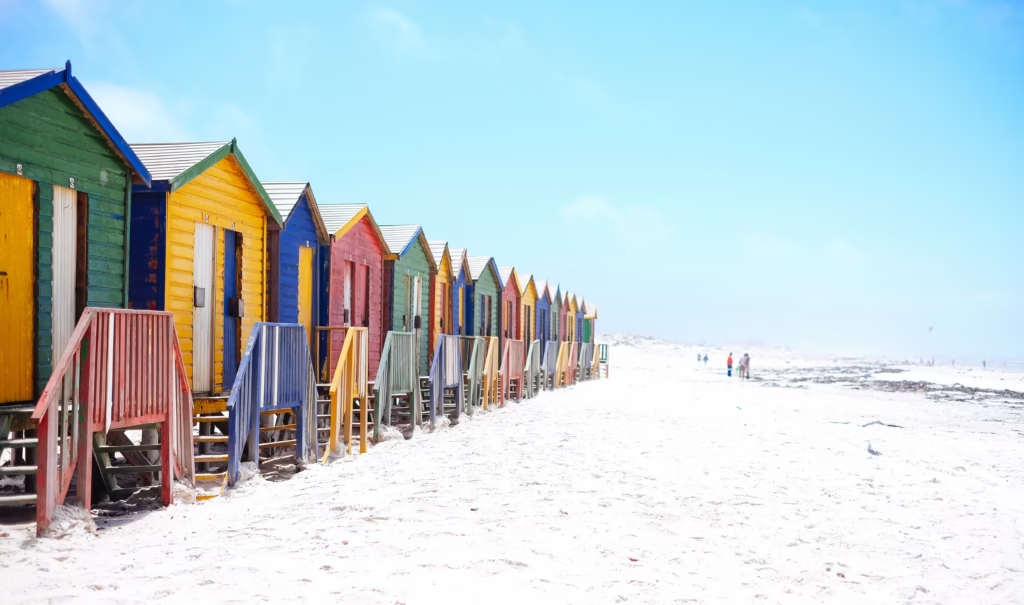
Muizenberg has a different personality from Camps Bay. It sits on False Bay; the atmosphere is more surf-focused, and colorful beach huts have become part of its visual identity.
Surfers’ Corner is popular with beginners, and surf shops offer rentals and lessons. Cape Town Tourism specifically recommends Muizenberg for surfing and swimming, whether you want beginner surfing, casual cafés, a longer sandy beach, colorful beach photography, or False Bay scenery instead of the Atlantic Seaboard.
One practical point for 2026: major upgrades to the Muizenberg beachfront have been underway, with work expected to continue through the end of 2026, according to Cape Town Tourism. Check current access before planning around specific beachfront facilities.
11. Boulders Beach: Best Wildlife Experience Near Cape Town
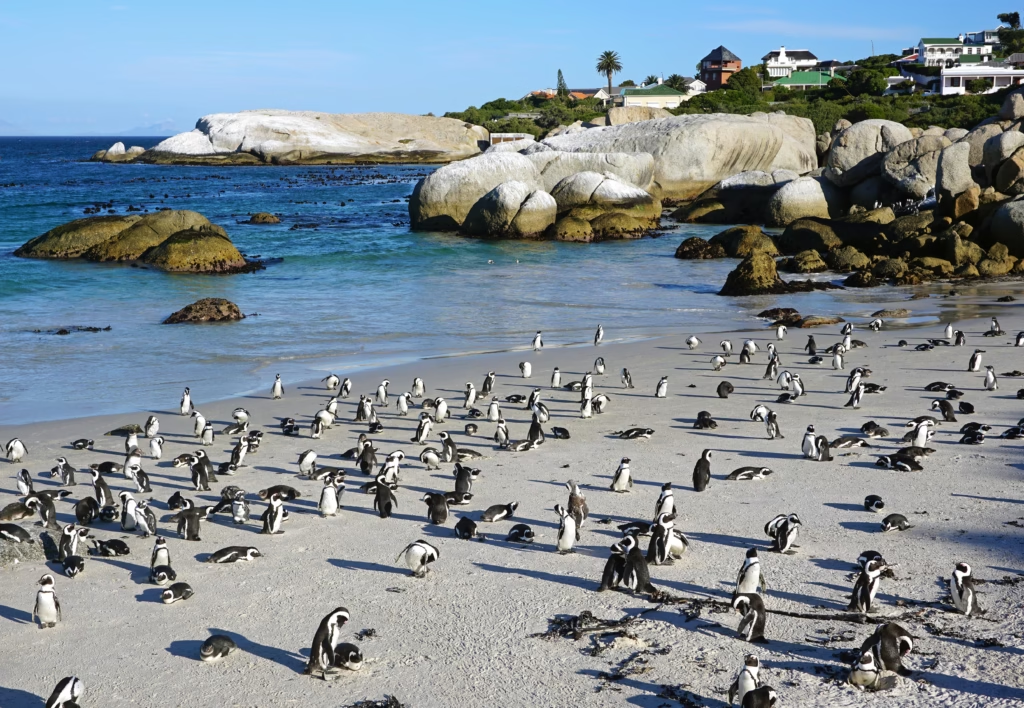
Boulders Beach is one of Cape Town’s most unusual experiences, and the attraction is obvious: African penguins. The colony sits near Simon’s Town inside Table Mountain National Park’s protected marine environment.
In the latest 2026 census cited by Cape Town Tourism, Boulders recorded 790 breeding pairs, up from 698 in 2025, with the wider colony estimated at around 2,528 individual penguins. Conservationists still consider the species highly threatened, so the increase shouldn’t be confused with a full recovery.
Boardwalks provide viewing access while protecting nesting areas, and Foxy Beach is particularly useful for viewing. Don’t touch the penguins, don’t feed them, and don’t block them. They are wild animals.
For November 1, 2025 through October 31, 2026, SANParks lists Boulders entry at R55 for South African citizens/residents (R26 for children), R110 for SADC nationals (R55 for children), and R245 for international visitors (R120 for children). It’s around an hour from central Cape Town by car depending on traffic, and Boulders combines naturally with Cape Point.
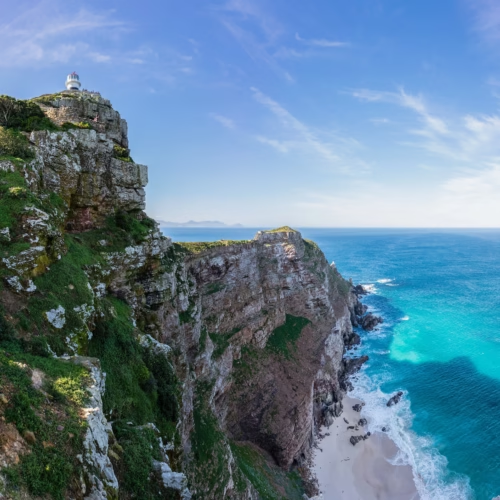
12. Cape Point and the Cape Peninsula: Best Full-Day Trip
Don’t confuse visiting Cape Town with properly seeing the peninsula. The further south you travel, the more the city disappears: coastal roads take over, small towns appear, and mountain landscapes grow larger.
The day often runs from Cape Town through the Atlantic Seaboard to Hout Bay, along the peninsula coast to Cape Point, then to Simon’s Town and Boulders Beach on the False Bay side. The exact direction can be reversed. That matters less than giving the trip a full day.
For November 1, 2025 through October 31, 2026, SANParks lists Cape Point’s daily conservation fee at R110 for South African citizens/residents (R55 for children), R225 for SADC nationals (R115 for children), and R515 for international visitors (R250 for children). These rates can change after October 31, 2026.
Possible stops around the peninsula include Camps Bay, Hout Bay, the Chapman’s Peak area, Noordhoek, Kommetjie, Cape Point, the Cape of Good Hope, Simon’s Town, Boulders Beach, Kalk Bay, and Muizenberg. Trying to stop everywhere is a mistake. Pick several and enjoy them properly.
13. Sea Point Promenade: Best Free Everyday Cape Town Experience
Not every memorable Cape Town experience requires an entry ticket. Sea Point Promenade is a good example, stretching along the Atlantic and used by walkers, runners, cyclists, families, and dog walkers.
Cape Town Tourism describes the promenade as one of Sea Point’s defining features, with restaurants, bars, and shops nearby along Main Road. Go near sunset. It feels less like sightseeing and more like being in Cape Town.
14. Signal Hill: Easy Sunset View
Signal Hill offers a much easier viewpoint than hiking Lion’s Head. It works well when you’re tired, want a sunset, are traveling with family, or a serious hike isn’t appealing.
Sunset can get crowded, so arrive before the final light, and remember that congestion after sunset is common in popular viewpoint areas.
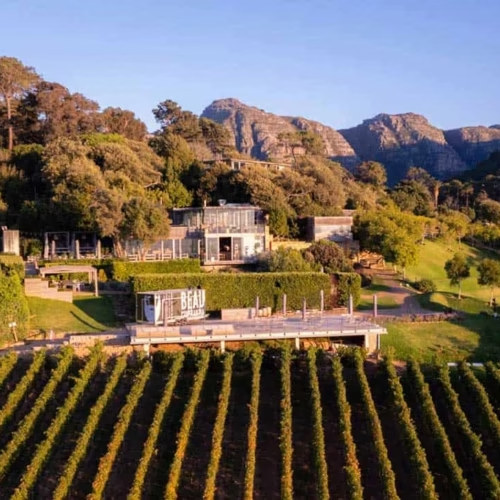
15. Constantia: Wine Without Leaving Cape Town Far Behind
You don’t need to travel all the way to Stellenbosch for a wine-country experience. Constantia sits in Cape Town’s leafy southern suburbs.
Cape Town Tourism highlights the area for wine tasting, gourmet dining, upscale stays, and a quieter environment. Constantia works well if your itinerary is short, you don’t want to change hotels, or you want wine without a full Winelands trip. But if wine is a major part of your vacation, spend time in Stellenbosch and Franschhoek too.
Best Beaches in Cape Town
Cape Town has a surprising amount of beach choice, and the best one depends on what you want.
Beach | Best For |
Camps Bay | Restaurants + atmosphere |
Clifton 4th | Classic scenery |
Muizenberg | Beginner surfing |
Boulders | Penguins |
Llandudno | Quiet scenery |
Fish Hoek | Swimming/families |
Bloubergstrand | Table Mountain views + kitesurfing |
Noordhoek | Long scenic beach |
Cape Town Tourism’s 2026 beach guide identifies Camps Bay for families, Clifton 4th for its sheltered setting, Muizenberg for surfing, Boulders for penguins, and Bloubergstrand for kitesurfing and views back toward Table Mountain.
Beach Safety in Cape Town
Beaches aren’t swimming pools, and conditions can change quickly. Cape Town Tourism recommends using lifeguarded beaches, swimming between red-and-yellow flags, and never attempting to swim directly against a rip current.
Also remember that cold water can affect confidence quickly, waves can change, and children need close supervision. Don’t leave valuables unattended on the sand.
Where to Stay in Cape Town
Where you stay changes the trip, and there’s no one perfect neighborhood.
V&A Waterfront: Best for First-Time Convenience
Choose this if you want easy access to attractions, restaurants, harbor atmosphere, higher-end hotels, and first-time convenience. Cape Town Tourism notes that the Waterfront puts attractions such as the Two Oceans Aquarium and Robben Island access within easy reach. Best for first-time visitors, families, and luxury travelers, though it’s often expensive and more tourism-focused.
City Bowl: Best for Restaurants and Urban Energy
Stay here if you want to feel closer to the city itself, with hotels, hostels, restaurants, bars, nightlife, and transport connections. Cape Town Tourism describes it as one of the most varied accommodation areas in the city. Best for younger travelers, food, nightlife, and urban exploration.
Sea Point: Best All-Round Base
Sea Point is one of the most practical choices, with a promenade, ocean, restaurants, cafés, accommodation choices, and a relatively central position. It’s not a classic sandy-beach neighborhood like Camps Bay, but it often works better as an everyday base. Best for couples, repeat visitors, and longer stays.
Green Point: Best Between Waterfront and Sea Point
Green Point gives you quick access to both areas, with hotels, apartments, restaurants, and Cape Town Stadium nearby, according to Cape Town Tourism. Best for first-timers wanting a central but less resort-like location.
Camps Bay: Best for Beach Luxury
Camps Bay is hard to beat visually. You wake near the ocean, the Twelve Apostles sit behind you, and sunset arrives out front. But prices can be higher, and traffic can make trips into the city slower during busy periods. Best for couples, honeymoons, and beach-focused luxury.
De Waterkant: Best Boutique City Stay
De Waterkant offers boutique hotels and guesthouses with easy access to restaurants, bars, and the central city, according to Cape Town Tourism. Best for couples, design-conscious travelers, and nightlife access.
Constantia: Best for Quiet Luxury and Wine
This is a completely different Cape Town experience. Stay here for greenery, larger properties, and wine-country atmosphere. Best for couples and luxury and relaxation, though not ideal for travelers who want to walk to downtown attractions.
Muizenberg or Kalk Bay: Best for Slow Coastal Travel
Cape Town Tourism highlights Muizenberg for surfing and Kalk Bay for cafés, boutiques, and access to the southern peninsula. These work best when you don’t need to be in central Cape Town every day.
Which Area Should First-Time Visitors Choose?
- V&A Waterfront if you want maximum convenience
- Sea Point if you want a strong balance of location, restaurants, and ocean
- City Bowl if you want nightlife and urban energy
- Camps Bay if the beach is a major part of the trip
- Constantia if you want quiet luxury and wine
For many first-timers, Sea Point, Green Point, or the Waterfront are the easiest choices.
Best Time to Visit Cape Town
Cape Town is a year-round destination, but the experience changes considerably by season.
January–February: Best for Classic Summer
Cape Town Tourism describes January and February as hot, mostly dry, and busy, with typical temperatures around 17°C to 28°C, although hotter days occur. January is one of the peak travel months, good for beaches, outdoor dining, hiking, long days, and water sports, but expect crowds, higher accommodation demand, wind, and busy attractions.
March–April: Excellent Shoulder Season
March and April are particularly attractive, with generally milder temperatures and reducing summer crowds. Cape Town Tourism lists typical temperatures around 15°C to 27°C during this period. Be aware of major event weekends, since the Cape Town Cycle Tour, Two Oceans Marathon, and Easter can affect prices and availability.
May: Good for Value
May begins moving toward winter, tourist numbers are lower, and restaurant and accommodation specials become more common. Cape Town Tourism lists temperatures around 13°C to 22°C.
June–August: Winter
This is the coldest and rainiest period, with temperatures commonly falling roughly between 11°C and 20°C. Rain is more frequent, but crowds are lower, the landscape becomes greener, and good-value accommodation can be easier to find, according to Cape Town Tourism.
Annual Table Mountain cableway maintenance also usually occurs during winter, so check exact closure dates before booking around it. The 2026 shutdown window ran from July 27 to August 9, so confirm the equivalent dates for your travel year.
September–October: Best Spring Shoulder Season
Spring brings longer days, easing rain, and rising temperatures. Cape Town Tourism lists typical temperatures around 13°C to 21°C. This is one of my strongest recommendations for travelers who want outdoor activities without peak-summer crowds.
November–December: Summer Returns
Weather becomes warmer and drier, with Cape Town Tourism reporting temperatures again around 17°C to 28°C in this period. December moves firmly into peak season, so book popular stays earlier.
How to Get Around Cape Town
Cape Town is spread out. You can’t walk everywhere.
Ride-Hailing
Ride-hailing is useful for city trips, the Waterfront, Sea Point, restaurants, and Camps Bay. For many tourists, this is the simplest everyday option. Use the app’s safety features and confirm the vehicle and driver before getting in.
Rental Car
A car becomes much more useful for the Cape Peninsula, Constantia, Cape Point, Boulders Beach, the Winelands, and a Garden Route continuation. If several day trips are planned, a rental car can save time. South Africa drives on the left.
MyCiTi Bus
MyCiTi serves parts of Cape Town, including routes linking the city with areas such as Sea Point, Hout Bay, and other suburbs. The dedicated airport service (route A01) had a well-documented suspension in the past, but the official MyCiTi site currently lists it as operating between Cape Town International Airport and the Civic Centre station. Confirm the current status directly on the MyCiTi site close to your travel date, since the service has been suspended before.
Airport Transfers
For first-time visitors, consider a prearranged hotel transfer, a reputable private transfer, or an app-based ride. Confirm the pickup arrangement before landing.
Is Cape Town Safe for Tourists?
Cape Town is a destination where practical safety planning matters. Cape Town Tourism advises visitors not to carry large amounts of cash, avoid displaying cameras unnecessarily, use secure well-lit parking, and avoid deserted or dark places at night. This doesn’t mean you should spend the trip afraid. It means habits matter.
- Ask your hotel about current local conditions
- Use known transport after dark
- Avoid wandering into unfamiliar areas at night
- Keep phones discreet when walking
- Don’t leave belongings unattended
- Use well-lit ATMs and decline unsolicited ATM help
- Keep car valuables out of sight
Hiking Safety in Cape Town
Mountain safety deserves its own section. Cape Town Tourism recommends hiking with others, carrying a map, keeping a charged phone, taking water, using proper footwear, carrying warm clothing, preparing for rapid weather changes, staying on marked paths, and returning before dark.
The Table Mountain National Park emergency number currently listed by Cape Town Tourism is +27 (0)861 106 417. Save it before hiking.
What to Eat in Cape Town
Cape Town deserves to be treated as a food destination, not simply a place with restaurants. The city’s food reflects several histories and communities.
Cape Malay Food
Bo-Kaap is an obvious starting point. Look for dishes and flavors involving curries, samoosas, roti, spiced meat, bredies, and koesisters. Food makes the neighborhood easier to understand beyond its architecture.
Seafood
A coastal city should involve seafood somewhere in the itinerary. Try restaurants around the waterfront, Hout Bay, Kalk Bay, and other coastal suburbs, and choose responsibly sourced seafood when possible.
Braai and Markets
Braai is part food and part social tradition, so don’t translate it only as barbecue. Cape Town’s markets are useful for casual eating too, with districts such as Woodstock offering food halls, weekend markets, and local products.
Wine
Cape Town is surrounded by major wine-growing areas, with three obvious choices: Constantia for an easy city-based outing, Stellenbosch for wine plus a historic town, and Franschhoek for wine, food, and a slower valley stay.
How Much Does Cape Town Cost?
Cape Town can work across different budgets, but popular neighborhoods aren’t cheap by South African standards. The biggest variables are hotel location, season, restaurant choice, tours, car rental, and major attraction tickets.
A traveler staying in Sea Point and self-driving will have a very different budget from someone staying at a luxury waterfront property and booking private tours.
Major 2026 Attraction Costs to Know
Attraction | Current 2026 Reference Price |
Table Mountain Cableway adult online return | R475 |
Boulders international adult | R245 |
Boulders international child (2–11) | R120 |
Cape Point international adult | R515 |
Cape Point international child (2–11) | R250 |
Kirstenbosch standard international adult | R270 |
Table Mountain prices shown are valid for the July 2026–June 2027 fare period; SANParks Cape Point and Boulders rates shown are valid through October 31, 2026; and Kirstenbosch/SANBI lists its current 2026–27 rates. Always recheck before publishing or traveling.
Best Free Things to Do in Cape Town
Cape Town is unusually strong for low-cost sightseeing. You can walk Sea Point Promenade, visit beaches, walk Company’s Garden, explore city neighborhoods, enjoy sunset viewpoints, browse markets, walk along the Waterfront, and hike some mountain routes.
Cape Town Tourism’s current budget guide specifically highlights free beach visits, tidal pools, Sea Point Promenade, and outdoor viewpoints.
Best Day Trips From Cape Town
The Cape Peninsula is the best overall day trip, combining Cape Point and Boulders. Stellenbosch is best for wine, food, and architecture, while Franschhoek is best for wine, restaurants, couples, and slower travel.
Constantia works well when you want wine without spending the entire day traveling, and Hermanus is a longer outing that works better as an overnight stay if time allows.
Cape Town With Kids
Cape Town can work very well for families. Strong options include Boulders Beach, the Two Oceans Aquarium, the Waterfront, beaches, Kirstenbosch, Cape Point, easy promenade walks, and the cableway. The key is pacing, so don’t schedule a mountain hike, peninsula tour, and long restaurant dinner on the same day with young children.
Cape Town for Couples
Few South African destinations are easier to build around couples. Try sunset at Camps Bay, a Clifton picnic, a Franschhoek overnight, a scenic peninsula drive, a good restaurant, Kirstenbosch, a beach morning, and a luxury Sea Point or Camps Bay stay. For a honeymoon, Cape Town pairs especially well with Franschhoek plus safari.
Cape Town for Solo Travelers
Solo travel is possible, but transport should be planned. Avoid isolated nighttime walks, consider group hiking, and use guided experiences when visiting places where historical or community context matters. Cape Town Tourism specifically advises solo travelers to avoid poorly lit or deserted areas and to keep valuables secure.
What to Pack for Cape Town
Cape Town rewards layers, even in summer. Bring walking shoes, a light jacket, sunscreen, a hat, a swimsuit, sunglasses, a small day bag, a reusable water bottle, a rain layer in cooler months, a warmer layer for mountain trips, a power bank, and appropriate hiking shoes if hiking. Even summer evenings can turn cool, and mountain weather can be very different from beach weather.
A Perfect 3-Day Cape Town Itinerary
Day 1: Table Mountain + City
Spend the morning at Table Mountain, then move through Company’s Garden, Bo-Kaap, and the Waterfront in the afternoon. Have dinner around the city or Sea Point.
Day 2: Cape Peninsula
Give the whole day to Camps Bay, Hout Bay, the peninsula route, Cape Point, Boulders, and Simon’s Town or Kalk Bay. Return later and don’t add another major attraction that evening.
Day 3: Culture + Beach
Visit Robben Island or Kirstenbosch in the morning, then Clifton or Camps Bay in the afternoon, followed by a Sea Point sunset in the evening.
A Better 5-Day Cape Town Itinerary
- Day 1: Waterfront + central Cape Town
- Day 2: Table Mountain + Camps Bay
- Day 3: Cape Peninsula + Boulders + Cape Point
- Day 4: Robben Island + Bo-Kaap + city culture
- Day 5: Kirstenbosch + Constantia (or swap in Stellenbosch)
7 Days in Cape Town
- Day 1: City + Waterfront
- Day 2: Table Mountain
- Day 3: Cape Peninsula
- Day 4: Robben Island + Bo-Kaap
- Day 5: Kirstenbosch + Constantia
- Day 6: Stellenbosch + Franschhoek
- Day 7: Slow beach day, markets, or Muizenberg/Kalk Bay
This schedule leaves space, and that’s useful. Cape Town is better when every hour isn’t planned.
Cape Town Travel Mistakes to Avoid
Giving Cape Town Only Two Days
There’s too much variety. Stay longer if you possibly can.
Fixing Table Mountain to One Exact Morning
Weather can ruin the plan, so move it when needed.
Treating Boulders as a Zoo
Penguins are wild. Keep your distance.
Rushing the Peninsula
Cape Point isn’t the only reason to go south. The drive is part of the day.
Staying Too Far Away to Save a Little Money
Cheap accommodation can become expensive if transport consumes the savings. Compare the whole trip, not just the room rate.
Ignoring Cape Town’s Winter
Winter can still work. It’s quieter, greener, and restaurants and accommodation may be cheaper, but rain needs to be expected, according to Cape Town Tourism.
Assuming All Cape Town Beaches Feel the Same
They don’t. Atlantic beaches differ from False Bay beaches, and surf beaches differ from sheltered coves.
Walking Everywhere at Night
Cape Town is geographically spread out. Use appropriate transport and follow current local safety advice from Cape Town Tourism.
Cape Town FAQ
Is Cape Town good for first-time visitors?
How many days are enough for Cape Town?
What is Cape Town most famous for?
Is Cape Town safe for tourists?ard?
What is the number-one attraction in Cape Town?
Is Table Mountain free?
Is Boulders Beach worth visiting?
Should I visit Cape Point?
How Cape Town Fits Into a South Africa Trip
Cape Town should rarely be treated as an isolated stop. It connects naturally with several other parts of your South Africa itinerary.
- Cape Town + Winelands: Cape Town to Stellenbosch to Franschhoek, best for food and wine
- Cape Town + Garden Route: Cape Town to Winelands to Garden Route, best for road trips
- Cape Town + Safari: Cape Town, then a flight to Kruger, best for a classic first South Africa vacation
- Cape Town + Garden Route + Safari: best for travelers with roughly two weeks
See our South Africa Travel Guide 2026, 2-Week South Africa Itinerary, and South Africa Safari Guide when building the full route.
Explore More South Africa Travel Guides
- South Africa Travel Guide 2026: Plan the Perfect Trip
- Kruger National Park: Best for a Classic Safari
- Garden Route: Best South African Road-Trip Destination
- Stellenbosch: Best for South African Wine Culture
- Franschhoek: Best for Food, Wine and Romantic Trips
- Johannesburg: Best for Understanding Modern South Africa
- Durban: Best for Beaches and Food
- Best Time to Visit South Africa
- 2-Week South Africa Itinerary
- Best Beaches in South Africa
- South African Food Guide
- South Africa Safari Guide
- South Africa Trip CostSouth Africa Safety Guide
Final Thoughts: Is Cape Town Worth It?
Cape Town earns its place at the beginning of a first South Africa trip. Not because it has one famous mountain, not because Camps Bay photographs well, and not because everyone else goes there. It works because the city keeps changing: a mountain in the morning, city streets at lunch, the ocean in the afternoon, sunset beside the Atlantic, penguins the next day, Cape Point after that, and then wine country.
Give it enough time. Don’t turn Cape Town into a two-day checklist. Let the weather change a plan, spend an afternoon doing less, walk the promenade, sit by the ocean, and choose one good meal instead of three rushed attractions.
Cape Town is at its best when the city is experienced, not collected. For a first visit to South Africa, there are few better places to begin.