
Don't Visit the Icelandic Phallological Museum Until You Read This 2026 Guide
Don't walk
Don’t walk into the Icelandic Phallological Museum unprepared. Skip the planning and you could miss the best exhibits, overpay for tickets, or show up during peak crowds. The Icelandic Phallological Museum is the only place on Earth dedicated entirely to phallology, the study of penises across the animal kingdom. Walk through its harbor-front exhibits. You’ll find whale specimens the size of a baseball bat next to a hamster’s baculum, smaller than a grain of rice. It’s part science lesson and part cultural oddity. It’s become one of Iceland’s most talked about tourist attractions heading into 2026. This guide covers everything you need, from tickets to timing, before your Reykjavik trip.
Tours Near Icelandic Phallological Museum
Plenty of tours pass right by the museum’s harbor location. That makes it easy to fold into a bigger day out. Whether you want hop-on hop-off flexibility, a bundled discount card, or a guided walk through Viking history, these three options fit neatly around your visit.
Hop-On Hop-Off – Reykjavik Sightseeing
This flexible bus loop stops within a short walk of the museum. It covers Reykjavik’s main landmarks in one single ticket. Hop off at Hallgrimskirkja, the Old Harbour, or Laugavegur, then hop back on whenever you’re ready. It’s ideal if you’re short on time but still want variety.
Reykjavik City Card
The Reykjavik City Card bundles free entry to pools, museums, and public transport. It also includes a discount on Phallological Museum tickets. Planning several stops in one day makes the card pay for itself fast. It saves you from juggling separate tickets everywhere too.
RECENT POST
Viking Walking Tour in Reykjavik
A guided walking tour through the city center pairs nicely with the museum’s quirky exhibits. You’ll hear Viking legends and local folklore along the way. Some of it even explains why elves and trolls show up among the museum’s imagined specimens.
Where is Iceland’s Phallological Museum located?
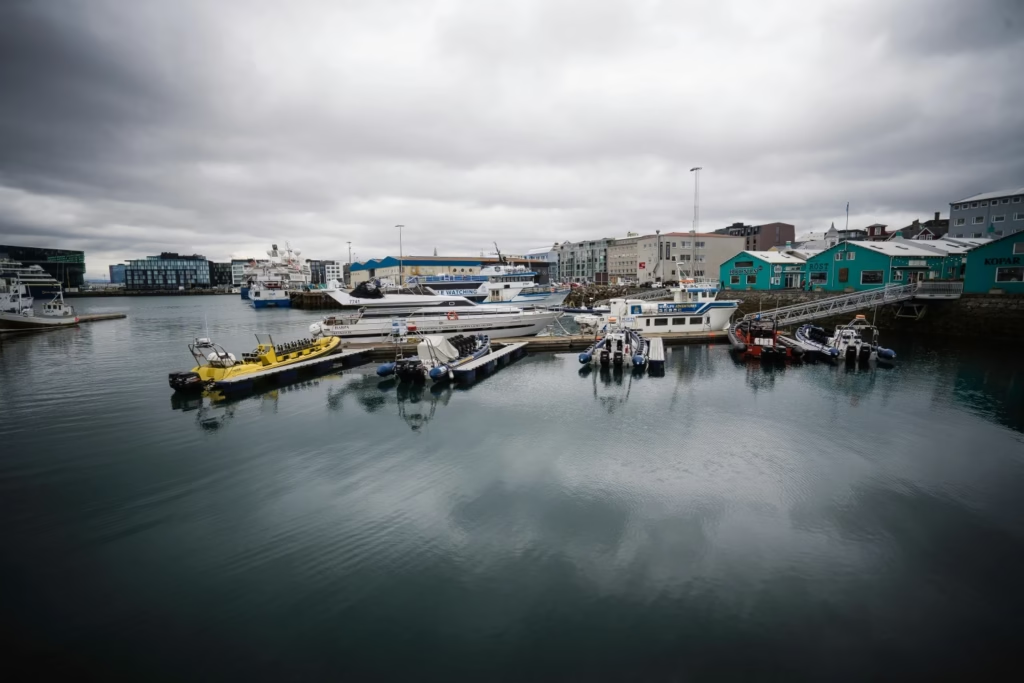
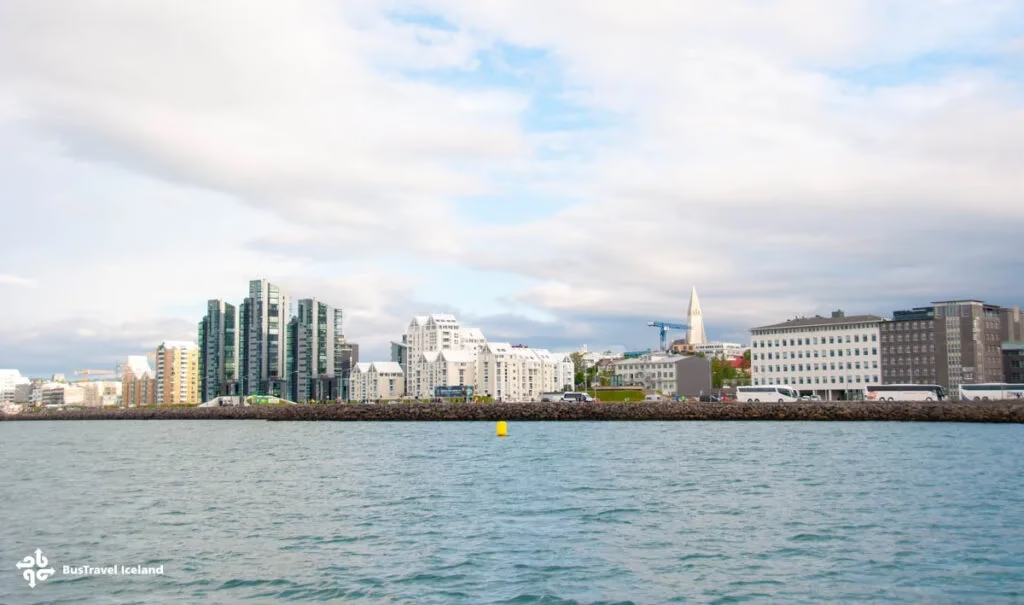
The museum sits right in downtown Reykjavik, inside the Hafnartorg harbor district. Its address is Reykjastræti 4, just steps from the waterfront. You’ll spot the entrance easily once you’re near Harpa Concert Hall.
Getting there is simple whether you walk, bike, or take the bus. Most downtown hotels sit within a fifteen-minute walk. Reykjavik’s compact layout means you likely won’t need a car at all. Strætó buses stop nearby too.
General Information about Iceland’s “Penis Museum”
Locals call it the “Penis Museum.” Its official name, though, is the Icelandic Phallological Museum. Despite the cheeky nickname, it’s a legitimate, well-organized scientific collection with English signage throughout, making it easy for international visitors to follow along without a guide.
Ticket Prices and Discounts
Admission runs around 2,750 ISK, roughly 20 USD, for adults. Kids thirteen and under get in free. Reykjavik City Card holders also receive a 20 percent discount. That’s a fair price for an hour or two of genuinely one-of-a-kind viewing.
Opening Hours and Peak Times
The museum stays open daily from 10 AM to 7 PM, with no weekly closing day. Expect crowds between mid-June and August. Early mornings work best if you want a quieter walk through. Off-season visits rarely require a wait.
Interesting Facts About The Phallological Museum
The official collection holds 280 specimens from 93 species of mammals, according to the museum’s own records. The largest piece is a portion of sperm whale penis measuring 170 centimeters and weighing 70 kilograms. That’s just the tip. The complete organ, if still intact, would have stretched roughly 5 meters and weighed close to 400 kilograms. The smallest specimen comes from a hamster and measures only 2 mm. You’ll need a magnifying glass just to spot it.
Most items arrived as donations. The museum has purchased only one specimen, though, an elephant penis measuring almost a meter long. Preservation methods vary across the collection. Some pieces sit pickled in formaldehyde jars. Others are dried, salted, or mounted on the walls. One oversized bull specimen was even turned into a walking stick. The founder also built several lamps from ram testicles to light the exhibit halls.


Detail | Info |
Founded | 1997, in Reykjavik |
Founder | Sigurður Hjartarson |
Current Location | Hafnartorg, Reykjavik |
Specimens | 280, from 93 species |
Largest Specimen | Sperm whale, 170 cm |
Smallest Specimen | Hamster, 2 mm |
Human Specimen Added | 2011 |
Annual Visitors | Around 70,000 |
History of the World’s Only “Penis Museum”
Sigurður Hjartarson owned a bull’s pizzle as a boy, once used as a cattlewhip. Decades later in 1974, a friend heard that story and gave him four more penises as a joke. He gave three away and kept one. Word spread among his colleagues, several of whom worked at whaling stations. They started bringing him specimens too. The collection kept growing from there.
Different animals came from different places. Farm animal specimens came from slaughterhouses, while fishermen supplied those from seals and smaller whales. Larger whale specimens came from commercial whaling stations, until a global whaling ban in 1986 cut that source off. After that, Sigurður relied on the 12 to 16 whales that strand on Iceland’s coast most years, plus one polar bear found drifting on sea ice.
A Family Effort
Collecting wasn’t always glamorous work. Sigurður’s daughter Þorgerður once got sent to a slaughterhouse to pick up a specimen and arrived mid-lunch break, basket in hand. Workers asked what was inside. She had to explain she was collecting a frozen goat penis. She later said she’d never do it again. Sigurður saw it differently, saying you can always get a new one, a better one, and that the collection never really stops growing.
From Reykjavik to Húsavík and Back Again
The museum first opened in Reykjavik in August 1997, backed by a small city grant. By 2003 it drew about 5,200 visitors a year, most of them tourists. When Sigurður retired in 2004, he couldn’t afford the rent anymore. He moved the whole collection to Húsavík, a small fishing village up north. His son Hjörtur took over in 2012 and brought the museum back to Reykjavik’s main shopping street. A wealthy German once offered roughly 232,000 dollars to buy the collection and move it abroad. The family turned him down flat since they felt the museum belonged in Iceland.
Folklore and Phallobilia at the Museum
Not every specimen in the museum is real. A whole section is dedicated to Icelandic folklore, featuring penises supposedly taken from elves, trolls, and kelpies. None of these are actually visible in the jars, since Icelandic legend holds that elves and trolls can’t be seen. The catalogue also lists a merman, a one-eyed creature called a “beach-murmurer,” and even a specimen credited to an Icelandic Christmas lad.
Beyond the folklore, the museum displays plenty of phallobilia, meaning penis-related art and objects rather than actual specimens. You’ll find lampshades made from bull scrotums, a walking stick carved from a bull penis, and wooden phalluses carved by the founder himself. He even had a bow tie printed with tiny phalluses, worn only on special occasions. It’s a strange kind of craftsmanship. It also says a lot about the museum’s sense of humor.
The Human Specimen and Celebrity Donations
For years, the museum wanted one thing most, a human specimen. That finally happened in 2011, when a 95-year-old Icelandic man donated his own after he passed away, hoping for a bit of lasting fame. Several other men later pledged to donate too, including an American who nicknamed his own specimen and sent a cast to display in the meantime, complete with playful photos.
Since then, the collection has picked up some famous additions. In 2022 the museum added a plaster cast linked to musician Jimi Hendrix, donated by the artist Cynthia Plaster Caster shortly before her death. In 2024 it added a cast described as the largest verified human specimen on record. Actor Jonah Falcon has also pledged his own specimen for the future. A 2012 documentary, The Final Member, tells the story of the museum’s original hunt for a human donor.
What To Do in Phallological Museum Iceland
A visit here isn’t just about staring at jars. Between the exhibits, the café, and the gift shop, you can easily spend a couple of hours soaking in the museum’s blend of science and Icelandic humor.



The Phallic-Themed Bistro Experience
Grab a bite at the on-site café, where the menu leans playfully into the theme with quirky snack names and drinks. It’s a fun, lighthearted spot to sit down after browsing the exhibits. Nothing here takes itself too seriously.
Phallic-Themed Gifts and Souvenirs
The gift shop stocks everything from candles to keychains, all riffing on the museum’s central subject. It’s a popular stop for quirky souvenirs. Honestly, it might end up being the most talked about item you bring home from Iceland.
Accommodations Nearby
Downtown Reykjavik has no shortage of places to stay within easy reach of the museum. Boutique hotels near Laugavegur and harbor-view properties near Harpa both put you within a short walk of the entrance.
Budget travelers can find guesthouses and hostels scattered through the city center too. Booking early matters most in peak summer. Rooms near the harbor fill up fast alongside whale watching tours and other popular excursions.
Attractions Nearby
Harpa Concert Hall, with its striking glass facade, sits just a short stroll from the museum entrance. The Sun Voyager sculpture along the waterfront makes a scenic stop too, especially at sunset during summer months.
Hallgrimskirkja church and the shops along Laugavegur are both walkable from here. You can easily string together a full afternoon without needing transport. The Old Harbour area adds boat tours and seafood restaurants into the mix.