
Bahrain Travel Advisory 2026: Is Bahrain Safe Right Now?
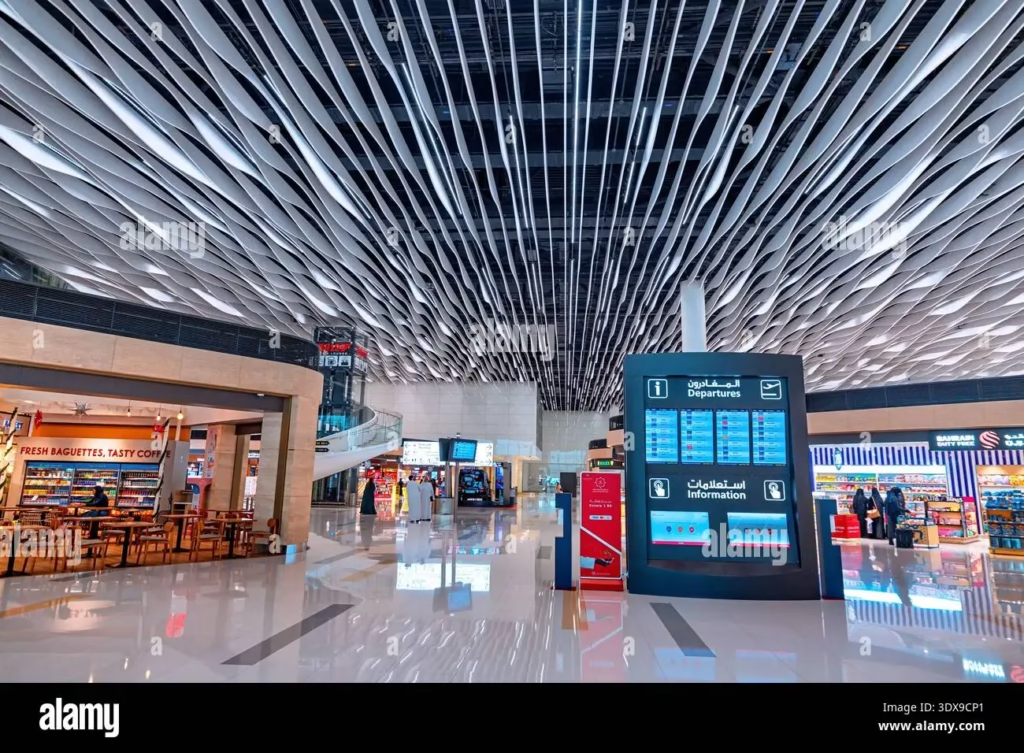
Travel to Bahrain and other Gulf countries remains affected by the continuing U.S.-Iran conflict and the risk of further regional escalation.
As of August 2026, the U.S. Department of State lists Bahrain at Level 3 – Reconsider Travel because of armed conflict and terrorism. Travelers should be prepared for missile or drone incidents, sudden aviation disruption, and changes to local security measures.
If you are already in Bahrain, Kuwait, or another Gulf country, monitor official alerts, confirm transportation directly with your airline, keep essential documents accessible, and maintain an emergency departure plan that does not depend entirely on government evacuation assistance.
most popular post
Best Travel Backpack for One-Bag Travel in 2026

Bahrain Travel Advisory at a Glance
| Category | Current situation |
|---|---|
| U.S. Travel Advisory | Level 3 – Reconsider Travel |
| Advisory issued | March 2, 2026 |
| Main U.S. risk indicators | Armed conflict and terrorism |
| Aviation | Disruptions and sudden schedule changes remain possible |
| Embassy status | Non-emergency U.S. government personnel and eligible family members were ordered to depart in |
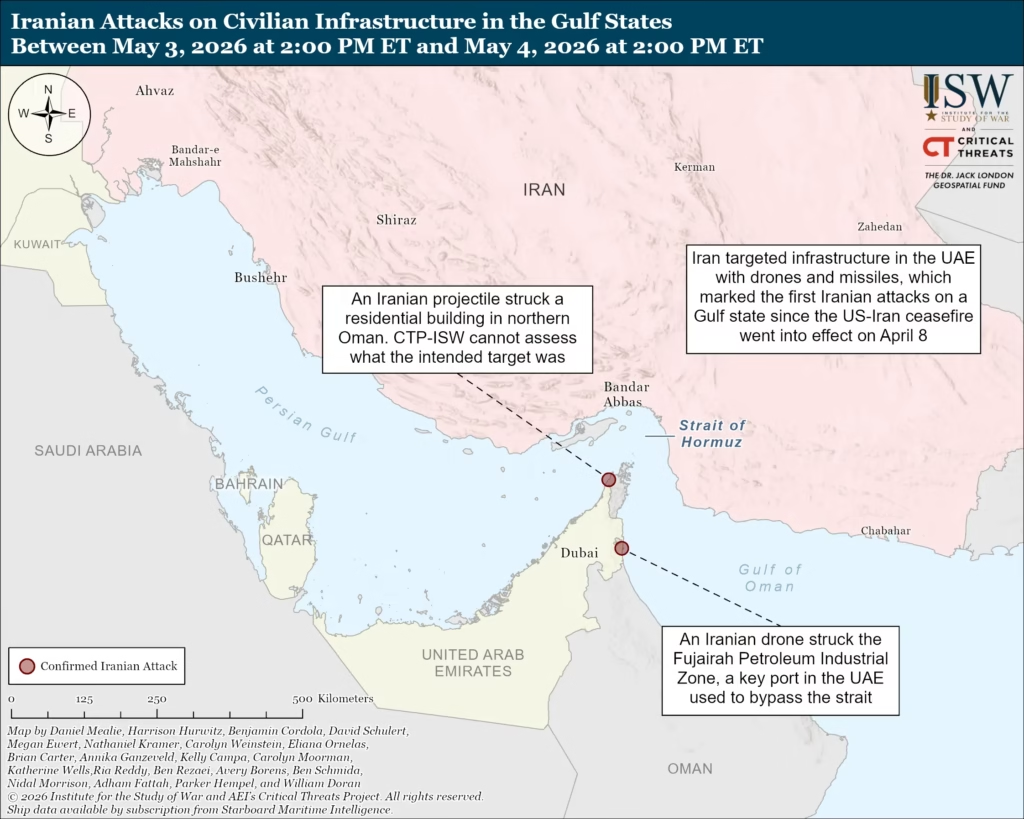
The U.S. Department of State says the security environment includes a continuing threat of missile and drone attacks connected to the conflict as well as terrorism risks. It also warns that commercial aviation has experienced significant disruption.
What Has Changed in Bahrain?
The situation has evolved significantly since the U.S. advisory was issued on March 2.
Bahrain has experienced additional conflict-related threats and attacks during 2026. Reuters documented an Iranian missile attack targeting Bahrain on July 14, while Associated Press reporting described missile alerts in Bahrain during Iranian retaliation for U.S. strikes.
The UK Foreign, Commonwealth & Development Office also says strikes and retaliatory attacks have affected Bahrain since early July. Its current guidance advises against all but essential travel to Bahrain.
Australia currently applies an even stronger warning, advising its citizens not to travel to Bahrain because of the deteriorating regional security situation.
These governments use different advisory systems, so their ratings cannot be compared directly. However, the combined guidance shows that travelers should treat the current situation as serious and subject to rapid change.
Is Bahrain Safe to Travel to in August 2026?
There is no simple yes-or-no answer.
For U.S. travelers, Bahrain’s official Level 3 designation means reconsidering travel rather than a blanket prohibition on travel. The decision should therefore depend on whether the trip is essential, your risk tolerance, available transportation, insurance protection, and your ability to respond if security conditions deteriorate.
Travelers who decide to go should understand that an itinerary that is possible today may change quickly because of security alerts, flight cancellations, or temporary restrictions. Anyone traveling for tourism who can easily postpone should carefully consider whether the trip needs to take place during the current period of regional instability.
recent post

FIFA World Cup 2026 Travel Advisory: Visa & Safety Guide
Your Ultimate Guide to the Canada Travel Advisory Updates for the United States (2026)
Al-Adham Hail: A Local's Guide to Mountain Evenings
What Are the Main Risks in Bahrain?
1. Missile and Drone Attacks
Bahrain faces a continuing regional armed-conflict risk. The U.S. State Department specifically warns about the threat of Iranian missile and drone attacks.
Interceptions can also create danger from falling debris. If authorities issue an attack warning, follow official shelter instructions immediately and remain away from windows.
2. Terrorism
The State Department continues to identify terrorism as a risk in Bahrain. Potential targets may include transportation locations, markets, shopping areas, places of worship, tourist locations and
and government or military facilities.
Travelers should maintain awareness in crowded public areas and follow instructions from Bahraini authorities.
3. Flight and Airspace Disruption
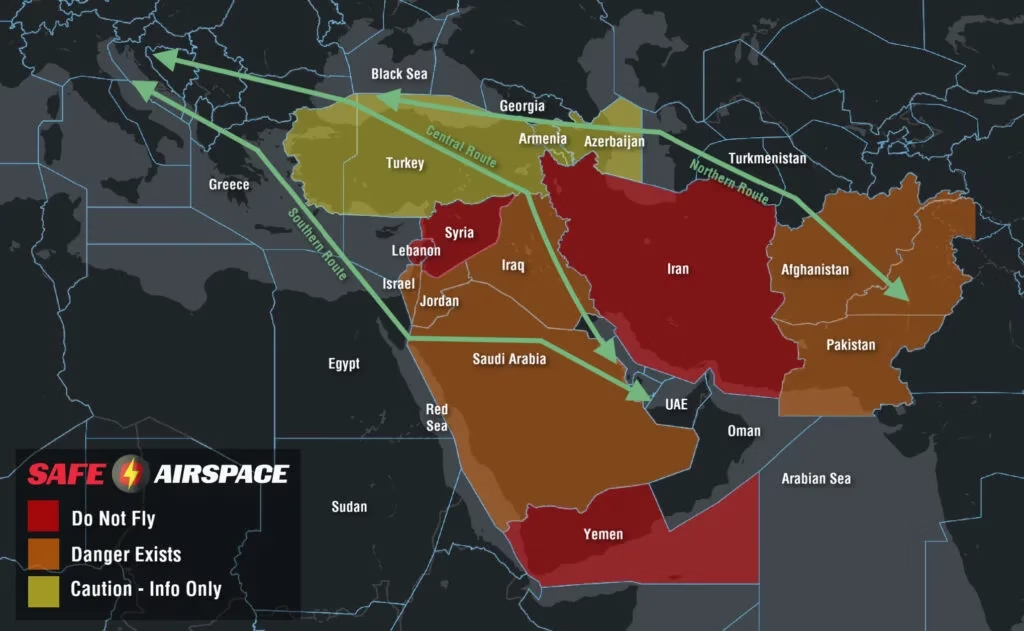
Regional conflict can result in flight cancellations, route changes, or airspace restrictions with little advance notice.
Do not rely only on a travel-booking application. Verify your flight directly with the operating airline before traveling to the airport and again before beginning a connecting journey through the Gulf.
4. Sensitive Government and Military Locations
Avoid military facilities, security installations, and areas where an active security response is taking place.
Travelers should also be cautious about photographing or recording military activity or sensitive infrastructure. Australian travel guidance specifically warns that photographing or sharing images of military facilities or conflict damage may result in serious penalties.
5. Demonstrations and Civil Unrest
Avoid political demonstrations, protests, and developing crowds.
Even peaceful gatherings can change quickly, interfere with road access, or draw a security response. Extra caution is appropriate around politically sensitive events and periods associated with large gatherings.
Kuwait Travel Advisory 2026
Kuwait is also currently listed by the U.S. Department of State at Level 3 – Reconsider Travel.
However, Kuwait’s advisory should not simply be treated as a copy of Bahrain’s. The U.S. advisory specifically identifies armed conflict, landmines, and crime among the reasons travelers should reconsider travel. Commercial aviation has also been seriously disrupted during the regional conflict.
Kuwait has faced drone and missile threats during 2026. Reuters reported that Kuwaiti air defenses dealt with Iranian drones in April, while Kuwait’s military later confirmed additional hostile aerial threats.
The UK currently advises against all but essential travel to Kuwait and warns that further escalation, aviation disruption, and attacks remain possible.
Travelers in Kuwait should avoid demonstrations, military or security
facilities and any area affected by an active emergency response.
Current Gulf Travel Advisory Comparison
Several Gulf countries remain under elevated U.S. travel advisories.
| Country | U.S. advisory level | Key concern |
| Bahrain | Level 3 | Armed conflict and terrorism |
| Kuwait | Level 3 | Armed conflict, landmines and crime |
| Qatar | Level 3 | Armed conflict |
| Oman | Level 3 | Armed conflict and terrorism |
| Saudi Arabia | Level 3 | Armed conflict, Iranian targeting risk, terrorism and other risks |
| United Arab Emirates | Level 3 | Armed conflict and terrorism |

Travelers should review the individual country advisory rather than assuming that the same restrictions and threats apply across the entire Gulf.
Are Gulf Flights Operating?
Flights are operating on many routes, but travelers should expect the possibility of cancellations, reduced schedules, rerouting, or temporary airspace restrictions.
The State Department’s July 22 worldwide security notice says Americans in the Middle East should be prepared for flight cancellations, periodic airspace closures, and other travel disruptions. Travelers outside the region are advised to reconsider travel to or through the Middle East.
Before leaving for an airport:
Confirm the operating flight directly with the airline, check whether your connection is still operating, keep alternative routing options available, allow extra time, and avoid relying on a single departure plan.
What Should Travelers in Bahrain Do Now?
Travelers already in Bahrain should prioritize practical preparation rather than attempting to predict how the conflict will develop.
Keep your passport, residency documents, insurance information, and essential medication accessible. Charge your phone and backup battery regularly. Know where you would shelter if local authorities issue an attack warning.
Avoid unnecessary time near military, diplomatic, governmental, and strategic infrastructure.
Maintain more than one method of communication with family or colleagues, and agree in advance on how you will confirm your safety during a communications disruption.
U.S. citizens should also enroll in the Smart Traveler Enrollment Program (STEP). STEP provides security messages from U.S. embassies and helps consular officials contact travelers or their emergency contacts during emergencies.
Should You Leave Bahrain?
There is no single answer for every traveler.
If you have a safe commercial departure option and no essential reason to remain, you may decide that leaving reduces your exposure to further escalation. Travelers who remain should have a realistic contingency plan in case commercial transportation becomes more limited.
The State Department advises U.S. citizens to maintain an emergency departure plan that does not depend on U.S. government assistance.
Do not wait until a crisis is at its worst to check whether your passport, visa, transportation, and payment methods are usable.
Travel Insurance During the Iran-US Conflict
Comprehensive travel insurance is particularly important during a period of regional instability, but simply buying a policy does not guarantee that conflict-related losses will be covered.
Review the wording carefully for medical expenses, emergency evacuation, trip interruption, cancellations, and exclusions related to war, armed conflict, terrorism, or travel undertaken after an official government warning was issued.
The U.S. State Department recommends that travelers consider insurance that includes evacuation assistance, medical coverage, and trip-cancellation protection.
Always confirm coverage directly with the insurer for your specific destination and travel dates.
Emergency Contacts for U.S. Citizens
U.S. citizens in Bahrain can contact U.S. Embassy Manama.
Main and emergency telephone: +973-1724-2700
Consular email: ManamaConsular@state.gov
The Department of State also provides 24-hour emergency assistance:
From the United States or Canada: 1-888-407-4747
From other countries: +1-202-501-4444
These numbers remain listed by the Department of State for Americans needing emergency assistance abroad.
FAQs: Iran-US Conflict Travel Advisory
Is Bahrain under a U.S. travel warning?
Are there Gulf destinations not affected by the advisory?
Should I register with my embassy before traveling to the Gulf?
How long will these advisories likely last?
Do airlines offer refunds for flights affected by the Iran-US conflict advisory?
Can I still get a visa or entry approval for Bahrain or Kuwait during the advisory?
Final Travel Safety Checklist
Before traveling to Bahrain, Kuwait, or elsewhere in the Gulf, verify the latest country-specific government advisory, check your operating flight, confirm travel-insurance exclusions, enroll in relevant government alert services, carry sufficient medication and essential documents, identify shelter options, and maintain an independent emergency departure plan.
The regional security environment can change faster than normal travel content can be updated. Check official government and airline sources again on the day you travel.
Editorial note: This guide summarizes publicly available government travel and security information and is not a replacement for an official government travel advisory. Advisory levels, flights, and security conditions may change without notice.