best places to visit in South Africa
South Africa is one of those countries where choosing where to go can be harder than deciding whether to go. A first trip could mean watching elephants in Kruger National Park, driving between forests and beaches on the Garden Route, hiking beneath the cliffs of the Drakensberg, exploring Johannesburg’s history, or spending an afternoon among the vineyards outside Cape Town.
That variety is exactly what makes South Africa special, but it also means trying to see everything in one trip is usually a mistake.
For most first-time visitors, the best places to visit in South Africa are Cape Town, Kruger National Park, the Garden Route, Cape Winelands, and the Drakensberg. Travelers with more time can add destinations such as Hermanus, iSimangaliso Wetland Park, Kgalagadi, the Wild Coast, and Namaqualand.
This guide covers 20 destinations worth considering in 2026, what each is best for, and how they fit into a realistic South Africa itinerary.
Best Places to Visit in South Africa at a Glance
| Destination | Best For | Suggested Time |
|---|---|---|
| Cape Town | First trips, scenery, food | 4–6 days |
| Kruger National Park | Safari | 3–5 days |
| Garden Route | Road trips | 4–7 days |
| Cape Winelands | Food, scenery, estates | 1–3 days |
| Johannesburg & Soweto | History and culture | 2–3 days |
| Durban | Beaches and food | 2–3 days |
| Drakensberg | Mountains and hiking | 2–4 days |
| Panorama Route | Scenic drives | 1–2 days |
| Hermanus | Whales and coast | 1–2 days |
| Addo Elephant National Park | Eastern Cape safari | 2–3 days |
| iSimangaliso Wetland Park | Wildlife and coast | 2–4 days |
| Hluhluwe-iMfolozi Park | KwaZulu-Natal safari | 2–3 days |
| Kgalagadi | Desert wildlife | 3–5 days |
| Cape Peninsula | Scenic day trip | 1 day |
| Wild Coast | Remote coastline | 3–5 days |
| Namaqualand | Wildflowers | 2–4 days |
| Karoo | Slow road trips | 2–4 days |
| Cape Agulhas | Southern tip of Africa | 1 day |
| Cradle of Humankind | Archaeology and history | 1 day |
| Cederberg | Wilderness and landscapes | 2–3 days |
1. Cape Town
Best for: first-time visitors, scenery, restaurants, beaches, and variety.
If you can visit only one part of South Africa, Cape Town is the strongest all-round choice. The city sits between Table Mountain and the Atlantic Ocean, putting beaches, mountain scenery, restaurants, cultural attractions, and scenic drives unusually close together.
Cape Town Tourism describes the city as a cosmopolitan destination surrounded by nature and highlights its biodiversity, beaches, food, and wine among its major attractions. Spend time around Table Mountain, the V&A Waterfront, Bo-Kaap, Kirstenbosch, Camps Bay, and the Atlantic Seaboard, but leave space in your itinerary for the Cape Peninsula as well.
How long to stay: 4–6 days. Best for a first trip? Absolutely.
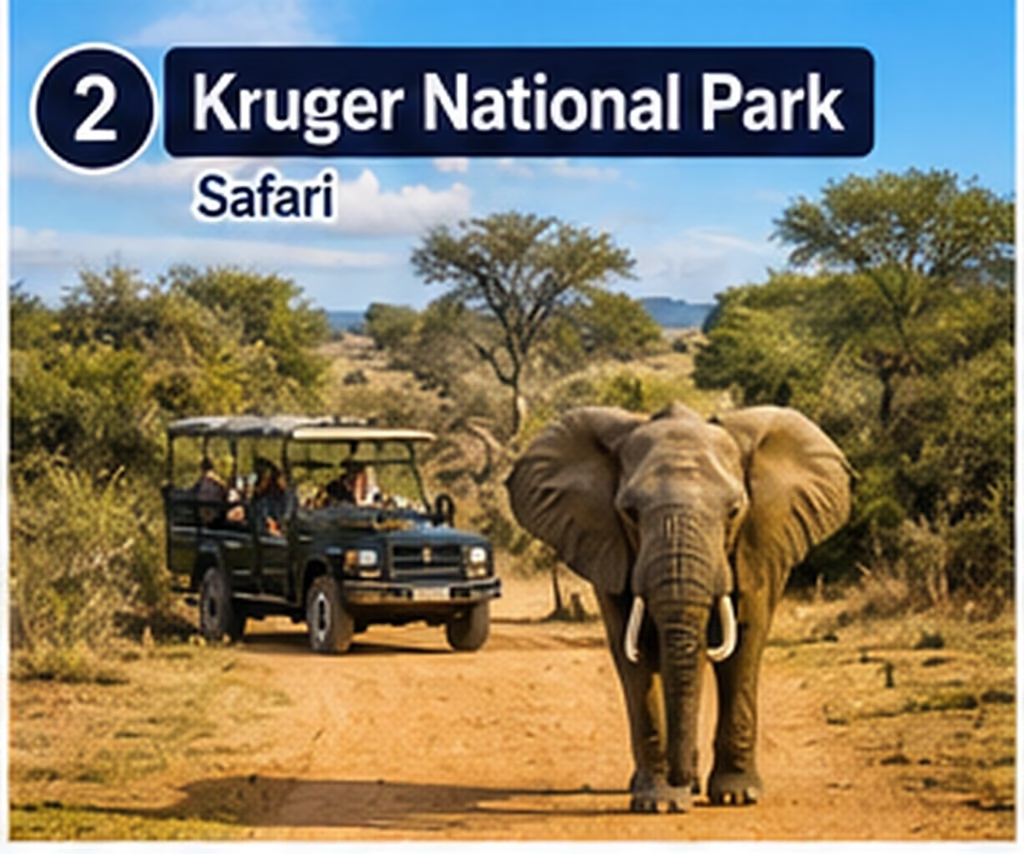
2. Kruger National Park
Best for: the classic South African safari.
Kruger is the country’s flagship national park and remains one of the easiest major African wildlife destinations to explore independently. SANParks allows visitors to drive through the park in their own vehicles, stay in public rest camps, or use private lodges. That flexibility is one reason Kruger works for very different budgets and travel styles.
Don’t treat it as a one-day wildlife stop. The park is enormous, wildlife sightings are unpredictable, and the experience improves when you have several mornings and evenings available.
How long to stay: at least 3 nights; 4–5 nights is better if a safari is a major reason for your trip. Pair it with the Panorama Route and Blyde River Canyon.
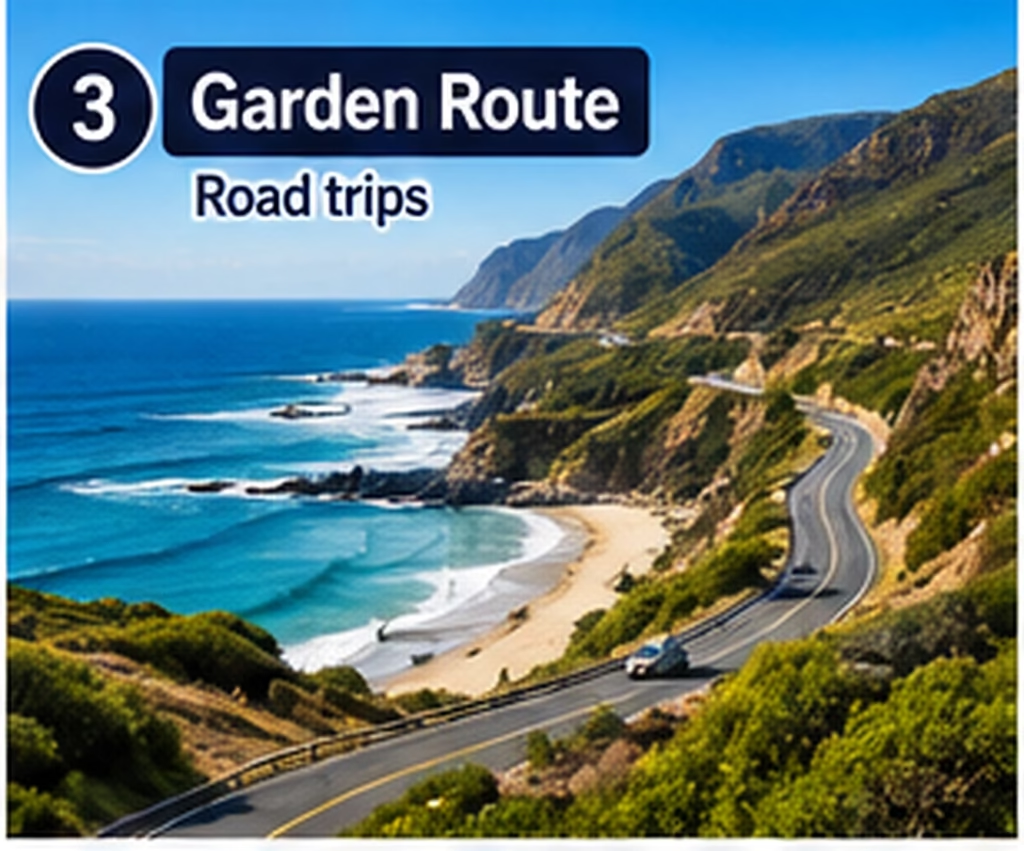
3. Garden Route
Best for: South Africa road trips.
The Garden Route combines forests, lagoons, beaches, coastal towns, and protected landscapes along the country’s southern coast. Garden Route National Park includes the Wilderness, Knysna, and Tsitsikamma sections, which is why these destinations work better as part of one broader Garden Route itinerary than as completely separate entries.
Popular stops include Wilderness, Knysna, Plettenberg Bay, Nature’s Valley, and Storms River. The strength of the Garden Route isn’t one single landmark; it’s the freedom to move between beaches, forest walks, viewpoints, and small coastal towns.
How long to stay: 4–7 days. Best route: Cape Town to Winelands to Hermanus to Garden Route to Addo.
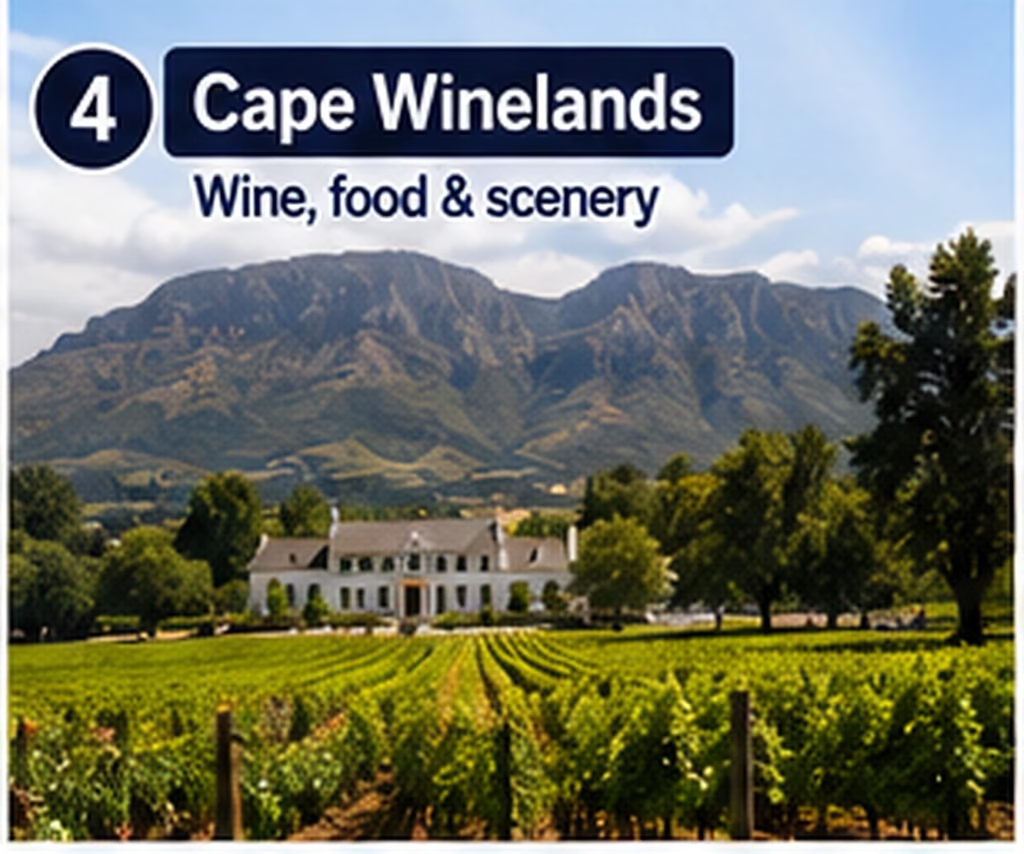
4. Cape Winelands: Stellenbosch and Franschhoek
Best for: food, historic towns, and vineyard scenery.
Instead of choosing between Stellenbosch and Franschhoek, first-time visitors should think of them as complementary parts of a wider Cape Winelands experience. Stellenbosch has the larger historic center and surrounding estates, while Franschhoek feels smaller and more leisurely. The region also works extremely well as an extension of a Cape Town stay rather than requiring a separate domestic flight.
Even travelers who aren’t focused on wine can enjoy the mountain scenery, architecture, restaurants, and rural atmosphere.
How long to stay: one day from Cape Town or 2–3 nights for a slower trip.
5. Johannesburg and Soweto
Best for: understanding modern South Africa.
Johannesburg isn’t usually the country’s most visually dramatic stop, but its value is different: it gives travelers context. The Apartheid Museum, Constitution Hill, and Soweto help explain events and communities that shaped modern South Africa, a perspective that’s difficult to gain from a beaches-and-safari itinerary alone.
Johannesburg also works naturally as an arrival or departure point for travelers heading toward Kruger.
How long to stay: 2–3 days.
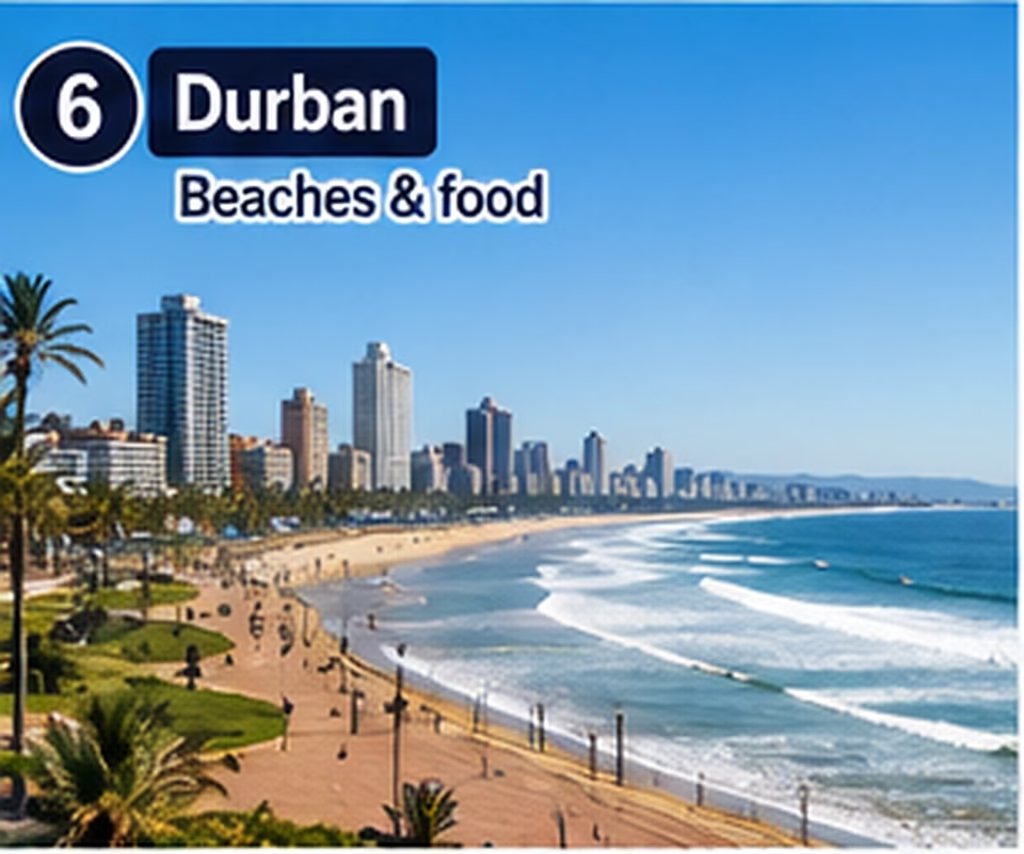
6. Durban
Best for: Indian Ocean beaches and food.
Durban feels very different from Cape Town. The Indian Ocean gives the city a warmer coastal character, while its food culture reflects strong Indian influences. The Golden Mile is the obvious starting point, but food should be part of the itinerary too; Durban is especially associated with curries and bunny chow.
For travelers building a KwaZulu-Natal itinerary, Durban also acts as a gateway toward the Drakensberg, Hluhluwe-iMfolozi, and iSimangaliso.
How long to stay: 2–3 days.
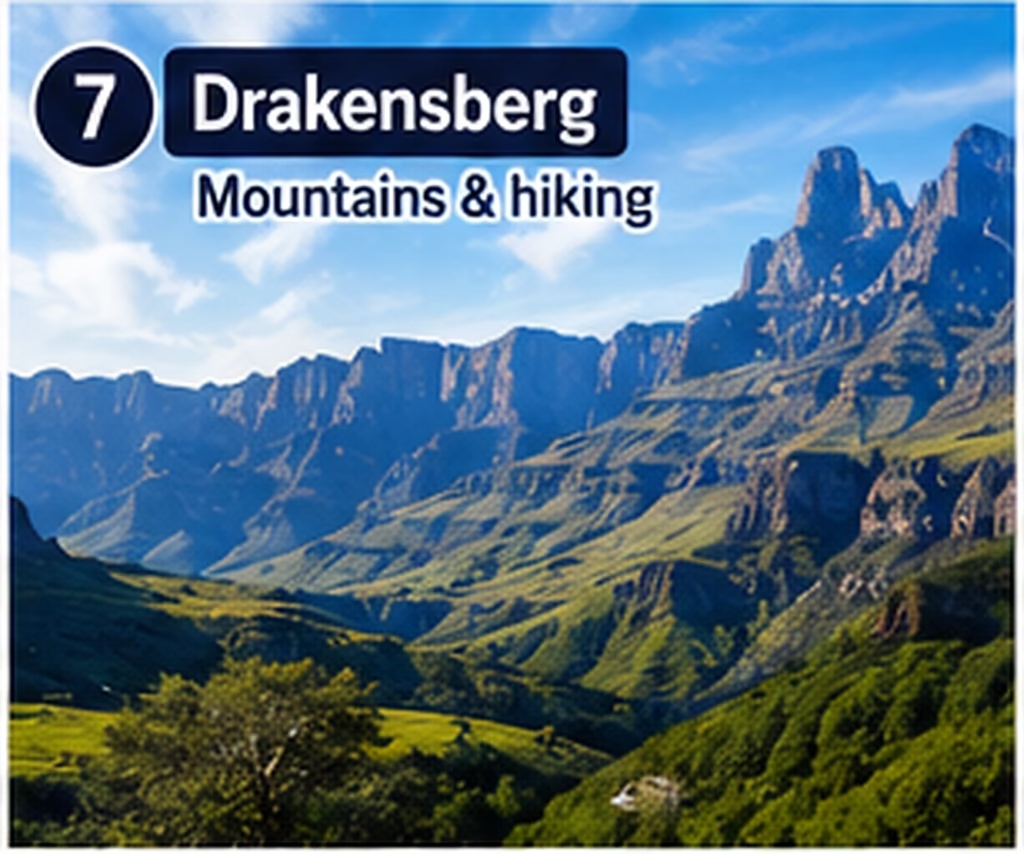
7. Drakensberg
Best for: mountains, hiking, and dramatic landscapes.
Travelers who think South Africa is mainly beaches and safari country are often surprised by the Drakensberg. The wider Maloti-Drakensberg Park is a transnational UNESCO World Heritage property spanning South Africa and Lesotho, recognized for both natural and cultural importance. The region is defined by towering escarpments, valleys, and open mountain landscapes.
It deserves more than a quick photo stop. Stay long enough to experience the mountains at different times of day.
How long to stay: 2–4 days.
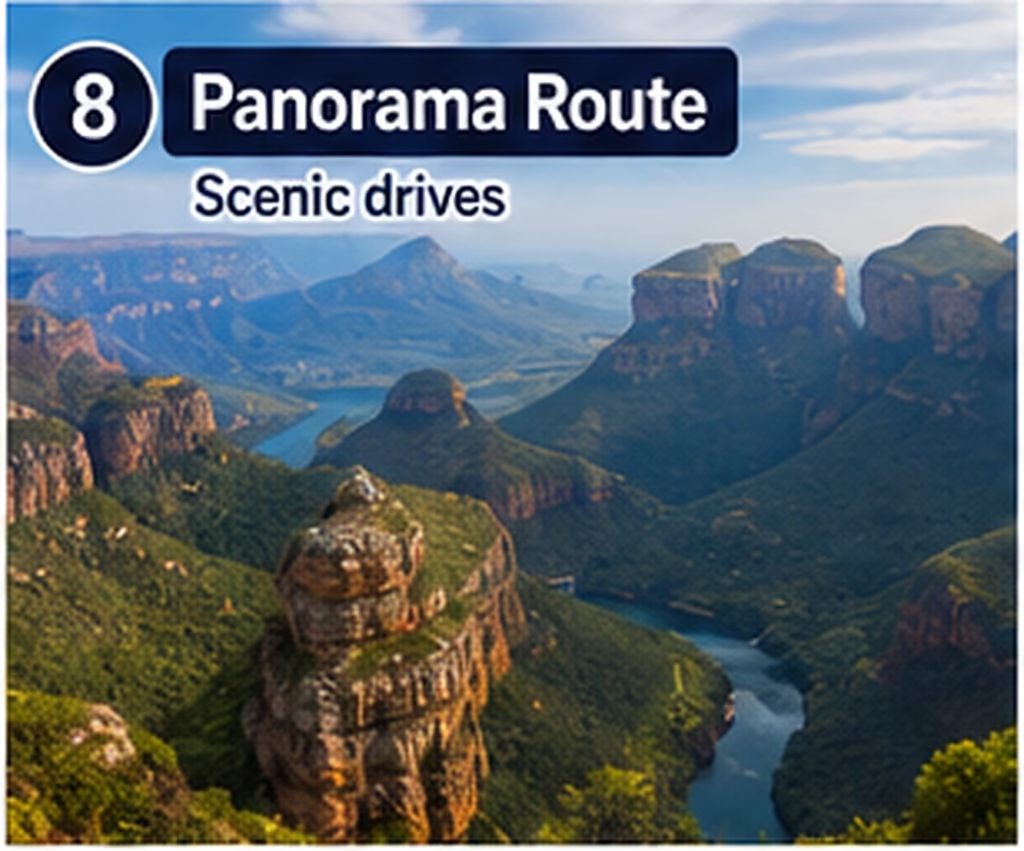
8. Panorama Route and Blyde River Canyon
Best for: viewpoints and scenic driving.
If you’re traveling toward Kruger from Johannesburg or Mpumalanga, don’t rush straight to the park. The Panorama Route is one of the easiest ways to add major landscape scenery to a safari-focused itinerary. South African Tourism specifically recommends stops including God’s Window and Bourke’s Luck Potholes when traveling through Mpumalanga toward Kruger National Park.
The Three Rondavels and wider Blyde River Canyon landscape are among the area’s strongest viewpoints.
How long to stay: 1–2 days. Best combined with: Kruger National Park.
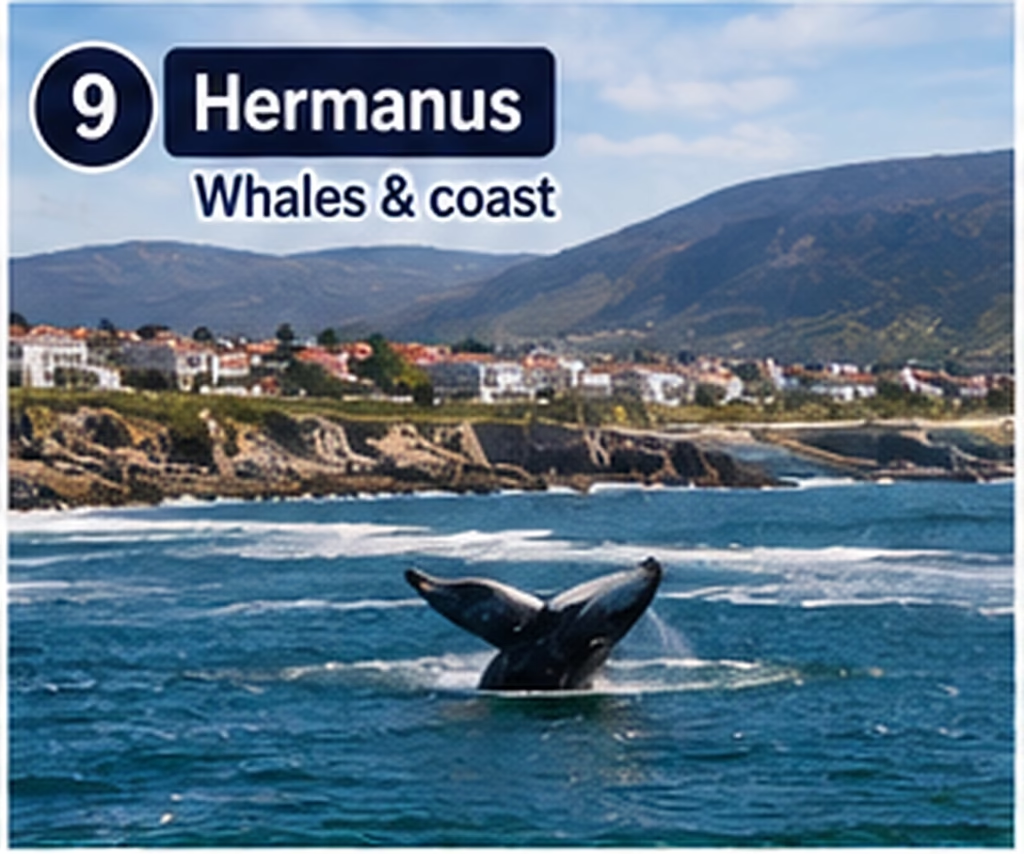
9. Hermanus and the Whale Coast
Best for: coastal scenery and seasonal whale watching.
Hermanus makes an excellent break between Cape Town and the Garden Route. Its biggest seasonal attraction is the arrival of southern right whales along Walker Bay. Hermanus Tourism identifies roughly June through November as the whale-watching season, with sightings peaking between September and October, although the number and timing of sightings naturally vary by year.
Outside whale season, the coastline, cliff paths, and nearby Hemel-en-Aarde Valley still make the area worthwhile.
How long to stay: 1–2 nights. Best time for whales: approximately June–November, peaking September–October.
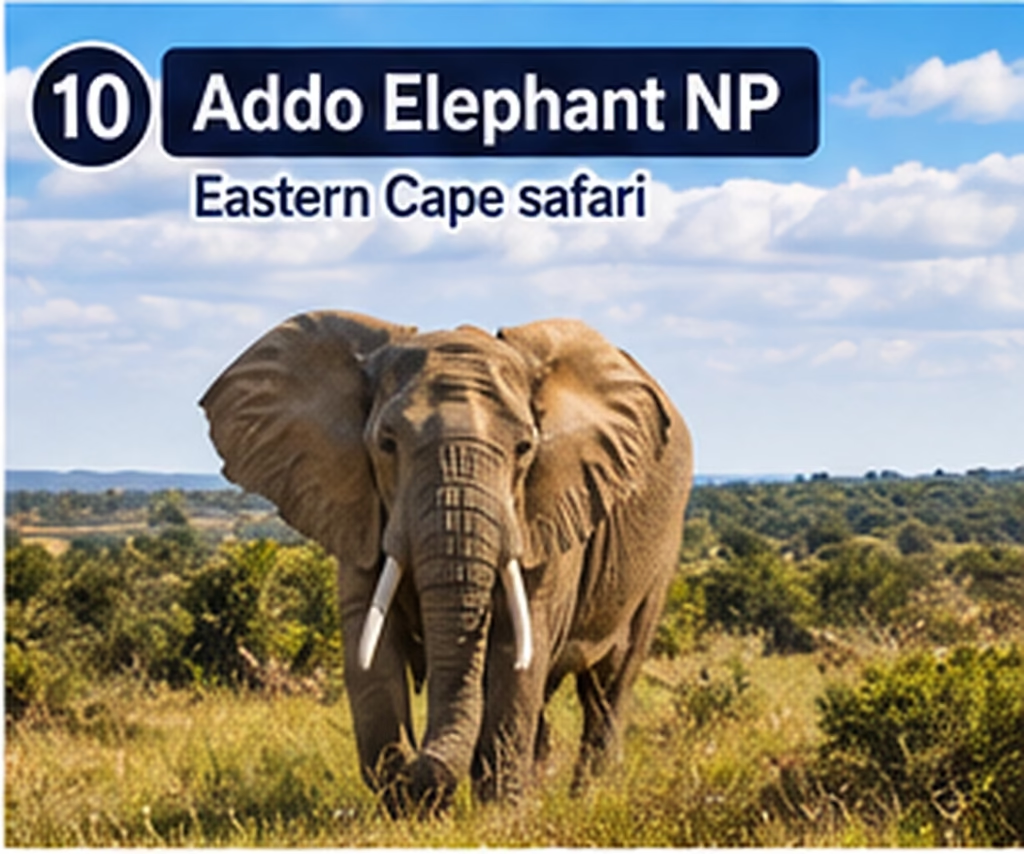
10. Addo Elephant National Park
Best for: an Eastern Cape safari.
Addo is one of the most useful additions to a Garden Route itinerary because it lets travelers combine a southern road trip with a national-park safari. SANParks lists self-drive game viewing, guided drives, and other nature experiences inside the park. The park lies near Gqeberha, making it particularly convenient if you plan to finish the Garden Route in the Eastern Cape.
If Kruger doesn’t fit geographically into your trip, Addo becomes a strong alternative.
How long to stay: 2–3 days.
RECENT POST

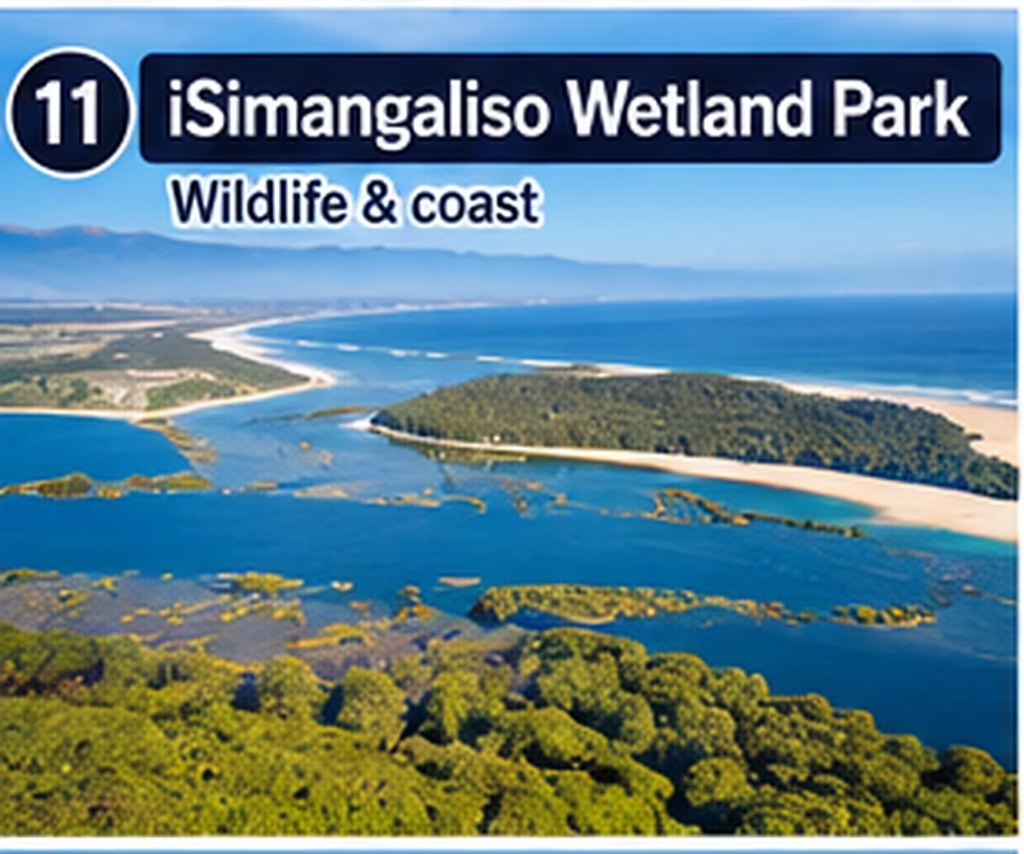
11. iSimangaliso Wetland Park
Best for: wildlife and coastal ecosystems in the same region.
Few South African destinations combine as many ecosystems as iSimangaliso. The UNESCO-listed area includes wetlands, lakes, coastal environments, and marine habitats, with exceptional biological diversity. The park authority describes iSimangaliso as South Africa’s first World Heritage Site and emphasizes its lakes, beaches, reefs, and wildlife-rich landscapes.
St Lucia makes a practical base for exploring parts of the region. Sodwana Bay can also be incorporated into a longer northern KwaZulu-Natal trip for travelers primarily interested in the coast and marine environment.
How long to stay: 2–4 days.
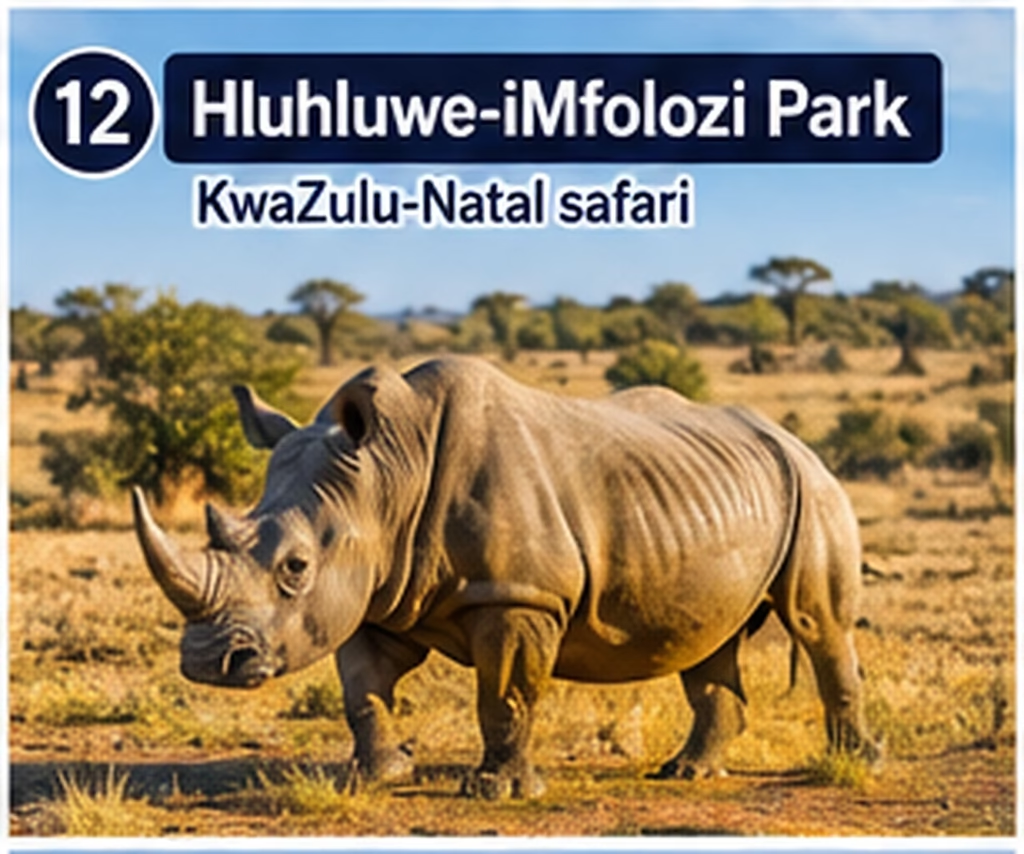
12. Hluhluwe-iMfolozi Park
Best for: adding safari to a KwaZulu-Natal itinerary.
One weakness in many first-time South Africa lists is that they jump from Kruger straight to Addo and ignore KwaZulu-Natal’s wildlife areas. Hluhluwe-iMfolozi solves that. It works particularly well when combined with Durban and iSimangaliso, allowing travelers to build a wildlife-and-coast itinerary without crossing the whole country. The reserve is known as a major Big Five wildlife area in KwaZulu-Natal.
How long to stay: 2–3 days.
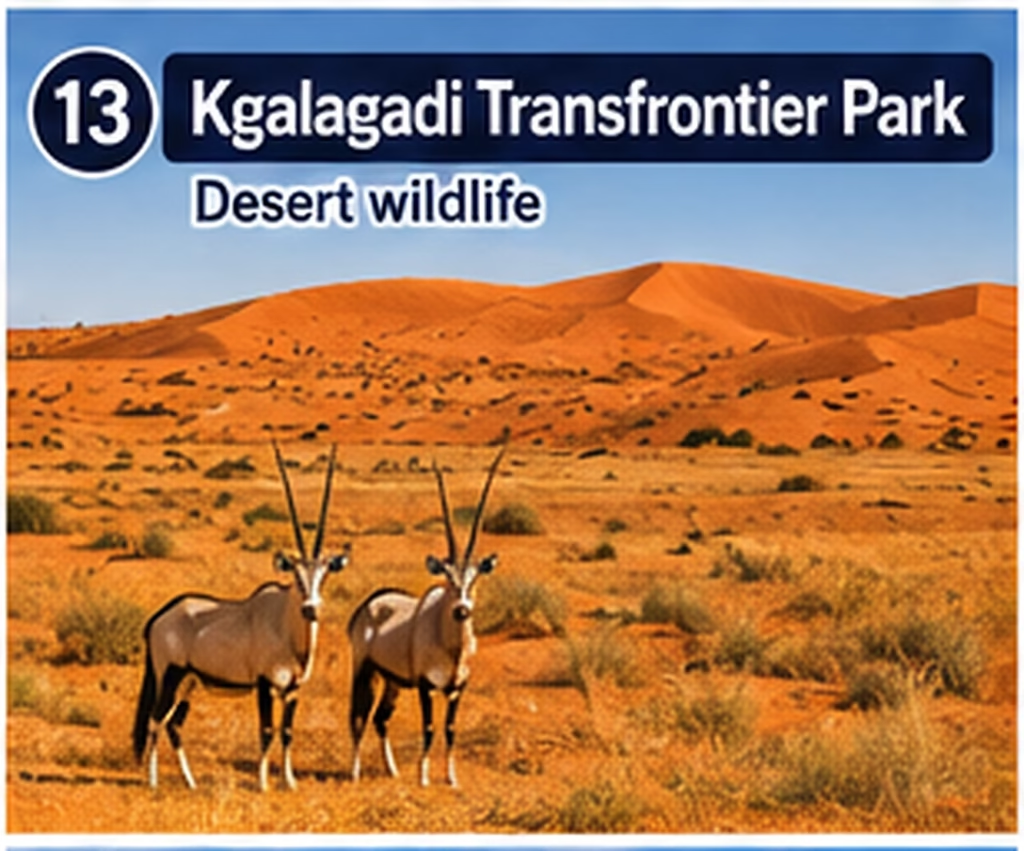
13. Kgalagadi Transfrontier Park
Best for: remote desert landscapes and wildlife.
Kgalagadi offers a completely different safari environment from Kruger. Instead of greener Lowveld scenery, expect Kalahari landscapes, dry riverbeds, and red dunes. SANParks highlights the park particularly for predator viewing and concentrations of wildlife around the Auob and Nossob dry riverbeds.
The trade-off is accessibility. Kgalagadi is remote and requires considerably more planning than Kruger, which makes it better for repeat visitors or travelers deliberately building a Northern Cape itinerary.
How long to stay: 3–5 days.
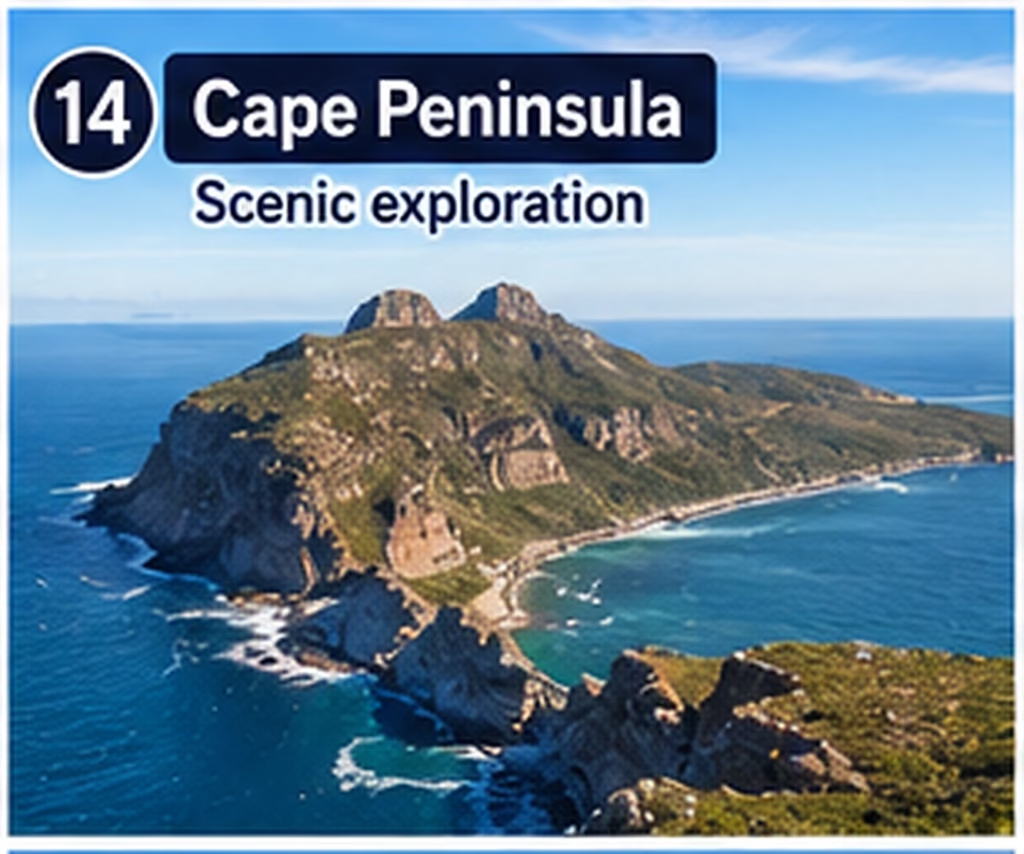
14. Cape Peninsula
Best for: one unforgettable scenic day from Cape Town.
The Cape Peninsula shouldn’t replace time in Cape Town, but it deserves its own day. A typical route links the False Bay side of the peninsula with Boulders Beach, Cape Point, and coastal roads before returning toward the city. The wider Table Mountain National Park protects much of this remarkable landscape.
If your South Africa trip is short, this is one of the easiest ways to experience dramatically different scenery without changing hotels.
How long to stay: one full day.
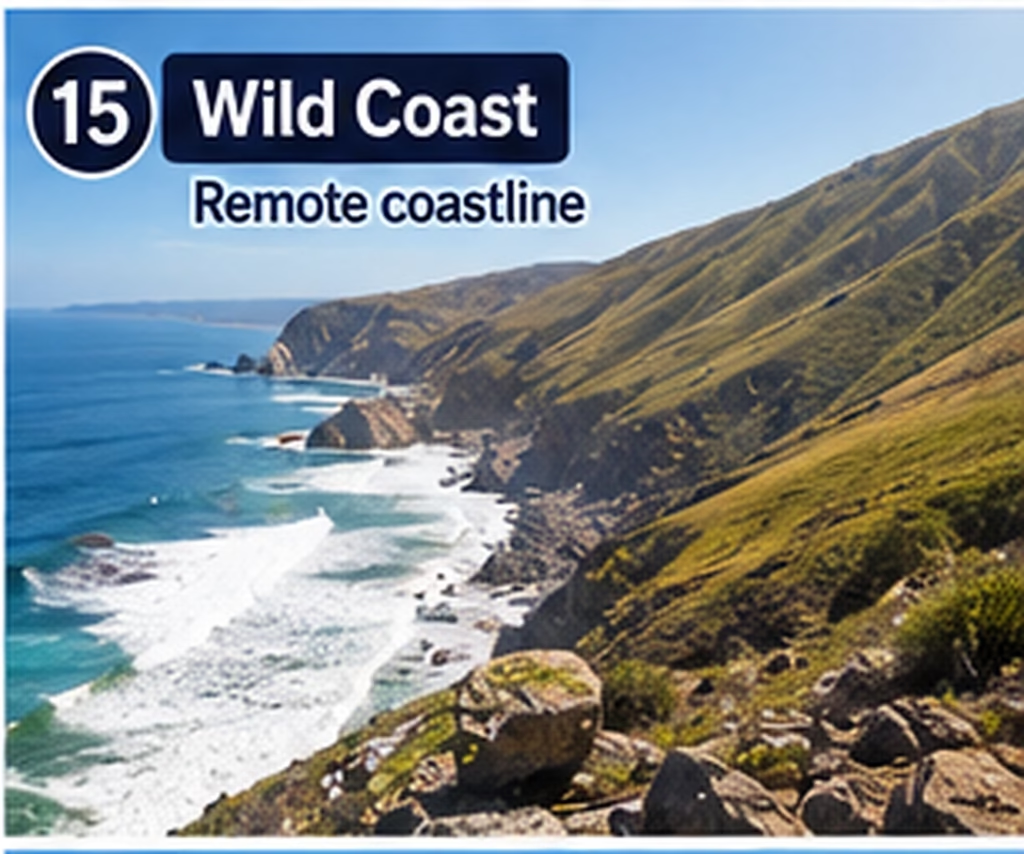
15. Wild Coast
Best for: remote coastline and slower travel.
The Wild Coast is for travelers who want a less polished version of coastal South Africa. Its appeal comes from open landscapes, quiet beaches, cliffs, and a slower travel rhythm rather than a checklist of major attractions. It requires more time and planning than the Garden Route, which is precisely why it feels different.
Choose the Wild Coast if you value solitude and landscape more than convenience.
How long to stay: 3–5 days.
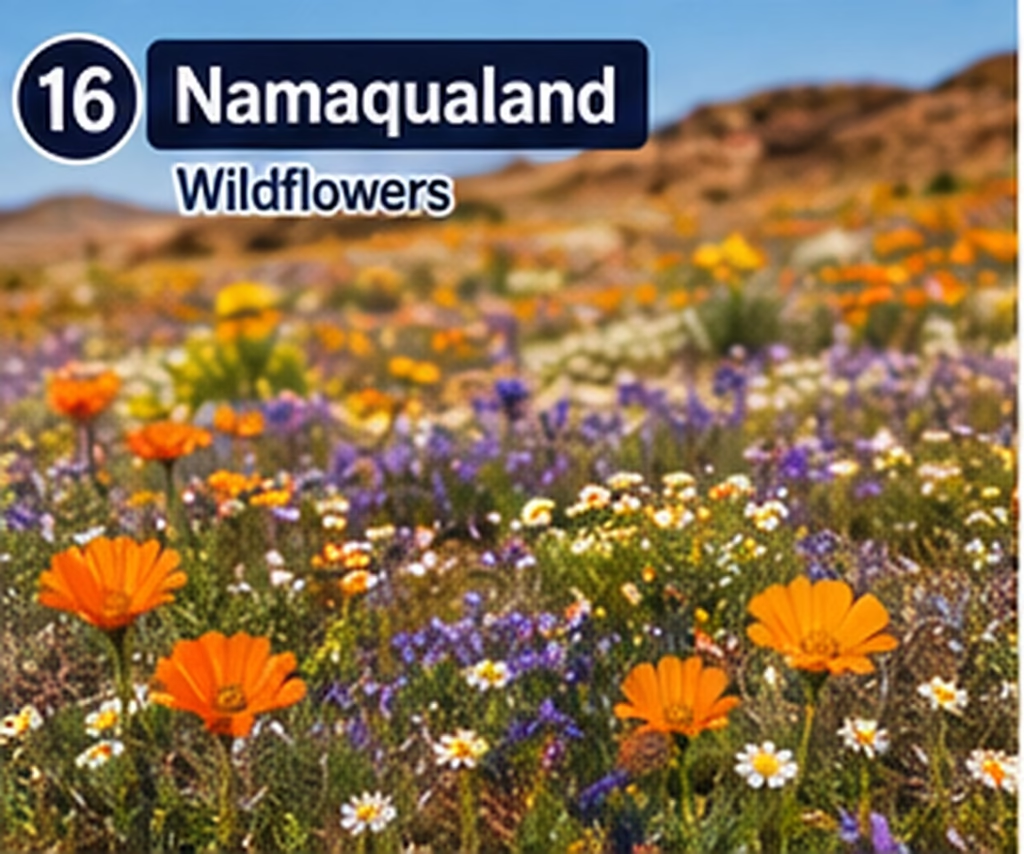
16. Namaqualand and Namaqua National Park
Best for: seasonal wildflowers.
Namaqualand is one of the few destinations on this list where your travel dates can completely change the experience. SANParks says the famous flower season usually reaches its height around August and September, when normally dry landscapes can transform into fields of color. Rainfall and weather determine the exact timing, so this isn’t an attraction that should be promised for a fixed date months in advance.
Outside flower season, the region becomes a much more specialized choice.
How long to stay: 2–4 days. Best time: usually August–September for flowers.
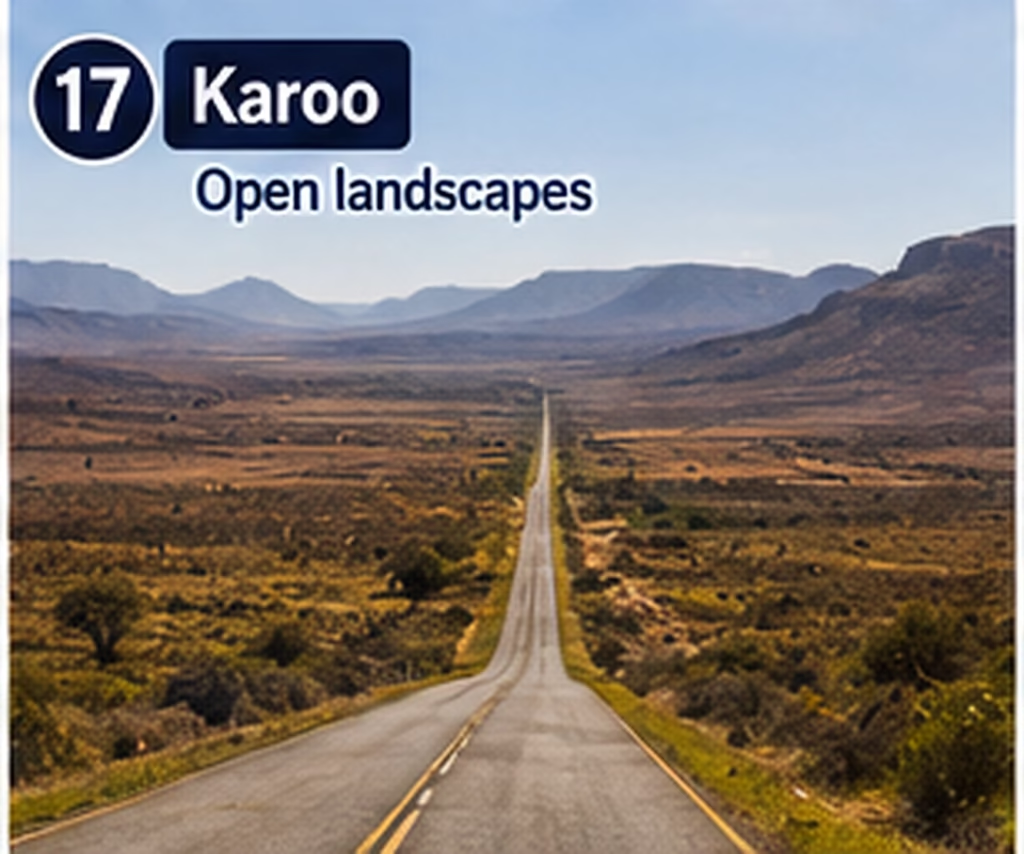
17. The Karoo
Best for: road trips, open landscapes, and small towns.
The Karoo offers almost the opposite experience of Cape Town. There are no famous city skylines or tropical coastlines, just long roads, semi-arid landscapes, small towns, and enormous skies. It works best for travelers who enjoy the journey itself.
Consider including places such as Graaff-Reinet or Karoo National Park, depending on your wider route. SANParks describes the Karoo ecosystem as a vast landscape whose wildlife and vegetation have adapted to demanding arid conditions.
How long to stay: 2–4 days.
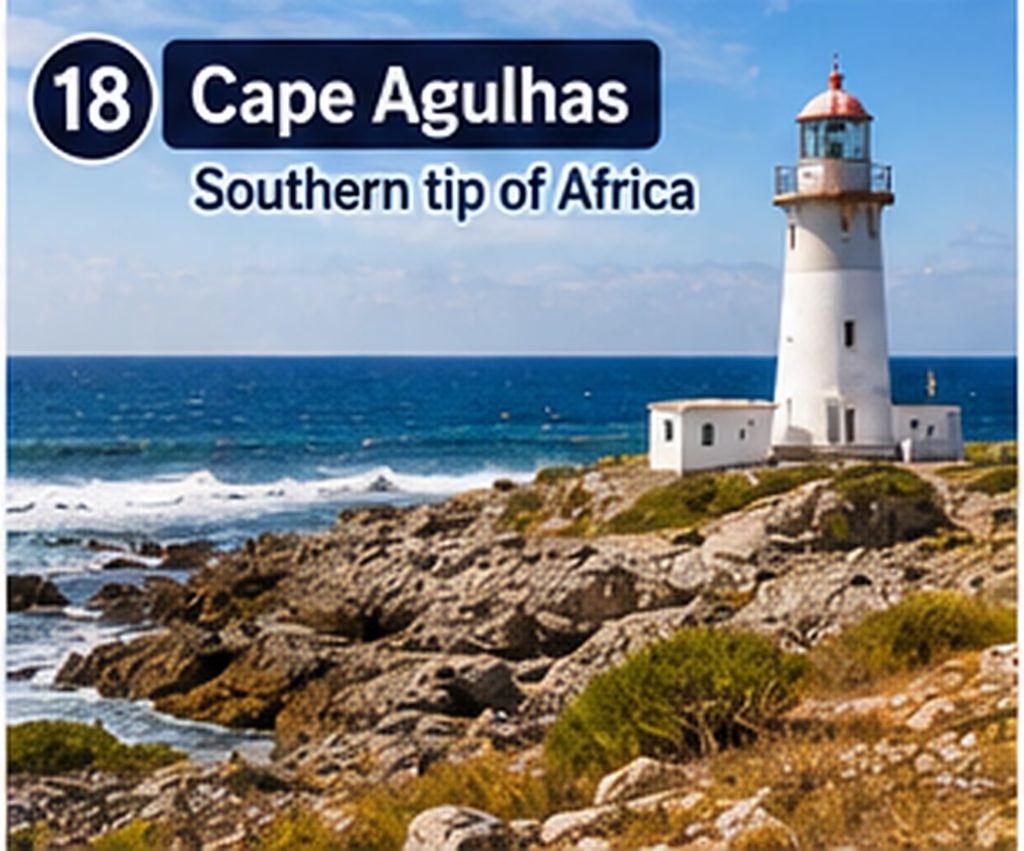
18. Cape Agulhas
Best for: geography and a quieter coastal detour.
Cape Agulhas marks the southernmost point of the African continent. It isn’t as convenient to visit as the Cape Peninsula, which is partly why many first-time itineraries leave it out. But if you’re traveling between Cape Town, Hermanus, and the Garden Route, it can become a worthwhile detour rather than a dedicated trip. The landscape feels windswept, open, and far removed from Cape Town’s urban coastline.
How long to stay: a day or one overnight stop.
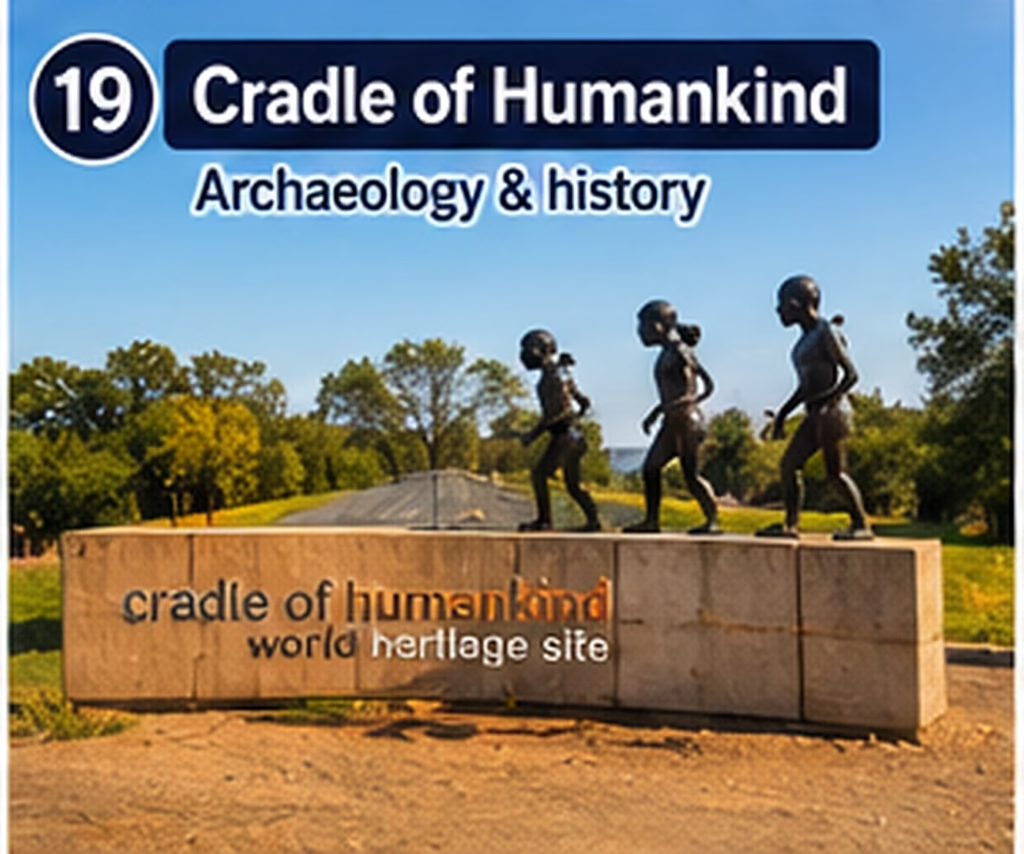
19. Cradle of Humankind
Best for: archaeology, human history, and a day trip from Johannesburg.
South Africa’s appeal isn’t limited to natural scenery. The UNESCO-listed Fossil Hominid Sites of South Africa preserve evidence that has played a major role in understanding human evolution, with important Australopithecine material from these sites dating back more than 3.5 million years.
This makes the Cradle of Humankind a particularly valuable addition for travelers spending time around Johannesburg, giving the itinerary intellectual and historical depth that generic beach-and-safari lists often miss.
How long to stay: one day.
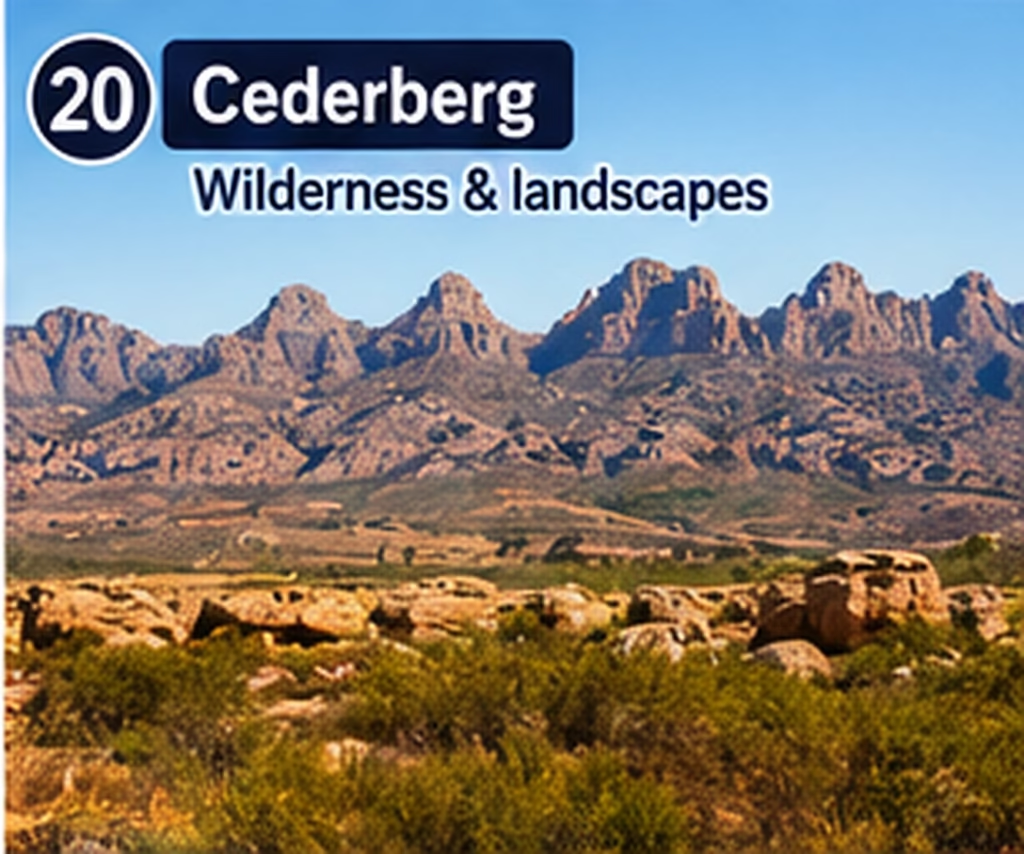
20. Cederberg
Best for: wilderness and unusual mountain landscapes.
The Cederberg is one of the strongest choices for travelers who have already covered South Africa’s obvious highlights. Its mountain scenery, rock formations, and relative remoteness create a completely different atmosphere from the nearby Cape Winelands or Atlantic coast. It’s better suited to a slower Western Cape road trip than a packed first-time itinerary.
How long to stay: 2–3 days.
Which Places Should First-Time Visitors Choose?
Trying to visit all 20 would make a first South Africa trip exhausting. Instead, choose destinations that work geographically together.
For 10 days, a strong introduction is Cape Town → Cape Winelands → Garden Route
If a safari is essential, consider the following: Cape Town → Cape Winelands → Kruger
For around 14 days, one of the strongest combinations is the following: Cape Town → Cape Winelands → Hermanus → Garden Route → Safari
South African Tourism itself promotes itineraries combining Cape Town, the Winelands, the Garden Route, and wildlife regions, which is a good indication of how naturally these areas work together.
Best Places in South Africa by Travel Style
- Best first destination: Cape Town
- Best safari: Kruger National Park
- Best road trip: Garden Route
- Best mountains: Drakensberg
- Best food and vineyard scenery: Cape Winelands
- Best for history: Johannesburg and the Cradle of Humankind
- Best warm-water city coast: Durban
- Best seasonal wildlife coast: Hermanus
- Best remote safari: Kgalagadi
- Best seasonal landscape: Namaqualand
- Best wildlife-and-coast combination: iSimangaliso and Hluhluwe-iMfolozi
- Best slow road trip: Karoo
When Is the Best Time to Visit South Africa?
There’s no single perfect month for the whole country, because South Africa covers very different climates and ecosystems. Cape Town is especially active during its warmer summer period, while safari regions have different seasonal patterns; Cape Town Tourism notes that the end-of-year summer period brings long days, beach activity, and peak-season demand.
For a broad first trip, spring and autumn often provide a useful balance, but the right timing should depend on your main priority. Choose your dates around the experience you care about most:
- Safari: Consider the drier months, when wildlife viewing conditions can be easier.
- Cape Town and coastal touring: warmer months suit beach-focused trips.
- Hermanus whales: roughly June–November, peaking September–October.
- Namaqualand flowers: usually August–September, depending on rainfall.
Is South Africa Safe for Tourists?
South Africa is a major international tourism destination, but travelers should plan realistically rather than treating safety concerns casually. Travel advisories can change, so check your own government’s latest guidance before departure.
Current U.S. State Department guidance places South Africa at Level 2, advising travelers to exercise increased caution and recommending measures such as staying aware of surroundings, being especially careful after dark, and following local guidance.
Inside national parks, always follow SANParks rules and staff instructions regarding wildlife.

Final Thoughts
The best South Africa itinerary isn’t the one that covers the most destinations. It’s the one that combines a few genuinely different experiences without spending half the trip changing hotels or sitting in transit.
For most first-time travelers, that means starting with Cape Town, adding either the Cape Winelands or the Garden Route, and making room for at least one safari experience. After that, South Africa becomes a country worth returning to.
The Drakensberg, KwaZulu-Natal, Kgalagadi, Namaqualand, the Wild Coast, and the Karoo each show a completely different side of the country, which is exactly why one trip rarely feels like enough.
Note on one fact I couldn’t verify at the “708 breeding pairs”-type level of precision: the whale-season dates varied noticeably across sources (some say July–November, others June–November, with peak dates ranging from September to October). I went with Hermanus Tourism’s own site as the primary authority and flagged the peak range explicitly rather than picking one number that might overstate certainty.