
FIFA World Cup 2026 Travel Advisory: Visa & Safety Guide
Quick answer: A World Cup ticket does not get you into the United States. Entry still depends entirely on your passport and visa status, and for fans from the Gulf and most of the Middle East, that means a U.S. visitor visa (B1/B2)—not the visa-free ESTA system available to a much smaller list of countries. Beyond entry, U.S. authorities currently rate general travel safety at their lowest concern tier, with most of the real risk during the tournament tied to crowd size rather than crime.
If you’re planning to follow the tournament from outside North America—including from Saudi Arabia, the UAE, or anywhere else in the Gulf—this guide covers what actually matters: getting in; staying safe across the host cities; and what’s genuinely different about 2026 compared with a normal U.S. trip.
The First Thing Every Fan Gets Wrong: A Ticket Isn’t a Visa
This is worth saying plainly because it trips up more fans than any safety concern on this list. Buying a match ticket gives you access to a seat in the stadium. It does nothing for your immigration status. The U.S. Embassy in the UAE addressed this directly ahead of the tournament. It confirmed that a World Cup ticket “does not guarantee a U.S. visa, nor does it affect the length of stay granted.” The same standard rules apply to every applicant, year-round.
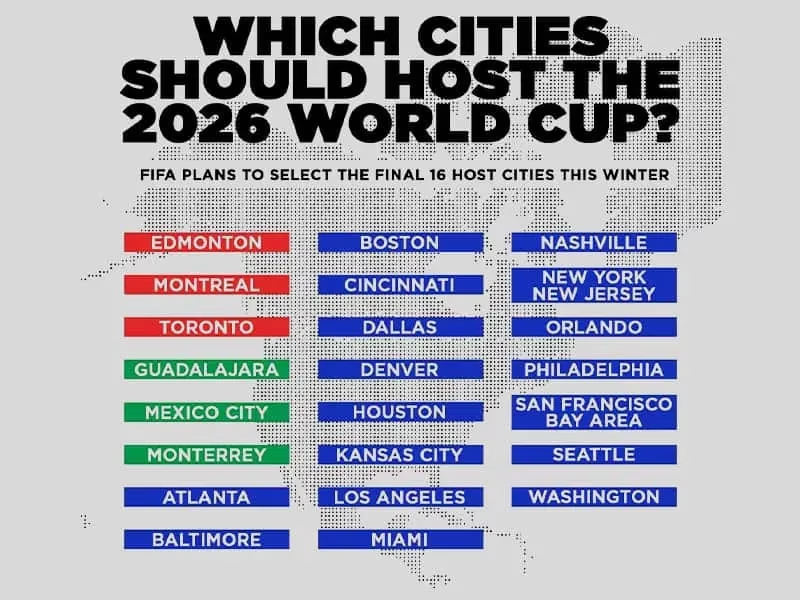
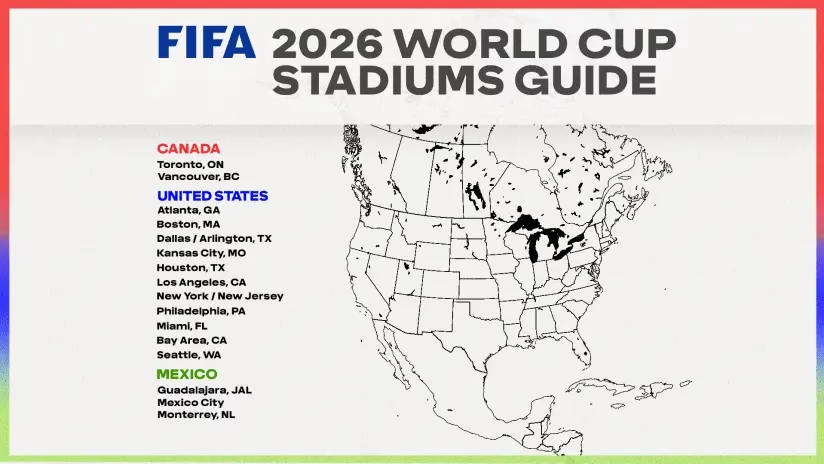
Three countries are co-hosting this tournament: the United States, Mexico, and Canada. It runs from June 11 to July 19, 2026, across 16 host cities. Each country has its own immigration system. If your trip involves matches in more than one host nation, you’re applying for entry to each one separately. A U.S. visa or ESTA carries no weight at the Mexican or Canadian border.
Entry Requirements: What Applies to You
Visa Waiver Countries (ESTA)
Roughly 40 countries take part in the Visa Waiver Program, including most of Western Europe and a handful of others. If your passport is from one of them, you can apply for ESTA online. It covers visa-free stays of up to 90 days. It is the fast track, but it isn’t available to Gulf nationals.
Visa-Required Countries, Including the Gulf
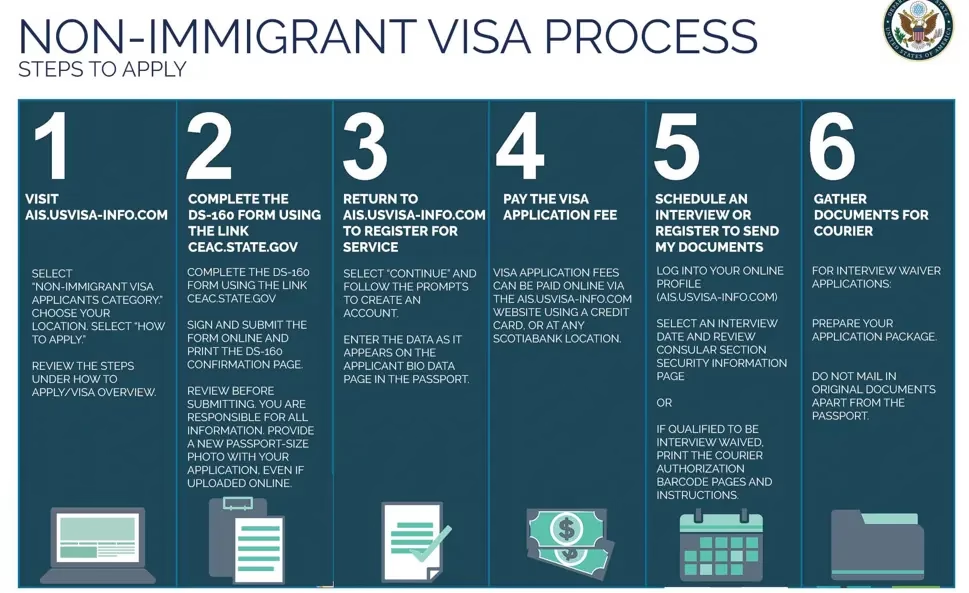
Saudi, Emirati, Qatari, Kuwaiti, Bahraini, and Omani passport holders are not eligible for the Visa Waiver Program, as are most other countries. If this applies to you, you’ll need a standard U.S. visitor visa. This is almost always the B1/B2 category. There is no World Cup-specific visa and no shortcut around the standard application process.
FIFA PASS: What It Actually Does
World Cup ticket holders do get one real advantage: access to the FIFA Priority Appointment Scheduling System (FIFA PASS). This
The U.S. State Department initiative gives ticket holders priority access to visa interview slots at their local embassy or consulate. It speeds up getting an appointment. It does not change the eligibility criteria, and it does not guarantee approval.
If you’ve already bought tickets and need a visa, opt in to FIFA PASS through FIFA.com and book your interview early. This is the single most useful thing you can do. Visa wait times in many countries already run into months, and they’re likely to lengthen further as the tournament approaches.
Other Entry Basics
A few other rules apply regardless of nationality:
- Your passport generally needs to be valid for six months beyond your intended stay, unless your country is specifically exempt.
- Border officers can search your electronic devices without giving a reason; declining can mean delays or device seizure. Putting your phone in airplane mode before you reach passport control is a simple precaution.
- Most ports of entry use facial recognition for identity verification as a routine part of processing.
- A January 2026 presidential proclamation updated entry restrictions for nationals of certain countries. If this could apply to you, check the current list well before booking. Authorities have revised it more than once in the lead-up to the tournament.
Travelling On to Canada or Mexico
If your itinerary also includes Canada: Toronto and Vancouver are hosting matches there. Canada’s entry system—eTA for many nationalities arriving by air, or a visa depending on your passport—is entirely separate from the U.S. system.
If it includes Mexico, matches are happening in Mexico City, Guadalajara, and Monterrey, again under Mexico’s own immigration rules. Plan each leg as its own trip.
Safety and Security in U.S. Host Cities
None of this is World Cup-specific. It’s the same general guidance that applies to visiting any major U.S. city—just worth knowing before you’re navigating an unfamiliar one during a month of huge crowds.
Petty Crime
Pickpocketing and bag theft cluster around tourist-heavy areas and transit hubs, just as in most global cities. Keep valuables out of sight in any parked vehicle and keep your passport secured rather than carried loosely through fan zones.
Violent Crime
Violent crime concentrates in specific neighborhoods rather than spreading evenly across a city, and it rarely targets visitors directly. A quick check of a neighborhood’s reputation before an evening out covers most of the practical risk.
Firearms
The U.S. has far higher rates of firearm ownership than the Gulf or most of Europe, and open carry is legal in many states. Mass-shooting incidents are statistically rare for any individual to encounter. Even so, it’s worth knowing the basics of how to
respond to an active-shooter situation rather than treating it as purely theoretical. U.S. Homeland Security publishes plain-language guidance on this.
Large-Crowd Risk
This is the genuinely tournament-specific concern. Stadiums and official fan zones expect huge numbers of people. That raises the odds of opportunistic theft, crowd-crush situations, and general confusion around entry and security screening. Build extra time into match-day plans, and agree on a meeting point with your group in case phones die or you get separated. Treat fan zones with the same caution you’d apply at any major stadium event back home.
Demonstrations
Protests can occur with little notice in any major city and may disrupt traffic or transit even when peaceful. Check local news before heading into a city center, and avoid the immediate area of any protest.
Card and ATM Fraud
Card and ATM fraud happens in the U.S., just like anywhere else. Use machines in well-lit, staffed locations, cover the keypad when entering a PIN, and check your statements while traveling.
General Terrorism Awareness
A general terrorism risk exists at any major international event, not just this one. Public venues and transit hubs are the targets typically cited. Staying alert in crowded spaces is the standard precaution, not anything specific to this tournament.
Health Considerations for 2026
A specific FIFA World Cup health notice is currently in effect, rated “Level 1: practice health precautions.” It’s a routine reminder that large-crowd settings raise the baseline risk of minor illness, not a warning about anything unusual. If your schedule allows, book a pre-trip visit to a travel health clinic six to eight weeks out. It confirms your routine vaccinations are current and flags anything specific to a long, multi-city itinerary.
Standard travel precautions apply. Be careful with food and water at lower-end vendors. Use insect repellent if any part of your trip is spent outdoors or in rural areas. Practice normal hygiene in packed indoor settings. Wash your hands often, and wear a mask in tightly crowded spaces if you’re feeling unwell or at higher risk.
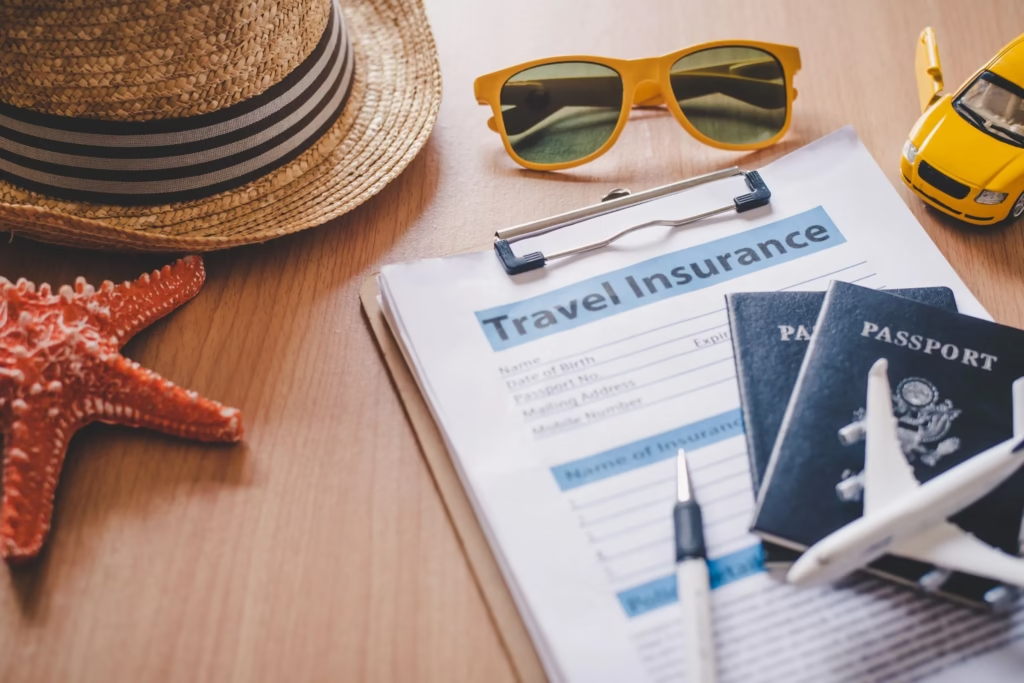
Healthcare in the U.S. is high quality but expensive by Gulf or European standards, and visitors have no national health system to fall back on. Emergency rooms will treat you regardless of insurance, then bill you in full afterward. Comprehensive travel insurance with medical evacuation coverage isn’t optional for this trip — treat it as part of your entry paperwork, not an add-on.
Laws, Culture, and Practical Differences Worth Knowing
U.S. law varies meaningfully by state, particularly around alcohol, drugs, and public behavior—it’s worth a quick check of the specific state you’re visiting rather than assuming national uniformity. Alcohol is widely available and socially normal in ways that may differ from home; if this is a consideration for your trip, plan accordingly rather than being caught off guard in social settings around match days.
Cannabis is legal at the state level in some places but remains federally illegal, and carrying any amount across state lines or through federal checkpoints (including airports) is a real legal risk regardless of where you’re coming from.
Carry a photo ID and a copy of your passport at all times—U.S. authorities can request proof of legal status at any point. If you’re traveling with family, note that children may be asked for their own documentation even when accompanied by a parent.
Money Matters
The U.S. dollar is the only currency in general use; foreign cash and checks aren’t widely accepted outside currency exchanges, so plan to use cards or withdraw USD locally. There’s no limit on how much money you can carry, but amounts over US$10,000 in cash or equivalent instruments must be declared at the border—undeclared amounts can be seized even if nothing else is wrong.
Climate and Natural Disaster Risk by Region
The tournament’s June–July window overlaps with several seasonal risks, depending on which host cities are on your itinerary:
- Hurricane season runs roughly from June through November along the Atlantic and Gulf coasts—relevant if your trip includes Miami or Houston.
- Extreme heat peaks in this exact window across the South and Southwest, including Dallas and Houston — heatstroke risk is genuine at outdoor matches and fan zones, not just a discomfort issue.
- Wildfires are a summer risk across the western U.S., relevant to a Bay Area or Los Angeles leg.
- Tornadoes are most common across the central and southern states during these months, often with limited warning.
- Earthquakes are an ongoing low-level risk in California, specifically.
None of this should change your plans, but checking the forecast for your specific host city a few days out — and knowing the venue’s evacuation guidance — takes five minutes and is worth doing.
Quick Guide to the U.S. Host Cities
The United States is hosting matches across eleven cities: Atlanta, the Boston area, the Dallas area, Houston, Kansas City, the Los Angeles area, Miami, the New York/New Jersey area, Philadelphia, the San Francisco Bay Area, and Seattle. If your itinerary spans several of these, treat each as its own mini trip for climate, local laws, and transit planning—a Houston-to-Seattle hop is a bigger shift in weather and culture than the shared host-country status might suggest.
How the Three Host Countries Compare
| United States | Mexico | Canada | |
|---|---|---|---|
| Entry for most non-VWP nationalities | B1/B2 visitor visa required | Visa or visa-free, depending on passport; check individually | eTA or visa, depending on passport |
| General safety rating | Lowest concern tier | Elevated caution; specific regions flagged | Lowest concern tier |
| Host cities | 11 | 3 (Mexico City, Guadalajara, Monterrey) | 2 (Toronto, Vancouver) |
| World Cup-specific visa fast track | FIFA PASS (priority appointment scheduling, not a separate visa) | None confirmed | None confirmed |
| Currency | USD | MXN | CAD |
FAQS
Yes. Saudi Arabia, the UAE, Qatar, Kuwait, Bahrain, and Oman are not part of the U.S. Visa Waiver Program, so a standard B1/B2 visitor visa is required regardless of whether you hold match tickets.
No. It only gives ticket holders priority access to a visa interview appointment. You still need to qualify under standard B1/B2 requirements, and approval isn’t guaranteed.
As early as possible. Interview wait times in many countries already run into several months, and the State Department itself has flagged that demand will likely increase further as the tournament approaches.
By the numbers, yes — general crime risk for tourists is low, and the country’s own risk rating from allied governments sits at the lowest tier. The realistic risks are crowd-related (theft, crowd-crush, heat) rather than anything specific to international visitors.
No. Each country has its own immigration system, and a U.S. visa or ESTA has no validity at the Mexican or Canadian border. Apply for each leg of a multi-country itinerary separately.
Assuming a match ticket helps with the visa process in any way. It doesn’t — treat the visa application as a completely separate task from buying tickets, and start it months ahead.
Practical Notes for Gulf and Muslim Travellers
A few things worth planning around that aren’t covered by the official safety or entry guidance but come up often for travelers from the Gulf region, specifically:
Halal food is genuinely easy to find in all 11 U.S. host cities—each has established Muslim communities and a reasonable density of halal restaurants. However, availability thins out the further you get from a city center or stadium district. It’s worth searching for options near your specific accommodation rather than assuming a fan zone will have halal vendors on-site, since stadium concessions skew toward standard American fare.
Prayer spaces near major stadiums aren’t always obvious from a venue’s official signage. Mosques exist in or near all eleven host metro areas, and several have a track record of accommodating large temporary prayer gatherings around major sporting events—it’s worth checking local mosque social media or community groups closer to your travel dates, since some arrange shuttle service or extended hours specifically for tournament crowds.
Family travel during a five-week tournament window is its own planning exercise. If you’re traveling with children, factor in that match-day crowds and security lines can mean long stretches of standing and waiting—bring entertainment, snacks, and a clear meeting-point plan in case of separation, the same precaution worth taking at any large event back home.
Dress and cultural norms in U.S. cities are generally relaxed, and there’s no legal dress requirement. Still, it’s worth knowing that a modest dress won’t draw particular attention in any of the host cities—these are large, diverse metro areas used to international visitors, and most fans will see a far wider range of dress and behavior at a World Cup than at an ordinary U.S. destination.
Alcohol is sold openly at most U.S. stadiums and fan zones, more visibly than in much of the Gulf. IT isn’t something you need to navigate on your own. Still, it’s worth setting expectations if you’re traveling with family or in a group that prefers to avoid it—most venues have designated family sections away from the busiest concession areas.
Choosing Travel Insurance for This Trip
Given the cost of U.S. healthcare and the realistic crowd-related risks above, here are a few things that are worth comparing across insurance providers before you book:
- Medical coverage limits in USD terms — a policy that looks generous when priced in your home currency can look thin once converted to actual U.S. hospital billing.
- Evacuation and repatriation coverage, particularly if your itinerary includes more than one host country.
- Trip-interruption coverage, in case a specific match date is affected by travel disruption beyond your control.
- Pre-existing condition clauses, which vary significantly between insurers and are worth reading in full.
[Insert your affiliate comparison link or widget here]
Before You Travel: A Quick Checklist
- Confirm whether you need a visa or can use ESTA—don’t assume
- If you need a visa, opt in to FIFA PASS and book your interview immediately
- Check your passport’s validity against the six-month rule
- Buy travel insurance with medical evacuation coverage before anything else
- Confirm entry requirements separately for any Canadian or Mexican leg
- Check the forecast and local laws for each specific host city on your route
- Save your country’s nearest embassy or consulate contact details before you travel
The Bottom Line
The headline safety picture for the U.S. hasn’t changed for 2026—it remains a low-risk destination by most measures. What’s genuinely different this year is the entry process: Visa wait times are longer, FIFA PASS is a real tool worth using if you need one, and the sheer scale of an 11-city, 16-venue tournament means crowd management matters more than crime statistics. Sort the visa first, build in time for it, and the rest of the trip is mostly standard travel planning with a football schedule attached.
This guide reflects U.S. entry and safety information current as of June 2026. Visa policies and entry restrictions have changed multiple times in the lead-up to this tournament—always confirm current requirements with your nearest U.S. embassy or consulate before booking travel.