
Where to Stay in Marrakech: Best Areas for First-Time Visitors
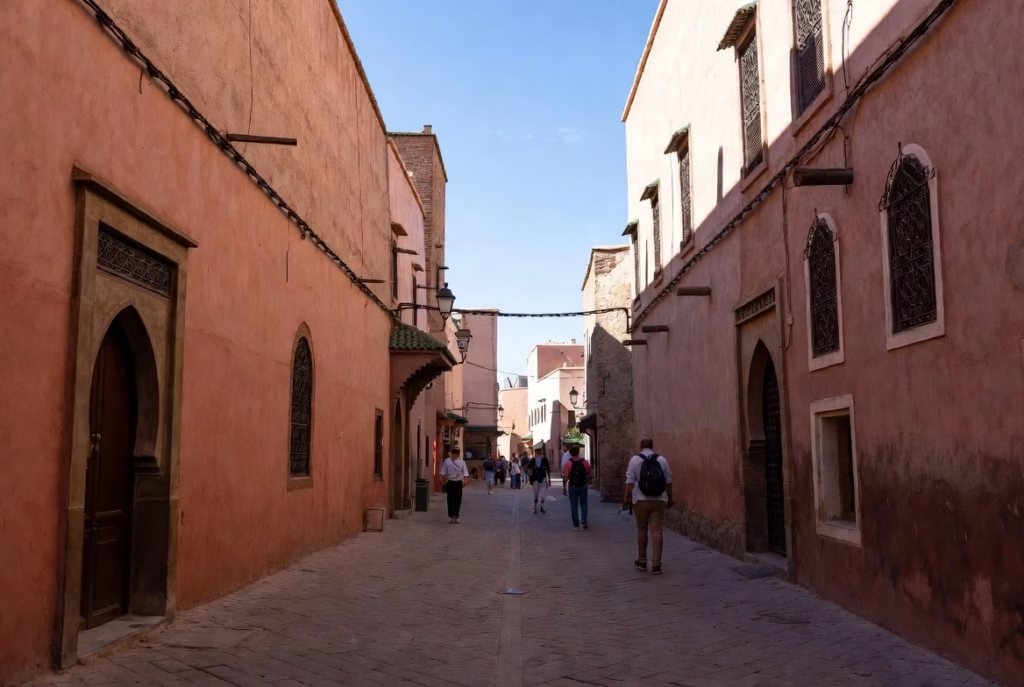
Marrakech is one of the most visited cities in Africa, and millions of travelers—including solo women, families, and elderly visitors—explore it every year without incident. The city is not dangerous, but it does require a different kind of awareness than a typical European holiday destination.
This guide does not aim to alarm you. It aims to prepare you with specific, actionable knowledge about the situations that genuinely catch first-time visitors off guard: commission scams, navigation pressure, dress expectations, night transport, and medina confidence. Once you read this, you will spend your trip enjoying Marrakech instead of feeling anxious about it.
The honest summary: Marrakech is safe for tourists. Petty scams and pushy selling tactics exist and are the main things to prepare for. Violent crime against tourists is rare. Your biggest risks are overpaying, getting lost, and being led into shops you did not plan to visit. |
Is Marrakech Safe? The Real Picture
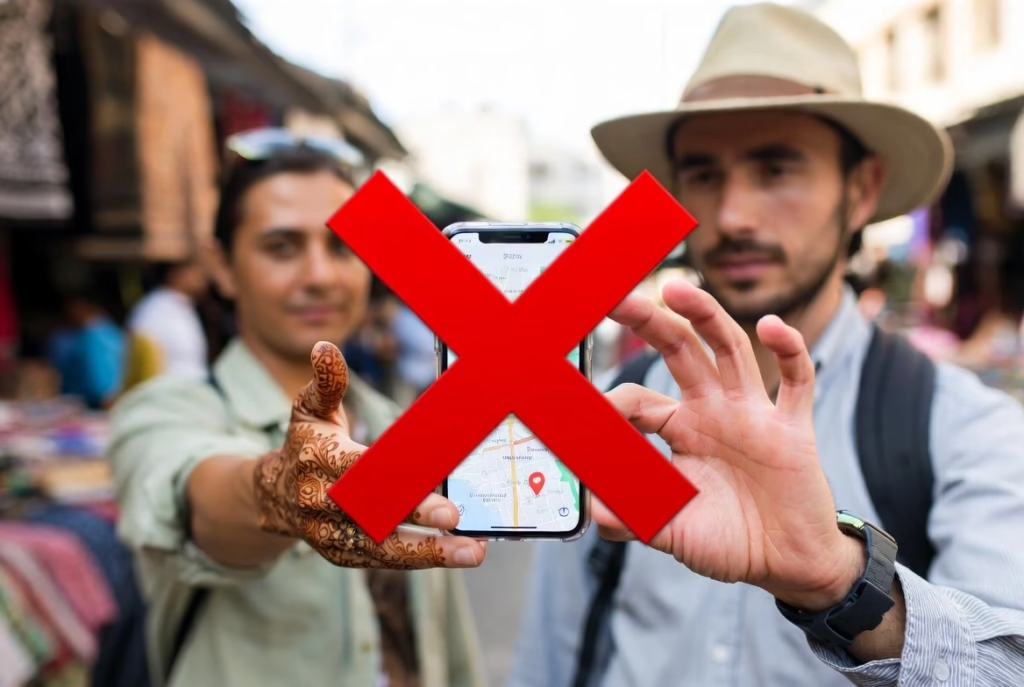
Morocco is one of the more stable and tourist-friendly countries in North Africa. Marrakech specifically has a large, established tourism infrastructure and a tourist police force (Brigade Touristique) that actively patrols the medina and main attractions.
Foreign Office travel advisories for the UK, US, and EU consistently rate Morocco as a standard caution destination—the same category as many popular European cities. Serious violent crime against tourists is rare and typically isolated to specific contexts.
What you actually need to watch out for
- Fake guides who offer free help and then demand payment or commissions from shops they lead you to
- Overpriced taxi rides when you do not confirm the meter or agree on a price upfront
- Misdirection scams around the entrances to the main souks and Jemaa el-Fna square
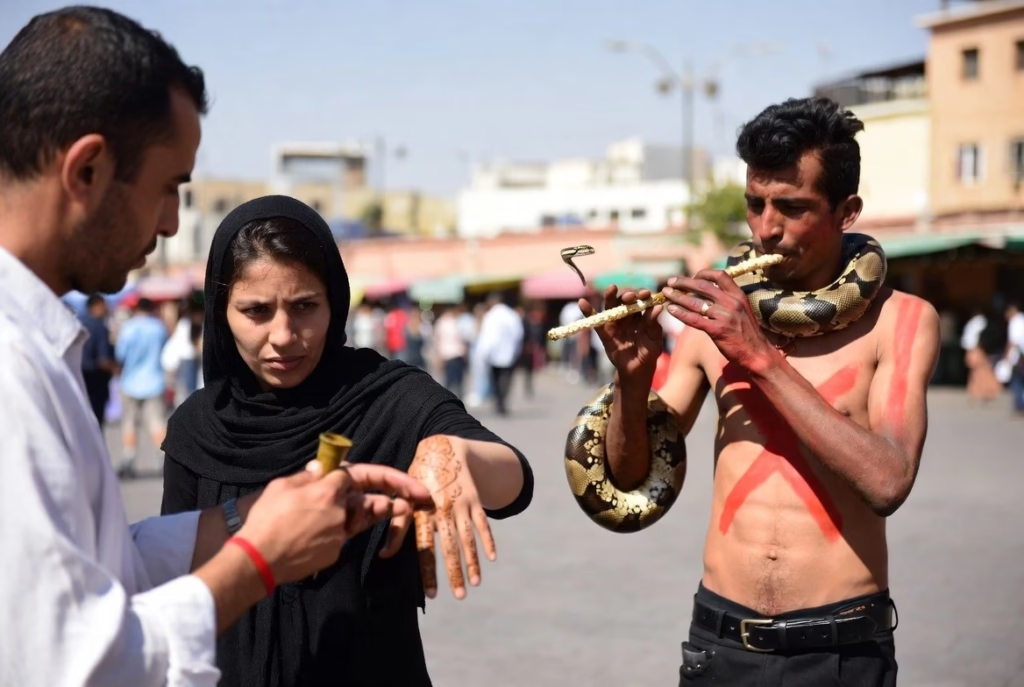
- Henna artists who approach women and apply henna without explicit consent and then demand high payment
- Snake charmers and musicians who place animals near you and then charge for the ‘experience.’
Common Scams in Marrakech and How to Avoid Them
Most ‘scams’ in Marrakech are less about crime and more about pressure selling and misdirection. Knowing the patterns removes their power completely.
The fake guide scam
Someone approaches you near the entrance to the souks or a major sight and offers to help you find your destination. They are friendly and speak good English. They guide you to your destination by a route that passes through their friend’s shop or their cousin’s riad. At the end, they ask for money or expect you to buy something.
Counter: Politely decline all unsolicited guide offers. Say, ‘No thank you, I know where I am going,’ and keep walking. Do not make eye contact or engage in conversation.
The 'you are going the wrong way' scam
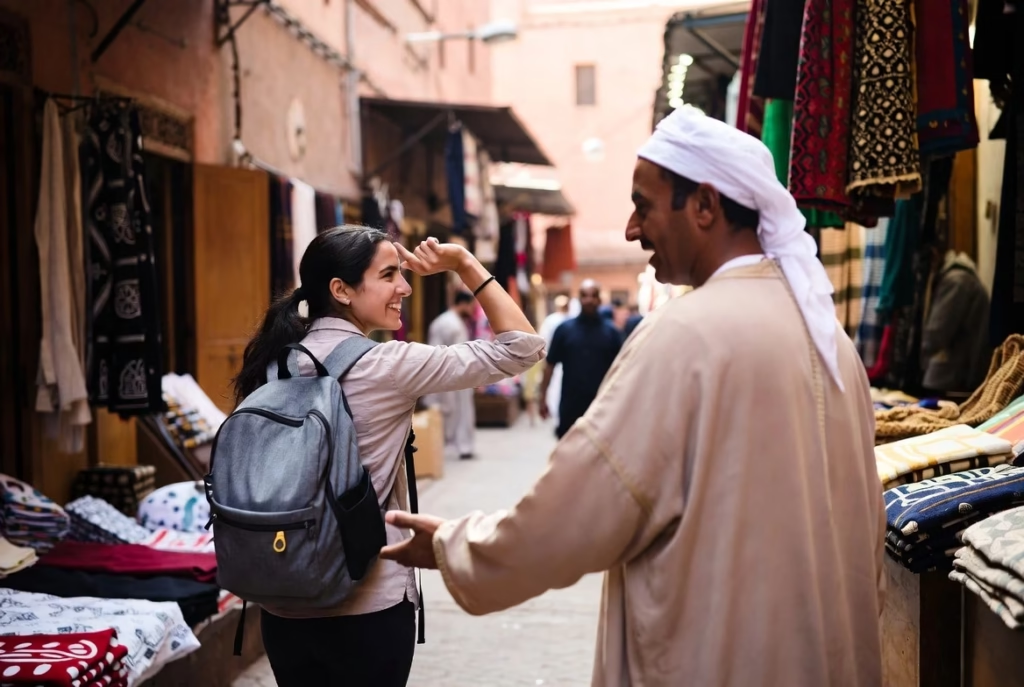
You are heading somewhere specific. A local tells you the road is closed, or the sight is that way, or the market is just around the corner in the opposite direction. None of this is true.
Counter: Trust your phone map. Verify any claim about closures or directions using your own navigation. Smile, thank them, and continue in your original direction.
The henna hand scam
A woman approaches female visitors near Jemaa el-Fna and grabs their hand, applying henna before they can react. The design takes seconds. Then she demands 200–500 MAD for it. The henna is often of low quality and may stain the skin badly.
Counter: If you want a henna tattoo, go to an established henna stall and agree on the price, design, and payment before the artist starts. Never let anyone touch your hand without consent.
The snake charmer and monkey photo scam
Performers in Jemaa el-Fna place snakes around your shoulders or position monkeys near you and then demand payment for the photo, whether you asked for it or not.
Counter: Do not approach these performers unless you plan to pay. Keep a clear distance when photographing. If something is placed on you without consent, remove it calmly, pay nothing, and walk away firmly.
Full scam reference table
Scam | How It Works | How to Avoid It |
Fake guide | Unsolicited help leads to commission shops | Decline all offers; use your own map |
Misdirection | False road closure or wrong direction | Trust GPS; ignore unsolicited route advice |
Henna grab | Applies henna before you agree, demands payment | Only use established stalls; agree on the price first |
Photo charge | Performers place animals near you and charge | Keep distance; never let performers approach without consent |
Gift scam | Hands you a bracelet or item, then demands payment | Do not accept items from strangers on the street |
Overpriced taxi | No meter, inflated flat fare | Insist on a meter for petit taxis; agree upfront for grand taxis |
Mint tea invitation | A friendly invitation to tea leads to high-pressure rug selling | Accept tea only if you genuinely want to browse; feel free to leave without buying |
Safe Transport at Night in Marrakech
Marrakech is reasonably safe at night, but your transport choices matter more after dark.
What to use after dark
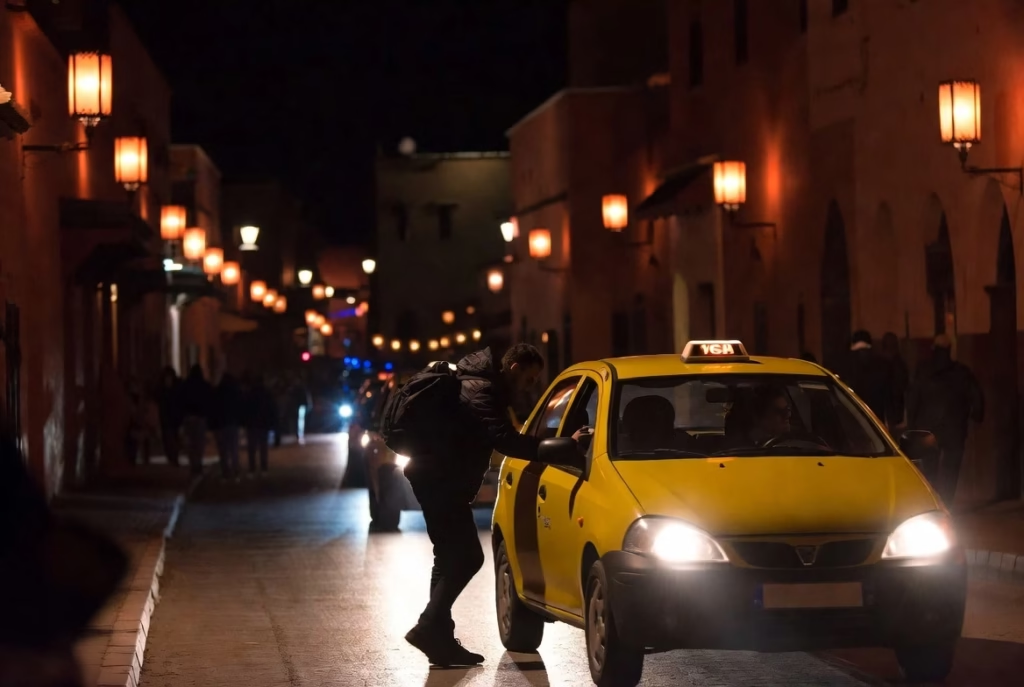
- Petit taxis are your best option for night travel. They are metered (insist on the meter), officially regulated, and plentiful around Jemaa el-Fna and main hotel areas until midnight and beyond.
- Ask your riad or restaurant to call a trusted taxi for you. Most riads maintain a list of reliable drivers.
- InDriver and Yango apps work at night and give you a record of your driver’s and vehicle’s details.
What to avoid at night
- Walking alone through unfamiliar medina lanes very late at night. The medina is generally safe but disorienting in the dark.
- Accepting rides from unmarked vehicles or individuals who approach you offering transport.
- Relying on buses after 10 pm. The ALSA network winds down, and reliability drops significantly.
Solo women traveling at night: Marrakech is manageable for solo female travelers at night, but taxi travel is strongly recommended over walking in the medina after around 10 pm. Confidence and purpose in your walking posture reduce unwanted attention significantly.
Dress Expectations in Marrakech
Morocco is a Muslim country with a moderate and generally tolerant approach to tourism. Marrakech in particular sees millions of international visitors, and the local population is accustomed to a wide range of dress styles.
That said, dressing respectfully makes your experience genuinely better. You attract less unwanted attention, receive warmer responses from locals, and feel more comfortable in mosques, markets, and local cafes.
Practical dress guide for visitors
Location
Women
Men
Medina souks and streets | Cover shoulders and knees; loose-fitting works well | Shorts acceptable; avoid vests/singlets |
Jemaa el-Fna square | A light cover-up is appreciated but not strictly required | Casual is fine |
Mosques (exterior only for non-Muslims) | Cover hair, shoulders, and knees | Remove shoes if entering a courtyard |
Hammams | Swimwear or modest underwear | Swimwear or shorts |
Restaurants (upscale) | Smart casual | Smart casual |
Swimming pool at a riad | Normal swimwear | Normal swimwear |
Do not feel you need to cover your face or wear traditional dress. The expectation is simply that you avoid overtly revealing clothing in public spaces—visible underwear, very short shorts, or completely bare shoulders in market areas. A light linen shirt or a cotton scarf you can drape over your shoulders solves most situations easily.
Solo Travel Safety in Marrakech
Marrakech is a popular solo destination, including for solo women. The medina is busy and public during daylight hours, which creates natural safety in numbers.
Tips specific to solo travellers
- Walk with purpose and confidence. Looking uncertain or consulting your phone while standing still in busy areas attracts more attention.
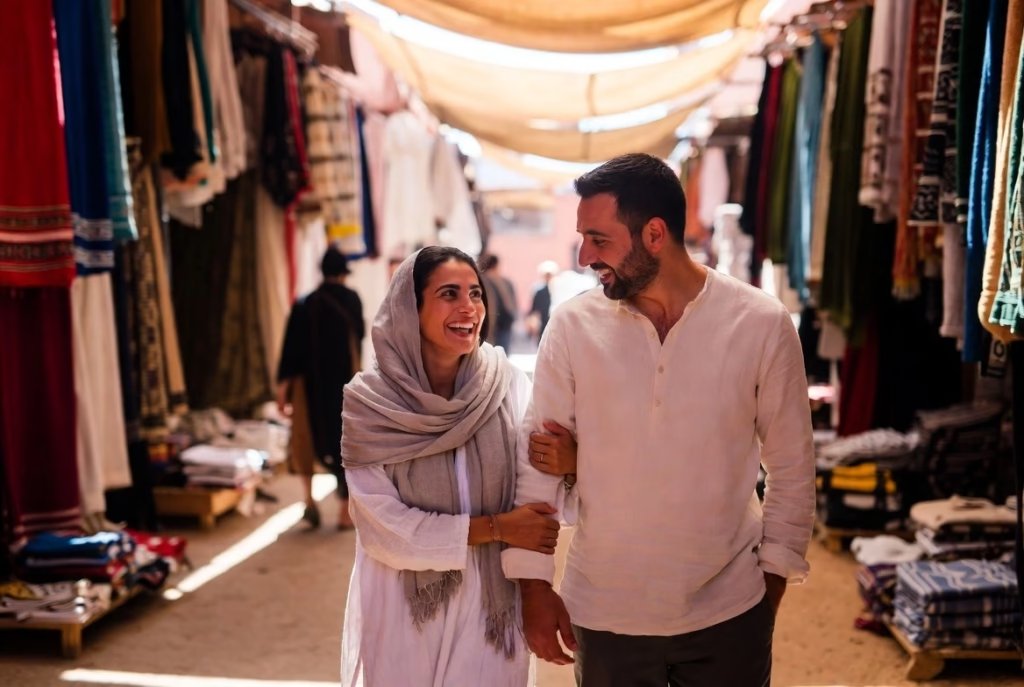
- Stay in riads rather than budget hostels in isolated streets. The Medina’s social riad culture means staff are usually available and helpful.
- Tell your ride where you are going for the day, especially for early morning or late-night activities.
- Join a cooking class, food tour, or guided hammam visit early in your trip. You meet other travelers and quickly gain local knowledge.
- Save the number for your riad, a trusted taxi driver, and the tourist police (Brigade Touristique) in your phone before you go out.
The reality for solo women
Solo women in Marrakech experience more unsolicited comments and attention than in many Western destinations. This is not specific to Marrakech—it reflects broader regional norms. The practical response is to avoid engaging with comments, keep moving, and not feel the need to apologize or respond. Most comments are not threatening and dissolve immediately when you do not engage.
The medina is safest during daylight hours. Evening dining and café culture is genuinely enjoyable for solo women, particularly around Gueliz (the new town), where the atmosphere is more cosmopolitan.
Navigating the Medina with Confidence
Getting lost in the medina is almost inevitable on your first day. The streets are intentionally winding—a historical defense mechanism—and even locals sometimes take the long route. The difference between an anxious experience and a joyful one is preparation.
Before you enter the medina
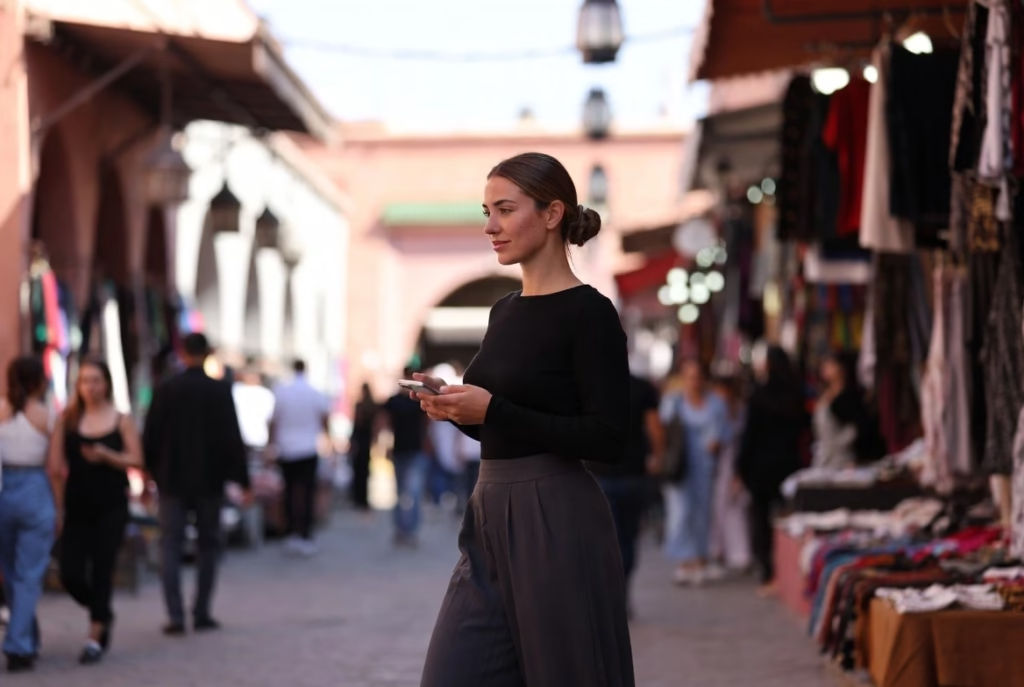
- Download Google Maps offline for Marrakech. It works surprisingly well inside the medina.
- Save your riad’s address AND phone number. Better yet, save a photo of the entrance and the street name.
- Note two or three major landmarks near your riad—a mosque, a specific souk alley name, or a fountain. These help locals give you accurate directions.
Inside the medina
- When lost, ask a shopkeeper rather than someone on the street. Shopkeepers are stationary and generally give straightforward directions.
- Know that ‘yes, I know it’ does not always mean accurate directions. Follow up with ‘how far?’ and ‘which direction?’ to test confidence.
- The main souk spine (Rue Semarine) runs north from Jemaa el-Fna. Once you find it, you can reorient most Medina journeys.
- If completely lost, get to a main road (look for cars or motorbikes), then take a petit taxi to your riad.
Safety Quick Reference for Marrakech
Situation | What to Do |
Someone offers unsolicited help | Thank them and decline politely; keep moving |
Henna artist grabs your hand | Remove hand firmly; pay nothing, and walk away |
You feel lost in the medina at night | Find a lit café or shop; call your riad, and take a taxi |
The taxi driver refuses to use the meter. | Get out; take the next taxi |
Someone claims your destination is closed | Ignore; verify with your own map |
You need emergency help | Tourist police (Brigade Touristique): active in the medina and near the main sights |
You are being followed persistently | Enter any open shop or café; explain the situation to the owner |
Solo walk, feeling uncomfortable | Raise your phone as if making a call; walk toward busy, lit areas |
Final Thoughts on Marrakech Safety
Marrakech rewards prepared visitors with extraordinary experiences. The city’s safety record for tourists is solid, the risks are specific and predictable, and none of them require you to stay indoors or limit your exploration.
Read this guide once before you travel. Know the scams by name. Dress simply and respectfully. Keep your riad’s number in your phone. After that, walk out into the medina and let yourself be surprised. Marrakech is one of the most extraordinary cities in the world, and the vast majority of first-time visitors leave wanting to come back.
FAQs
Best area: The Medina (specifically near Riad Laarouss or Bab Doukkala) or Gueliz (the new city).
Why: The Medina offers the authentic, immersive experience (souks, historic sites, palaces). Staying near the northern or western edges of the Medina gives easier access for taxis. Gueliz is modern, quieter, and has better infrastructure (wide sidewalks, ATMs, and cafes)—ideal if you want a break from the hustle.
It depends on your style:
| Neighbourhood | Vibe | Best for |
|---|---|---|
| Medina (Centre) | Chaotic, historic, magical | Adventurous travelers, couples, culture lovers |
| Gueliz | Modern, chic, calm | First-timers nervous about noise, digital nomads, families |
| Hivernage | Upscale, secure, luxury | Nightlife seekers, luxury travelers (close to casinos & clubs) |
| Kasbah | Quiet, authentic, near palaces | Those wanting a less-touristy medina experience near the Saadian Tombs |
Stick to the “Imperial Cities” circuit: Marrakech → Fes → Meknes → Rabat.
For first-timers: Start with Marrakech (most accessible, great infrastructure) and add Fes (for a more traditional, less commercial medina). If you want desert & mountains, add a 2-day trip to the Atlas Mountains or Zagora Desert from Marrakech.
Avoid staying in remote areas (e.g., Western Sahara or small mountain villages) without a guide on your first trip.
The very center of the Medina at night (e.g., the area immediately around Jemaa el-Fnaa Square after 11 PM—not dangerous but very intense with aggressive touts and pickpockets).
Isolated alleys after dark – always stick to main, well-lit passages.
The train station area (Gare ONCF) after midnight – poorly lit and few people around.
Outlying slum districts (e.g., Sidi Youssef Ben Ali, Douar El Koudia) – no tourist interest and higher crime risk
Rule 490 is a controversial article in the Moroccan penal code that criminalizes “debauchery” or “incitement to debauchery.” In practice, it is often used against:
Same-sex sexual acts (which are illegal under Article 489 as well).
Adultery or sex outside marriage (can be prosecuted if a spouse or relative files a complaint).
Public acts deemed “immoral” (e.g., aggressive sexual behavior in public).
For tourists: You are highly unlikely to be prosecuted for private consensual acts between unmarried couples, but public displays of sex or aggressive propositions could theoretically trigger it. Most enforcement targets Moroccan nationals, not tourists.
Yes, but with common sense.
In Gueliz / New City / Hotels / Pools: Absolutely fine – shorts are normal.
In the Medina / Souks / Rural areas: Knee-length or longer shorts are okay, but very short shorts (e.g., denim booty shorts) will attract unwanted attention (stares, comments, occasional catcalls). Most local women wear leggings, pants, or long skirts.
Practical tip: Bring both—wear longer shorts or a light cover-up (e.g., a long scarf tied as a sarong) when deep in the souks. Save the short shorts for your riad’s rooftop pool or the beach.