
12 Budget Travel Destinations in the USA That Feel Expensive (Under $1000)
Here is something nobody tells you when you first start planning a trip across America.
The most unforgettable travel experiences are rarely the ones with the highest price tags.
Think about it. The moment you pulled over on an empty highway because the sunset looked completely unreal. The tiny roadside diner where the food was surprisingly perfect. The hiking trail where you reached the top and saw an entire valley stretching out beneath you in total silence.
Those are the moments people describe for years. And most of them cost almost nothing.
Finding the best budget travel destinations in the USA is not about choosing boring places or settling for less. It is about knowing where to look. Across America, there are breathtaking national parks, charming forgotten towns, wild coastal highways, and culturally rich cities where you can experience something genuinely extraordinary without spending thousands of dollars.
A great trip does not require a luxury hotel or an expensive itinerary. Sometimes the most beautiful adventures are the ones where you slow down, stay curious, and spend your money on the moments that actually matter.
Here are 12 affordable USA destinations that feel far more expensive than they really are.
Recent Posts
1. The Great Smoky Mountains, Tennessee and North Carolina: Free and Genuinely Unforgettable
Here is a fact that stops most people mid-sentence. The Great Smoky Mountains is the most visited national park in the entire United States, and it charges no entrance fee. None at all.
That means no expensive tickets standing between you and one of the most achingly beautiful landscapes this country holds.
The mountains sit across the Tennessee and North Carolina border, and they have a quality that feels ancient and unhurried. Morning fog pours through the valleys before the sun burns it off. Waterfalls appear around bends in trails that nobody warned you about. The forest is so dense and green in summer that the light filtering through it turns the air itself a soft gold.
Cades Cove is worth an entire morning. It is a historic valley where old homesteads and grist mills still stand among fields where white-tailed deer graze without paying much attention to the people watching them. Drive the 11-mile loop slowly and you will understand why this is one of the most photographed places in any American national park.
Nearby Gatlinburg is cheerfully touristy in a way that is more endearing than exhausting. Asheville on the North Carolina side is genuinely one of the most interesting small cities in the country, with a live music scene, an independent restaurant culture, and a creative energy that makes it worth at least a full day of your time.
Campgrounds throughout the park keep accommodation costs minimal. Cabin rentals in the surrounding mountains are often surprisingly affordable outside peak summer weeks and give you the sound of the forest at night, which is worth more than any hotel room view.
Average daily cost: $40 to $80 per person, including accommodation, food, and activities. Less if you camp.
Practical tip: Visit in October for fall foliage that rivals New England at a fraction of the crowd and cost. The colors in the Smokies during peak autumn are genuinely extraordinary.
2. Sedona, Arizona: A Luxury-Looking Escape That Does Not Cost Like One
Sedona is the kind of place that makes people slow their cars down involuntarily.
The red sandstone formations surrounding the town are enormous and somehow more dramatic in person than in photographs, which is saying something because the photographs are already almost unbelievable.
They glow orange at sunrise. They turn deep red through the afternoon. At sunset they seem lit from inside, burning against a darkening blue sky in a way that does not look entirely real.
Many travelers assume Sedona must be expensive because of its famous spa resorts and its reputation as a high-end destination. And it can be, if you let it. But the best experiences here cost nothing or close to nothing, and that is the important thing to understand before you book.
Cathedral Rock is a short hike with a view at the top that belongs in the conversation of the finest panoramic views in the American Southwest. Bell Rock is accessible even for less experienced hikers and delivers its rewards immediately, within the first ten minutes on the trail.
Devil’s Bridge, a natural sandstone arch spanning an open drop, requires a bit more effort but gives you a photograph and a feeling you will not forget easily.
Staying slightly outside the immediate town center makes a meaningful difference to your budget. Oak Creek and the Village of Oak Creek are only minutes from everything but charge noticeably less for accommodation.
A vacation rental with a kitchen, some grocery shopping, and free trail access turns Sedona into an extraordinary trip well within an affordable budget.
Average daily cost: $50 to $90 per person depending on accommodation choices.
Practical tip: Stay outside the main town area. Nearby communities offer better prices while keeping you minutes away from the best trails and scenery.
3. The Oregon Coast: One of America’s Greatest Budget Road Trips
There is a particular kind of freedom that comes from driving a highway where the ocean appears and disappears on your left and cliffs rise on your right and you have no strong reason to be anywhere specific at any particular time.
Highway 101 down the Oregon Coast delivers that feeling for roughly 363 miles.
This is one of the finest cheap road trip destinations in the United States because the most beautiful parts of the experience are completely free.
You can pull over wherever the view demands it, walk down to beaches that stretch for miles with almost nobody on them, and sit on driftwood watching waves dismantle themselves against sea stacks that rise from the water like ancient monuments.
Cannon Beach is the famous highlight, anchored by Haystack Rock, a 235-foot basalt monolith rising straight from the surf. It is genuinely worth seeing and genuinely as dramatic as its reputation suggests.
But the stretch of coast between Lincoln City and Florence is where the highway becomes wild and the landscape stops performing for tourists and simply becomes itself.
The Pacific here is cold and dramatic. It does not invite swimming. It invites you to stand at its edge and feel small in a way that is, unexpectedly, deeply satisfying.
State park campgrounds along the route are affordable and well maintained. Newport and Astoria both have excellent fresh seafood at prices that seem generously low compared to coastal eating elsewhere. A cup of chowder and a plate of Dungeness crab at a local fish counter in Newport is one of the best and most affordable meals available anywhere in this country.
Average daily cost: $35 to $70 per person, less with camping.
Practical tip: Do not avoid the cloudy days. The mist and dramatic grey skies are part of what makes this coastline so distinct. Pack layers and embrace the atmosphere. The moody beauty is entirely the point.
Popular post


4. Shenandoah Valley, Virginia: The Quietly Beautiful Destination Most People Drive Past
Some places become famous because everyone talks about them. Others stay special because they are still quietly waiting to be discovered.
The Shenandoah Valley belongs firmly in the second category, and that is part of what makes it so rewarding to visit.
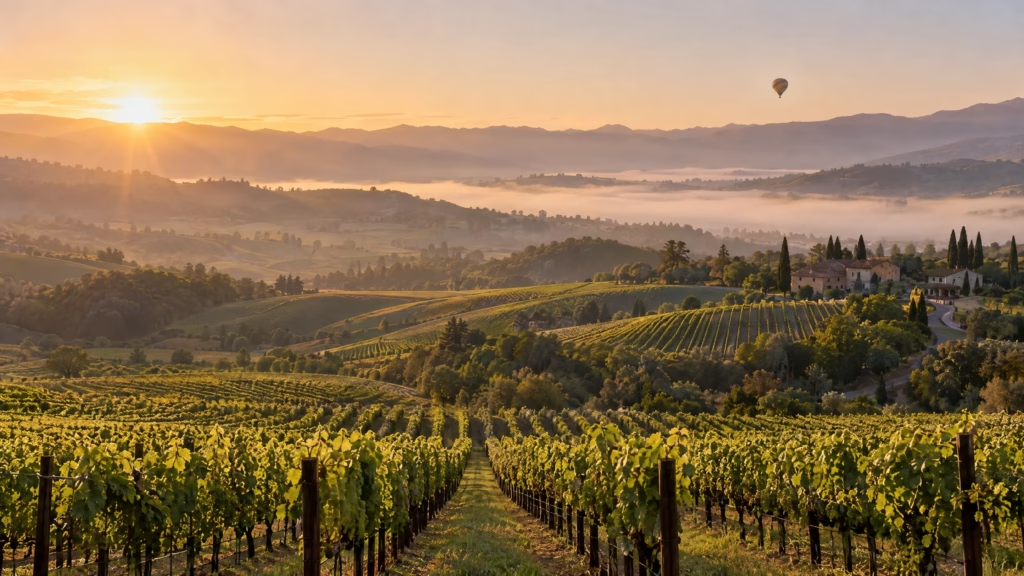
It sits between the Blue Ridge Mountains and the Allegheny Mountains in northwestern Virginia, and it offers everything a traveler could want from an American getaway: scenic mountain drives, hiking trails through ancient forest, charming historic towns, and long views across farmland that has been worked for three centuries.
Skyline Drive is the centerpiece. The 105-mile road runs along the crest of the Blue Ridge through Shenandoah National Park, and it serves up overlooks, trailheads, and views across the valley at a pace entirely set by you. The entrance fee is modest and covers unlimited access for seven days.
The towns throughout the valley add genuine character. Staunton has a walkable historic downtown with independent restaurants and a strong arts presence built around the American Shakespeare Center.
Luray is home to the Luray Caverns, where underground limestone formations called stalactites and stalagmites fill chambers that have been growing in the dark for millions of years. Walking through them is one of those experiences that sounds like a tourist trap and turns out to be completely worth it.
Accommodation here is meaningfully less expensive than comparable mountain destinations that have been more heavily marketed.
Bed and breakfasts in Victorian homes, small inns in historic town centers, and campgrounds throughout the national park all offer comfortable options at prices that leave money for the things that matter more.
Average daily cost: $50 to $85 per person.
Practical tip: Late September through mid-October brings cooler temperatures, fall colors beginning across the mountain ridges, and harvest season at local farms and wineries. It is the best possible time to experience this valley.
5. New Orleans, Louisiana: A City That Gives You More Than You Pay For
New Orleans does not operate by ordinary rules, and that includes the rule that great cultural experiences have to be expensive.
This city has a personality unlike anywhere else in the United States. The music, the food, the architecture, the traditions, and the particular way the heat sits on the streets in the evening make everyone move a little slower and talk a little longer. It creates an atmosphere that is completely its own.
The French Quarter is a living 19th-century neighborhood, not a reconstruction of one. The cast iron balconies are original. The narrow streets are original. The second lines, those impromptu brass band processions that move through the neighborhoods on Sunday afternoons with a crowd dancing behind them, are a tradition that has been continuous here for generations and costs you nothing to join.
Frenchmen Street, a few blocks from the Quarter, is where the live music scene lives that locals actually attend.
On any given evening you can stand on that street and choose between four or five venues, each playing something different, each pouring the music out onto the sidewalk for free. It is one of the finest free entertainment experiences available in any American city.
The food is where costs can climb, but only if you let them. The authentic version of New Orleans eating is also the affordable version. Red beans and rice at a neighborhood lunch counter. A muffuletta from Central Grocery.
A dressed po’boy from a corner shop. These are the dishes this city built its reputation on, and they cost a fraction of what the tourist corridor restaurants charge for the same flavors.
City Park is free, vast, and genuinely beautiful. The New Orleans Museum of Art inside the park charges admission, but the Besthoff Sculpture Garden surrounding it is free and filled with outstanding work.
Average daily cost: $55 to $90 per person.
Practical tip: Avoid Mardi Gras unless Mardi Gras is specifically what you want. Hotel prices triple, and the genuine local experience becomes harder to find. October and early November offer excellent weather, lower costs, and a more intimate version of the city.
6. Olympic Peninsula, Washington: A Landscape That Belongs in a Different World
The Olympic Peninsula does something unusual for a single destination. It contains four completely different ecosystems within driving distance of each other, and every single one of them is worth the trip on its own.
There are ancient temperate rainforests here where moss covers everything and the trees are so large that you feel genuinely small standing beneath them. There are wild Pacific beaches littered with massive driftwood logs, where sea stacks rise from the water and tidepools hold entire communities of creatures.
There are alpine meadows in the high country of Olympic National Park where wildflowers carpet the ground in summer and the views extend to the Strait of Juan de Fuca and beyond.
The Hoh Rain Forest receives up to 14 feet of rainfall per year, and the result is a forest so green and layered and alive that walking through it feels like entering another century. The Hall of Mosses, a short trail through old-growth bigleaf maples draped in thick green moss, is one of the most extraordinary short walks in the entire national park system.
Ruby Beach is perhaps the finest of the coastal access points, where enormous sea stacks and rocky islets create a landscape that feels prehistoric.
Going there at low tide and walking among the tide pools is one of those experiences where you realize you have been crouching down looking at creatures for forty minutes without noticing the time pass.
Hurricane Ridge, accessible by road from Port Angeles, puts you at nearly 5,500 feet with views across the Olympic Mountains that justify the drive alone.
Accommodation costs stay manageable by choosing smaller towns outside the main tourist areas or using the park campgrounds, which are affordable and often more atmospheric than any hotel.
Average daily cost: $45 to $85 per person depending on accommodation style.
Practical tip: Plan your route before you arrive. The peninsula is large, and the distances between ecosystems are real. A loose itinerary saves fuel costs and ensures you actually reach the places you came for.



7. San Antonio, Texas: A Major City That Does Not Charge Major City Prices
San Antonio has a generosity to it that larger, more expensive American cities tend to lose somewhere along the way.
It is a city of genuine history, excellent food, a vibrant river culture, and a pace of life that does not make you feel like you are falling behind. It is also significantly more affordable than comparable cultural destinations in the United States, which makes it one of the most consistently satisfying budget city trips in the country.
The River Walk is the social heart of the city. A network of stone pathways follows the San Antonio River through downtown, lined with restaurants, historic buildings, bridges draped with lights, and the kind of pleasant evening atmosphere that makes you want to slow down and stay another day.
Walking it in the early evening, when the heat of the Texas day has eased and the lights are coming on over the water, costs absolutely nothing and consistently ranks among the experiences visitors remember most.
The Alamo, a short walk from the River Walk, is free to enter and carries the kind of historical weight that makes a place feel permanently important. The battle of 1836 that took place on this ground shaped Texas and ultimately American history, and standing in the original chapel knowing that is a different experience from reading about it.
The San Antonio Museum of Art charges a modest admission and is worth it. The surrounding neighborhoods, particularly the Pearl District and the King William Historic District, are excellent for free walking exploration, independent coffee shops, and local restaurants where the food is excellent and the prices are honest.
Average daily cost: $50 to $90 per person.
Practical tip: Stay slightly outside the downtown core for better accommodation prices while keeping everything within easy reach by foot or a short rideshare.
8. Savannah, Georgia: Southern Beauty Without the Southern Price Tag
Savannah is one of those cities that ruins other cities for you slightly.
It is so genuinely, consistently beautiful that you find yourself comparing other places to it and finding them lacking in specific ways you struggle to articulate.
The 22 historic squares that interrupt the street grid every few blocks, each one a small park shaded by enormous live oaks trailing Spanish moss, create an urban environment unlike any other in the United States.
Walking Savannah costs nothing and delivers everything. Forsyth Park, the largest of the public green spaces, is a 30-acre gathering place where locals walk dogs, play music on weekend mornings, and hold the kind of relaxed community life that wealthy cities elsewhere have largely lost.
The fountain at its center is one of the most photographed landmarks in the South, and sitting near it on a warm afternoon with a coffee from one of the surrounding shops is an entirely free and deeply pleasant experience.
The historic district is walkable, architecturally extraordinary, and free to simply exist within. The homes on Jones Street, widely considered one of the most beautiful residential blocks in America, cost nothing to walk along and appreciate.
The riverfront along the Savannah River offers free views and a lively public atmosphere.
The food in Savannah deserves its reputation but does not have to break your budget. Mrs. Wilkes Dining Room, a Savannah institution serving communal family-style Southern cooking, is one of the finest and most affordable dining experiences in the South. The line outside is part of the experience.
Ghost tours, cooking classes, and boat tours on the river are optional paid add-ons that can be chosen selectively. The base experience of Savannah, the streets and squares and river and architecture, is free.
Average daily cost: $50 to $85 per person.
Practical tip: Book Mrs. Wilkes well in advance or arrive very early. The line begins forming before the doors open and moves quickly, but the place fills up fast.
9. Asheville, North Carolina: The Mountain City That Surprises Every Visitor
Most people who visit Asheville come expecting a quiet mountain town and leave wondering why nobody told them it was this interesting.
Asheville sits in the Blue Ridge Mountains at an elevation of 2,134 feet, which keeps it noticeably cooler than the surrounding lowland South during summer. The mountain setting is part of its appeal.
But the city that has grown up within that setting has a creative energy, a culinary ambition, and a music culture that punch significantly above the weight of a town of 95,000 people.
The River Arts District is where former industrial buildings along the French Broad River have become studios, galleries, and breweries. Walking through it on a weekend when the studios are open is free and genuinely interesting.
Artists working in ceramics, painting, glassblowing, and metalwork open their doors, and the result is an authentic art district experience that large cities pay significant infrastructure costs to manufacture.
Downtown Asheville has one of the highest concentrations of independent restaurants per capita of any small city in the country, and the quality-to-price ratio is excellent. The culinary scene draws influences from Appalachian tradition, international immigration, and the farm-to-table movement that the surrounding agricultural region supports naturally.
The hiking surrounding the city is extraordinary and free. Black Balsam Knob, Max Patch, and the Blue Ridge Parkway overlooks are within an hour of downtown and offer mountain views that would be the headline attraction of a far more famous destination.
The Biltmore Estate, America’s largest private home built by George Vanderbilt in 1895, charges for admission but is worth the splurge at least once. The grounds alone, designed by Frederick Law Olmsted, who also designed Central Park, are worth the price.
Average daily cost: $55 to $90 per person.
Practical tip: The Blue Ridge Parkway is free to drive and offers some of the finest scenic driving in the eastern United States. Allow at least half a day to drive a section of it and stop at overlooks.
10. Moab, Utah: Adventure Capital on a Surprisingly Manageable Budget
Moab sits in a landscape that seems designed to make the human scale of things clear.
The red rock desert surrounding this small Utah town includes two national parks, Arches and Canyonlands, and an almost endless variety of hiking trails, slot canyons, and viewpoints that collectively constitute one of the most dramatic outdoor environments in North America.
Arches National Park contains more than 2,000 natural stone arches, a concentration found nowhere else on earth. Delicate Arch, the most famous, requires a moderate 3-mile round trip hike and delivers a view at the end that is so striking it is used on the Utah license plate and still manages to exceed expectations in person.
The arch frames a vast canyon behind it, and at sunset the sandstone glows in shades of orange and red that feel exaggerated even when you are standing inside them.
Canyonlands is larger and more remote than Arches and rewards the visitors willing to go slightly further. Mesa Arch at sunrise, when the rising sun lights the underside of the arch and the canyon spreads below it in shadow, is one of the most spectacular natural light events in the American Southwest and requires a short, easy walk from the parking area.
The mountain biking trails around Moab are famous worldwide, and bike rentals from local shops are a reasonable daily expense that opens up terrain inaccessible on foot.
The Colorado River, which runs alongside the town, offers affordable half-day rafting trips that provide a completely different perspective on the canyon landscape.
Moab, the town, has grocery stores, affordable restaurants, and a range of budget accommodation options. Camping at the park campgrounds or at one of the many Bureau of Land Management sites outside the parks can reduce accommodation costs significantly.
Average daily cost: $55 to $95 per person depending on activities chosen.
Practical tip: Summer in Moab is genuinely hot, regularly exceeding 100 degrees Fahrenheit. Spring and fall are dramatically more comfortable, and the crowds thin considerably after Labor Day.
11. The Florida Keys: Island Life at a Price You Can Actually Manage
The Florida Keys stretch southwest from the tip of the Florida peninsula in a long curve of islands connected by the Overseas Highway, one of the most scenic drives in the country.
The drive itself deserves its reputation. Forty-two bridges cross open ocean between the islands, and there are stretches where water fills your view in every direction and the mainland feels very far away.
That particular feeling of arriving somewhere genuinely different begins before you even reach your destination.
Key Largo, the first and largest of the keys, is the entry point to one of the finest snorkeling and diving environments in the continental United States.
John Pennekamp Coral Reef State Park, the first underwater state park in the country, protects a section of the only living coral reef system in the continental US. Glass-bottom boat tours and snorkel trips leave from the park marina at prices that are considerably more affordable than comparable reef experiences in the Caribbean.
Key West at the far end of the chain is the destination most visitors aim for, and it earns its reputation for character and atmosphere even as it has grown more expensive over the years. The free experiences remain excellent.
Sunset at Mallory Square, where the town gathers every evening to watch the sun drop into the Gulf of Mexico and then collectively applaud it, is a Key West tradition that is simultaneously slightly absurd and genuinely moving.
The middle keys, Marathon and Islamorada in particular, offer excellent fishing, kayaking through mangrove channels, and local restaurants serving fresh seafood at prices that reflect actual local economics rather than tourist markups.
Average daily cost: $60 to $95 per person depending on how far south you travel.
Practical tip: Accommodation in the Keys is expensive relative to mainland Florida. Booking well in advance, traveling mid-week, or staying in Marathon instead of Key West can reduce costs significantly while keeping the best experiences accessible.
12. Glacier National Park, Montana: The Crown of the Continent on a Real Budget
Glacier National Park sits in the northwestern corner of Montana against the Canadian border, and it is far enough from major population centers that many American travelers have never considered it seriously. That distance is the exact reason to go.
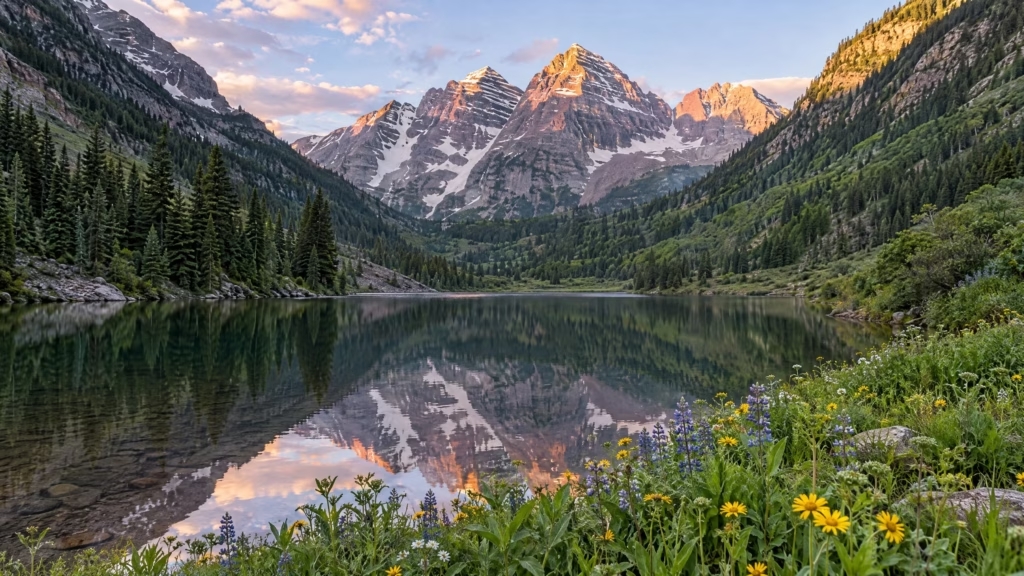
The park contains over a million acres of wilderness, more than 700 miles of hiking trails, 26 remaining glaciers, and landscapes of such concentrated beauty that Theodore Roosevelt called this region the Crown of the Continent.
The Going-to-the-Sun Road, which crosses the Continental Divide through the heart of the park, is one of the great scenic drives in North America and the only road in the country listed on the National Register of Historic Places.
Logan Pass at the summit of the Going-to-the-Sun Road sits at 6,646 feet and on a clear day delivers views in every direction across mountain ridges and valleys that extend beyond what the eye can comfortably hold.
Mountain goats walk the parking area with complete indifference to the people photographing them. Grizzly bears are regularly spotted from the road.
The hiking here ranges from short lakeside walks to multi-day backcountry routes. Highline Trail, accessible directly from Logan Pass, follows a narrow ledge across the face of the Garden Wall for 11.8 miles and is consistently rated among the finest day hikes in any American national park.
The gateway towns of Whitefish and West Glacier have affordable accommodation options, particularly outside peak summer weeks. Camping within the park is modest in cost and puts you inside one of the finest natural environments in North America.
Driving here from Seattle, Spokane, or Calgary and making it part of a broader road trip reduces per-trip costs considerably.
Average daily cost: $45 to $85 per person.
Practical tip: The Going-to-the-Sun Road requires vehicle reservations during peak summer months. Book through Recreation.gov as soon as your dates are confirmed. The road is only fully open from approximately late June through mid-October, depending on snowpack.
The Honest Truth About Budget Travel in America
Budget travel is not about removing the best parts of a trip.
It is about redirecting attention from expensive amenities toward genuine experience. The couples and solo travelers who explore America on a budget usually discover something that surprises them: they come home with better stories than the people who spent twice as much.
The luxury hotel room might be comfortable. But it will not create the memory of reaching the top of a trail you almost skipped and finding the valley spread out below you in the late afternoon light.
It will not create the conversation with the person at the end of the counter in the New Orleans lunch spot who told you which street to find the real music on. It will not create the morning in Glacier when the mountain goats walked past your campsite and the air smelled like pine and cold water and nothing else.
America rewards curiosity more than it rewards spending. From mountain landscapes and coastal highways to historic city streets and hidden desert towns, there are countless places here where an extraordinary adventure is available to anyone willing to show up and pay attention.
The open road is genuinely waiting.
Frequently Asked Questions About Budget Travel in the USA
The Great Smoky Mountains, Sedona, the Oregon Coast, Shenandoah Valley, New Orleans, and Glacier National Park consistently offer the best combination of natural beauty, cultural richness, and affordability. Each delivers experiences that feel far more expensive than they actually are.
Yes, absolutely. Many outstanding USA trips come in well under $1000 by combining free national park access, camping or budget accommodation, self-catering some meals, and prioritizing outdoor experiences over paid attractions. Shoulder season travel reduces costs further.
National parks with free entry like the Great Smoky Mountains, scenic road trip routes like the Oregon Coast, and culturally rich cities like New Orleans and San Antonio consistently offer the best value for travelers watching their budgets carefully.
Travel during shoulder seasons in spring and fall when prices drop and crowds thin. Book accommodation early for better rates. Use campgrounds and vacation rentals with kitchens. Prioritize free outdoor attractions, free museums, and walkable neighborhoods. Build your trip around places where the best experiences are accessible without spending money.
Yes. The destinations in this guide are all well-visited, well-maintained, and straightforward to navigate independently. The national parks have ranger stations and visitor centers. The towns along the routes have all necessary services. Basic preparation, a reliable vehicle, and downloaded offline maps are all you need.
National parks with free entry like the Great Smoky Mountains, scenic road trip routes like the Oregon Coast, and culturally rich cities like New Orleans and San Antonio consistently offer the best value for travelers watching their budgets carefully.
Start Planning Your Affordable USA Adventure
A great trip does not begin with a large budget.
It begins with curiosity, an open road, and the willingness to go somewhere you have not been before.
Whether you are watching morning fog move through the Smoky Mountains, standing under a natural arch in Moab as the sun turns the sandstone orange, walking the moss-hung squares of Savannah in the early evening, or listening to a brass band move down a New Orleans street with a crowd dancing behind it, America has extraordinary experiences waiting for you at every price point.
The country is bigger and more beautiful and more surprising than most people realize. And a lot of the best of it is available to anyone willing to show up.
If you are planning a romantic trip and want to make it feel special without overspending, our guide to USA Honeymoon Destinations covers the most beautiful destinations for couples at every budget level.
For anyone exploring American cities, our Free Things to Do in USA Cities guide proves that some of the finest experiences in the country’s greatest cities cost absolutely nothing.
The trip is waiting. The only thing left is to go.