
Picture this: You’re working from a cozy café in Budapest’s historic Jewish Quarter, your laptop open, a perfectly pulled espresso steaming beside you. Your monthly rent? Less than $700. After wrapping up your client call, you’ll head to Széchenyi Baths for an evening soak in 38°C thermal waters. Welcome to the digital nomad life in Hungary’s capital.
I’ve spent the last six months exploring what makes Budapest one of 2026’s hottest destinations for remote workers, and I’m convinced that it is one of Europe’s best-kept secrets. With Hungary’s White Card visa now streamlined for digital nomads and tools like Mindtrip AI making trip planning ridiculously easy, there’s never been a better time to make the move.
In this guide, I’ll walk you through everything you need to know—from qualifying for the visa to finding the perfect co-working space, budgeting your expenses, and yes, which thermal bath is actually worth your time. Whether you’re a freelance designer, digital marketer, or software developer, Budapest might just be your next home base.
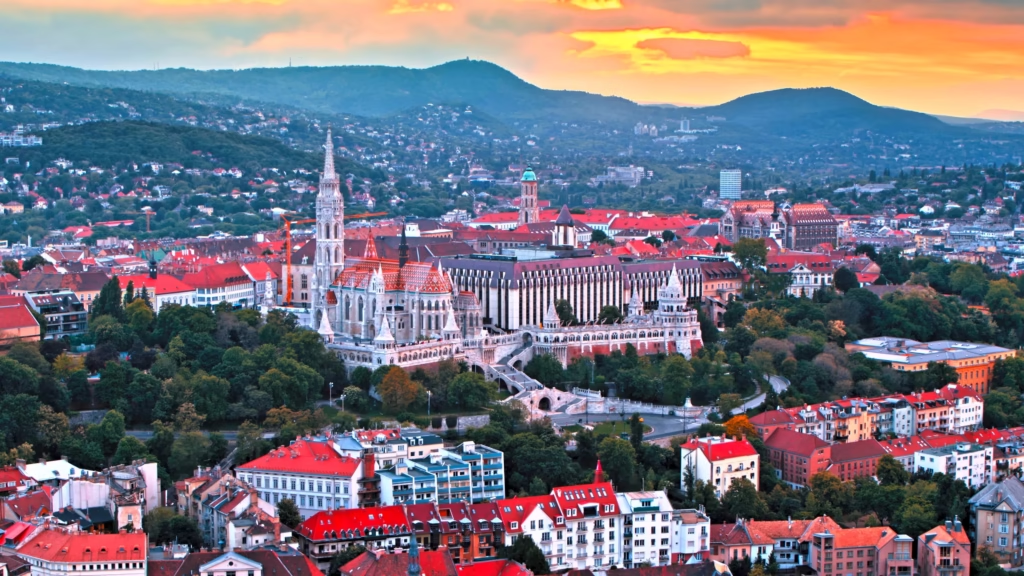
Table of Contents
ToggleUnderstanding Hungary’s White Card Visa: Who Qualifies in 2026?
Let’s get straight to what you’re wondering: can you actually qualify for this thing?
Hungary’s White Card isn’t technically called a “digital nomad visa,” but that’s essentially what it is. Officially, it’s a residence permit for third-country nationals (anyone who’s not an EU/EEA citizen) who work remotely using telecommunications technology. The program launched in 2024, and I’m happy to report it’s only gotten better in 2026.
The beauty of this visa? You can live in Hungary for up to one year—renewable for an additional year—without taking on Hungarian employment. Even better, you won’t pay Hungarian taxes on your foreign income. When you factor in Budapest’s cost of living (typically €1,500-2,000 per month for a comfortable lifestyle), this becomes one of the most attractive visa programs in the EU.
The Actual Requirements (No Sugarcoating)
Here’s what you’ll need to prove:
Remote Work Documentation: This is the big one. You’ll need to show verified employment or business ownership outside Hungary and the EU. Think employment contracts, client service agreements, or company incorporation documents that clearly demonstrate you use digital tools for your work. If you’re a freelancer like me, gather your client contracts and invoices from the past 6-12 months.
Minimum Monthly Income: You must earn at least €3,000 net per month. Yes, they actually check this. You’ll need bank statements covering the last six months or tax certificates proving consistent income. Pro tip: if you have irregular income (hello, fellow freelancers), make sure your six-month average hits this threshold.
Proof of Accommodation: You’ll need documentation showing where you’ll live for your entire stay. This could be a rental agreement or proof of property ownership. Most nomads I’ve spoken with recommend securing a 12-month lease before applying—short-term Airbnbs won’t cut it. Check out ingatlan.com or alberlet.hu for apartment listings.
Health Insurance: You need valid coverage for your entire stay in Hungary. International policies from providers like SafetyWing or Cigna Global work fine. Budget around €100-300 per year depending on your coverage level.
Valid Passport: Must remain valid for your entire intended stay. Straightforward, but check those expiration dates!
No Local Business Ties: You can’t hold shares in Hungarian companies or engage in any gainful activity within Hungary. The visa is strictly for remote work with non-Hungarian clients or employers.
Application Process: The Real Timeline
Applications can be submitted online through the Enter Hungary portal (enterhungary.gov.hu) or in person at the National Directorate for Aliens Policing. Here’s what nobody tells you: processing takes a minimum of three months. I’ve heard of cases taking 4-5 months. So if you’re planning a May arrival, submit your application by January at the latest.
Once approved, you have three months to enter Hungary. Miss that window and your card becomes invalid—no exceptions.
What It’ll Cost You
Let’s talk numbers:
Visa Application Fee: €110 (approximately $120 USD) if applying from abroad
Document Preparation: Budget €50-100 for certified translations and notarizations
Health Insurance: €100-300 per year depending on coverage
Total upfront costs: Expect to spend around €300-500 before you even arrive.
Want the official details? Visit the National Directorate for Aliens Policing website for the most up-to-date forms and requirements. But honestly? Consider consulting with an immigration specialist if you want to avoid headaches. The €200-300 you’ll spend on professional help is worth the peace of mind.
Meet Mindtrip AI: Your Personal Budapest Planning Assistant
Okay, so you’ve got your visa sorted (or you’re working on it). Now comes the fun part: actually planning what you’ll do once you land in Budapest.
This is where Mindtrip AI comes in, and I have to say, it’s genuinely changed how I approach travel planning. Full disclosure: I’m not sponsored by them—I just love tools that actually work.

Mindtrip is a free, AI-powered travel planner that creates visual, map-based itineraries. Think of it as having a local friend who knows exactly what you’re looking for and can build you a custom guide in minutes. The app uses a chat interface where you can say something like, “I need a week in Budapest with co-working spots, thermal baths, and cheap eats,” and it’ll generate an actual, usable itinerary complete with maps, photos, reviews, and costs.
Why It’s Perfect for Digital Nomads
The genius of Mindtrip for nomads? It understands that you’re not on vacation—you’re living and working. Traditional travel apps give you tourist-heavy itineraries that assume you have eight hours of free time every day. Mindtrip lets you specify your work schedule and builds plans around it.
For Budapest specifically, it excels at weaving together:
- Co-working spaces with reliable WiFi and good coffee
- Thermal baths that fit into evening relaxation routines
- Cafés where you can work without dirty looks after ordering one coffee
- Neighborhoods where you’ll actually want to live (not just visit)
- Budget breakdowns that account for long-term stays, not tourist splurges
Download it on iOS or access it via mindtrip.ai. No credit card required, no hidden fees. Just smart planning.
How to Build Your Perfect Budapest Itinerary with Mindtrip
Let me walk you through creating a nomad-friendly itinerary. I’ll use my own recent planning process. An example:
Step 1: Download and Set Up Your Account
Grab the app from the App Store or visit mindtrip.ai if you prefer working on desktop. Create a free account so your plans save automatically. It takes about 30 seconds.
Step 2: Start a Conversation
Open the chat feature and get specific. The more detail you provide, the better your results. Here’s what I typed:
“Create a 7-day Budapest itinerary for a digital nomad with Hungary’s White Card visa. I’m a marketing professional working 9am-5pm weekdays. Include co-working at Kaptar, thermal baths for evenings and weekends, and budget-friendly restaurants, and keep daily costs under €100. I want to experience local culture but need reliable WiFi and quiet work environments.”
Step 3: Refine Your Preferences
Mindtrip will ask follow-up questions to nail down exactly what you want:
- “Do you prefer outdoor or indoor activities for your free time?”
- “What’s your budget for food per day?”
- “Any specific neighborhoods you want to explore?”
For the thermal baths, I specified I wanted the iconic Széchenyi and the more boutique Gellért experience. It adjusted the plan accordingly.
Step 4: Review, Edit, and Export
Within seconds, you’ll get a complete plan with:
- Interactive maps showing each location
- Photos and recent reviews of every spot
- Estimated costs (surprisingly accurate)
- Walking times between locations
- Opening hours and booking links
You can drag and drop to reorder days, swap out places you don’t like, and add your own discoveries. When you’re happy with it, export the whole thing to Google Calendar or share it with friends.
Step 5: Add Your Visa Checkpoints
This is the nomad-specific hack: use Mindtrip’s notes feature to add reminders about your White Card requirements. I added reminders like
- Register at district office within 30 days of arrival
- Submit address card proof near Kaptar co-working space
- Check visa renewal timeline at 10-month mark
Pro tip: Mindtrip has a location-smart feature that gives real-time updates. During my trip, it notified me that Széchenyi Baths was unusually crowded on a Saturday morning and suggested visiting Lukács Baths instead. Super helpful.
Sample 7-Day Budapest Itinerary for Marketing Nomads
Based on what Mindtrip generated for me (and refined after actually living it), here’s a realistic week in Budapest. This assumes you’ve already secured your White Card visa and found accommodation in central Pest, probably in District VII (the Jewish Quarter), where most nomads end up.

Day 1: Arrival and Admin
Land at Budapest Ferenc Liszt Airport (BUD). Take a Bolt or taxi to your rental—it should cost around €20. The 100E airport bus is cheaper (€4) if you’re feeling adventurous, but after a long flight, I always just grab a car.
Spend the afternoon getting your apartment set up and organizing your visa documents. You’ll need to register at your district’s government office within 30 days of arrival, so don’t put it off forever.
Evening: take a gentle stroll along the Danube to shake off jet lag. Grab dinner at Mazel Tov (a gorgeous ruin bar with Mediterranean food) or For Sale Pub if you want something more local and budget-friendly.
Budget: €50
Day 2: First Co-Working Day at Kaptar
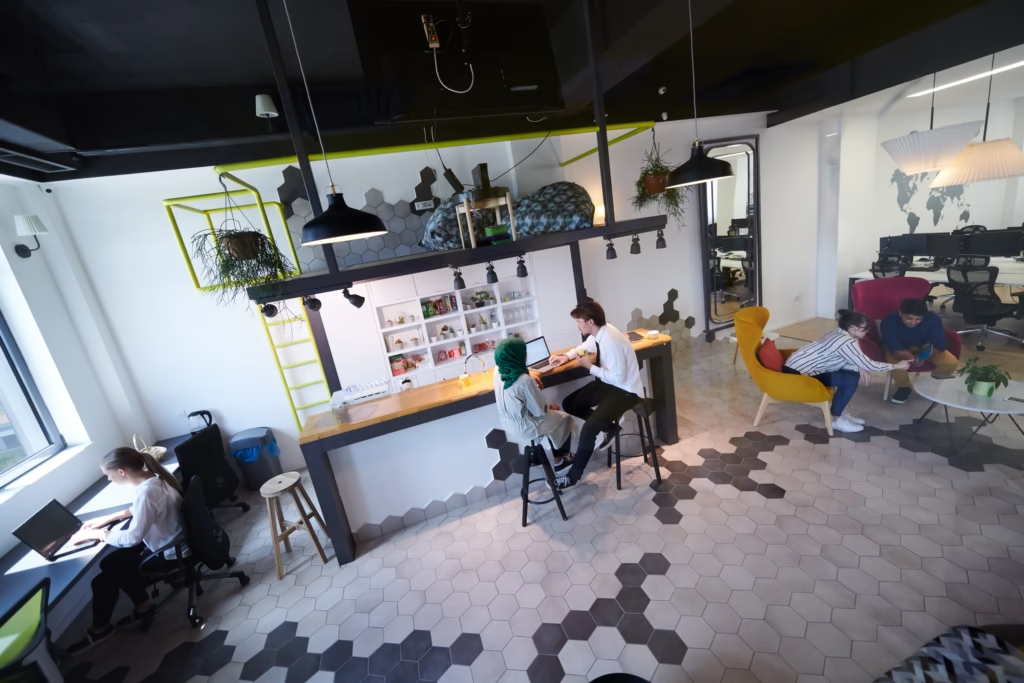
Head to Kaptar (Révay utca 4), Budapest’s most popular co-working space for international nomads. A day pass is €15 and includes unlimited coffee, high-speed WiFi, and access to their community events.

The vibe here is perfect—professional but friendly, with a good mix of freelancers and remote employees. Plenty of standing desks, phone booths for calls, and a kitchen where people actually talk to each other.
Lunch: Try Hummus Bar (5-minute walk) for filling, cheap Mediterranean bowls around €8-10. Or grab a lángos (Hungarian fried bread) from a street vendor for €3.
Evening: Explore Budapest’s famous ruin bars. Start with Szimpla Kert (the original) but expect crowds. For a more chill vibe, try Ellátó Kert. Budget €10-15 for drinks.

Budget: €40
Day 3: Work Morning, Thermal Afternoon
Morning work session from your apartment or a café (I love Espresso Embassy for quality coffee and laptop-friendly atmosphere).
Afternoon: Time for your first thermal bath experience at Széchenyi Baths. This is the postcard-perfect one with the yellow buildings and outdoor pools. Entry is around €25 on weekdays. Go around 3pm to avoid the tourist rush.
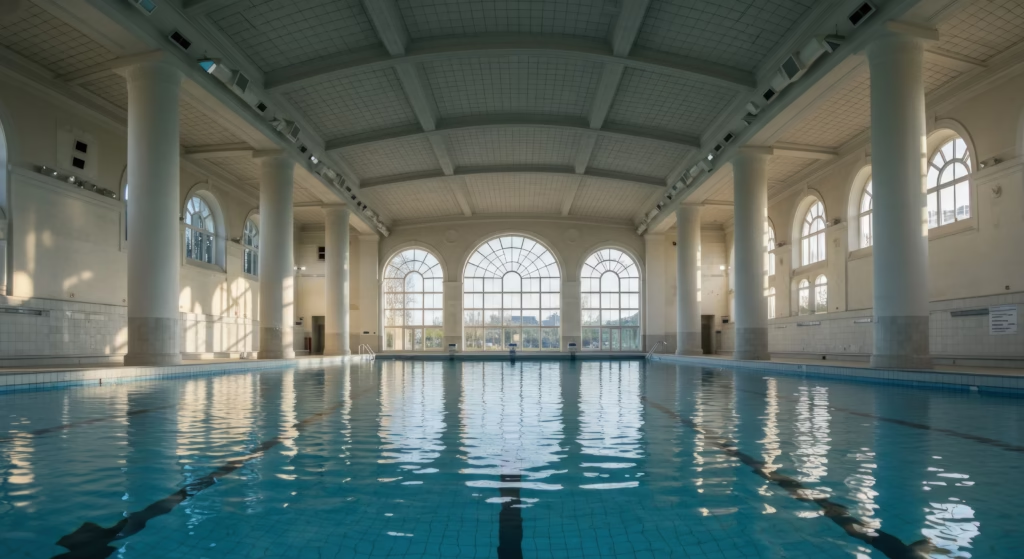
The outdoor pools are stunning, especially if you visit during winter and can sit in hot water while snow falls around you. The indoor pools are warmer and less crowded. Bring your own towel to save €5 on rental.
Pro tip from Mindtrip: Book your ticket online in advance to skip the often-confusing ticket counter system.
Budget: €60 (includes bath entry, meals, and transport)
Day 4: Cultural Deep Dive
Work morning at Kaptar again. You’ll want to build relationships with other nomads here—some of my best Budapest connections came from Kaptar’s community lunches.
Afternoon: Take the funicular up to Buda Castle (€5 round trip, or walk up the stairs for free). The views alone are worth it, and the castle grounds are perfect for a walking break between Zoom calls.
If you have time, check out the Hospital in the Rock museum (€15)—it’s a WWII-era bunker that’s genuinely fascinating.
Evening: Join any networking events at Kaptar. They usually have something happening Thursday evenings—language exchanges, founder meetups, or casual drinks.
Budget: €45
Day 5: Gellért Baths & Networking
Another split day. Morning work, then head to Gellért Baths around 2pm.
Gellért is the fancy, art nouveau bath that feels like you’ve stepped into a 1920s spa. Entry is €20-25 depending on the time. It’s smaller and more refined than Széchenyi—less of a party atmosphere, more of a relaxation sanctuary.
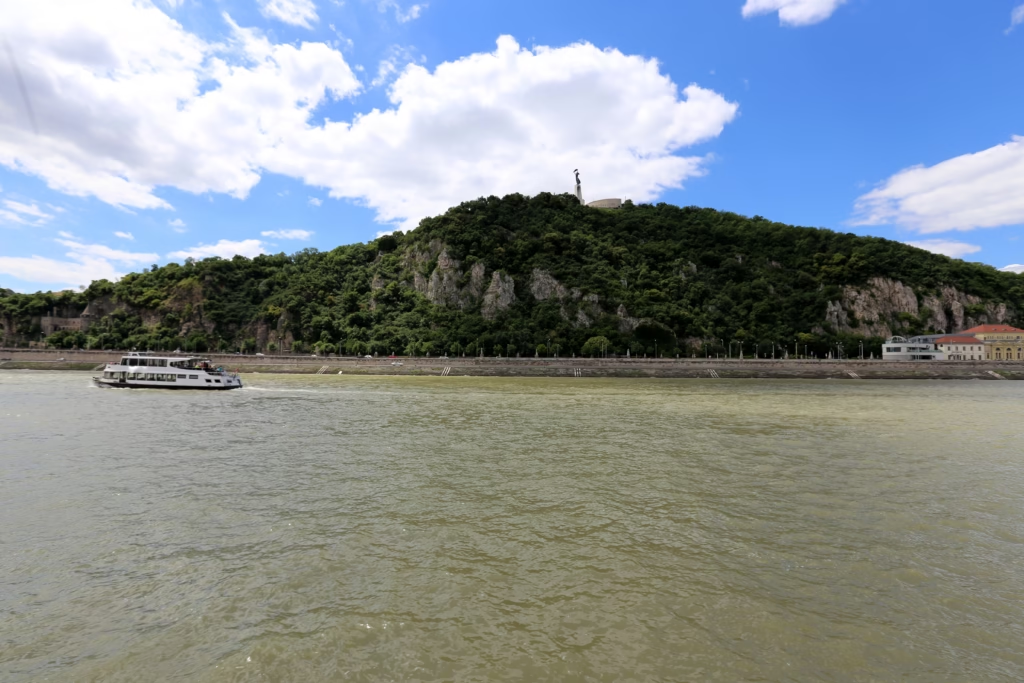
The outdoor wave pool is iconic, and the thermal pools inside are beautifully tiled. This is where you go when you want to feel fancy without spending fancy money.
Budget: €55
Day 6: Day Trip to the Danube Bend
Take a break from the city. Mindtrip suggested a trip to Visegrád and Esztergom along the Danube Bend, and it was perfect.
Catch a train from Nyugati station (€10-15 round trip, about 90 minutes each way). Bring your laptop—Hungarian trains have surprisingly good WiFi, so you can catch up on emails during the journey.

Visegrád has a castle with panoramic views, and Esztergom has the largest basilica in Hungary. Both towns are small enough to explore in an afternoon but big enough to feel like a real escape from Budapest.
Budget: €70 (includes train, lunch, and castle entrance)
Day 7: Wrap-Up and Forward Planning
Final work day at Kaptar. Use this time to check in on your visa renewal timeline—if you’re planning to stay the full two years, you’ll need to start gathering documents around the 10-month mark.
Evening: Celebrate your first week with a thermal soak at Rudas Baths. This one’s special because it has a rooftop pool with panoramic views of the Danube and Parliament building. Go at sunset (around 7-8pm in summer). Entry is €20-25.

The rooftop pool is clothing-mandatory (unlike some areas of Rudas), and it’s the perfect spot to reflect on your first week as a Budapest digital nomad.
Budget: €50
Total Weekly Budget: €370 (excluding rent, visa fees, and health insurance)
The Real Cost of Living in Budapest: A Nomad Budget Breakdown
Let’s talk about what you’ll actually spend each month. These are 2026 prices based on my own experiences and conversations with other nomads in Budapest.
One-Time Setup Costs
- White Card application: €110
- Document translations/notarizations: €50-100
- Health insurance (annual): €100-300
- First month deposit + rent: €1,200-1,600
Total initial outlay: €1,460-2,
Monthly Recurring Expenses
Rent: €600-800/month for a decent one-bedroom in District VII or V. You can find cheaper in outer districts (€400-500), but you’ll spend more on transport and miss the nomad community.
Utilities: €80-120/month (electricity, water, internet). Some apartments include utilities, so ask before signing.
Food: €300-400/month if you’re cooking most meals. Groceries are incredibly cheap at Lidl or Aldi—I spent about €40-50 per week. Eating out adds up quickly, though: budget restaurant meals are €8-12, nice restaurants €20-30.
Transport: €35 for a monthly public transport pass (absolutely worth it). Or just buy a Budapest Card (€30 for 72 hours) when you first arrive—it includes unlimited transport plus discounts on attractions.
Co-working: €15/day at Kaptar, or €150-200/month for a dedicated desk. Alternatively, many cafés are laptop-friendly (just buy a coffee every 2-3 hours).
Thermal Baths: If you go weekly, budget €80-100/month. Most locals buy annual passes, which work out cheaper if you’re staying long-term.
Entertainment/Activities: €100-150/month for museums, ruin bars, concerts, and weekend trips.
Phone: €15-20/month for a local SIM with plenty of data.
Total Monthly Estimate: €1,500-2,000
This leaves a comfortable buffer from your €3,000+ monthly visa requirement. You’re not living paycheck-to-paycheck, and you can afford the occasional splurge without stress.
Your Budapest Digital Nomad Questions, Answered
Can I extend my White Card beyond one year?
Yes! The White Card is renewable once for an additional year, giving you a total of two years in Hungary. You’ll need to reapply with updated proof of income, accommodation, and health insurance about 2-3 months before your first year expires. The process is similar to the initial application but slightly faster since you’re already in the system.
Is Mindtrip really free, or are there hidden costs?
It’s genuinely free for all core features—itinerary creation, maps, recommendations, and export functions. They do offer some premium add-ons (like advanced collaboration features for group trips), but honestly? I’ve never needed them. The free version is more than enough for solo nomads.
Which thermal bath is actually worth visiting?
Depends on what you want. Széchenyi is the iconic, Instagram-worthy experience with outdoor pools and a social atmosphere—perfect for a first visit. Gellért is more refined and architectural, great when you want luxury without luxury prices. Rudas has the best views (that rooftop pool!). For locals-only vibes, try Lukács Baths in District II—less touristy, cheaper, and just as good.
My personal ranking: Rudas for special occasions, Gellért for regular relaxation, and Széchenyi when friends visit.
Do I need to speak Hungarian?
Not at all. Budapest’s nomad scene is overwhelmingly English-speaking. Most co-working spaces, cafés in central districts, and anyone under 40 speak solid English. Government offices can be trickier, but Google Translate works fine, and many offices have English-speaking staff if you ask.
That said, learning basic phrases (“köszönöm” for thank you, “szia” for hello) goes a long way with locals. Hungarians appreciate the effort, even if your pronunciation is terrible.
How do I prove the €3,000 monthly income if my earnings fluctuate?
This is the freelancer struggle! The requirement is that your average over the past six months hits €3,000/month. So if you earned €2,000 one month and €4,000 the next, you’re fine as long as the total divided by six is above €3,000.
Provide bank statements showing all income deposits, and if you have tax returns or invoices, include those too. I know nomads who also submitted signed letters from clients confirming ongoing contracts—probably overkill, but it shows you’re serious.
What’s the WiFi situation like for remote work?
Excellent. Hungary has some of the fastest internet in Europe—you’ll regularly get 100+ Mbps in apartments and co-working spaces. Cafés are hit-or-miss, but anywhere frequented by nomads (Espresso Embassy, Madal, Massolit) has solid connections.
Get a local SIM card from Vodafone or Telekom for €15-20/month with unlimited data as backup. Mobile 4G/5G coverage is reliable throughout the city.
Can I travel to other EU countries while on the White Card?
Yes, but with limits. The White Card allows you to travel within the Schengen Area for up to 90 days within any 180-day period. Hungary is your primary residence, so you can’t spend more time traveling than you do in Hungary without jeopardizing your visa status.
Plenty of nomads do “workations” to Vienna, Prague, or Krakow for a week or two—totally fine. Just don’t try to live in Italy for six months while technically holding a Hungarian visa.
Ready to Make Budapest Your Digital Nomad Base?
Budapest in 2026 offers something special: an affordable EU base with incredible culture, reliable infrastructure, and a thriving remote work community. The White Card visa makes it accessible, Mindtrip makes planning effortless, and those thermal baths? They make everything worthwhile.
If you’re serious about making this move, start your visa application now—remember that 3+ month processing time. While you wait, download Mindtrip and start building your Budapest bucket list. Join some Facebook groups (“Digital Nomads Budapest” and “Expats in Budapest” are both active), and start getting excited.
Want more AI-powered travel strategies and digital nomad visa guides delivered straight to your inbox? Sign up for our weekly newsletter at traveltips.searchsuccessolution.com. We cover everything from visa updates to remote work tools to hidden gem destinations.
See you at Széchenyi Baths! 🏊♂️

