Sapporo Snow Festival 2027: Dates, Sites and Tips
November 26, 2026 • Yasmeen • About 9 minutes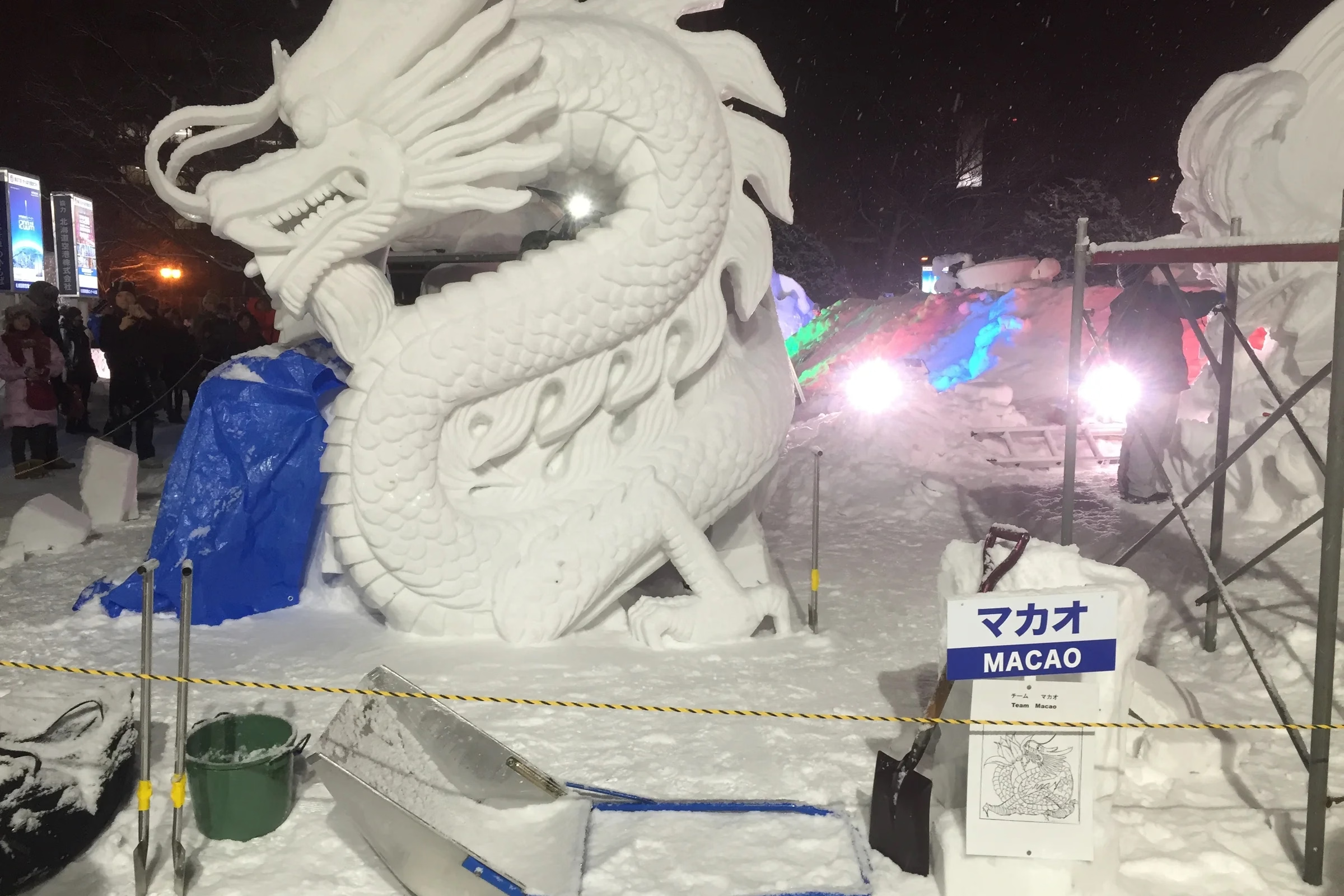
Short answer: Sapporo Snow Festival 2027 runs from 4 to 11 February 2027, the 77th edition, across three sites in Sapporo: Odori Park, Susukino and Tsudome. Entry is free at all three sites. Come for the giant snow sculptures by day, stay for the lights at night, and book your room months ahead, because festival week rooms are the real cost.
Picture a whole city that decides, once a year, to build its art out of snow. You step off the subway into Odori Park and there it is: a castle, a dragon, a scene from a film, carved from snow. Children run between the sculptures. Everyone is smiling, everyone is cold, and nobody seems to mind.
That is the week this guide is about. Eight days in February when Sapporo turns winter into a reason to go outside, and it costs nothing to walk in.
Table of Contents
- The 2027 Festival in One Table
- Three Sites, One Week
- Odori Park: The Giant Sculptures
- Susukino After Dark: Ice That Glows
- Tsudome: The Family Site
- How to Plan Your Week
- Stretch the Week: Asahikawa and Otaru
- Frequently Asked Questions
- The Bottom Line
1. The 2027 Festival in One Table
Here is the whole festival in one table.
| What to know | The detail |
|---|---|
| Dates | 4 to 11 February 2027, eight days |
| Edition | 77th |
| Sites | Odori Park, Susukino, Tsudome |
| Entry | Free at all three sites |
| Visitors | About 2 million people in festival week |
| Where to check 2027 times | sapporo.travel |
| Best base | One hotel in Sapporo for the whole week |
That is the simple version of Sapporo Snow Festival 2027: eight free days, three sites, and one city that turns winter into art. The rest of this guide is the detail: which site to visit first, what to do after dark, and how to plan a week around it.
The dates matter most. The festival runs for one week only, and the city fills up fast. If you can travel in that week, book first and plan second. The sculptures will still be there when you arrive. The cheap rooms will not.
Pro Tip: Book your room the moment your dates are set. Festival week rooms are the real cost of this trip, not the festival itself.
2. Three Sites, One Week
The festival is not one place. It is three sites across the city, and each one has its own mood.
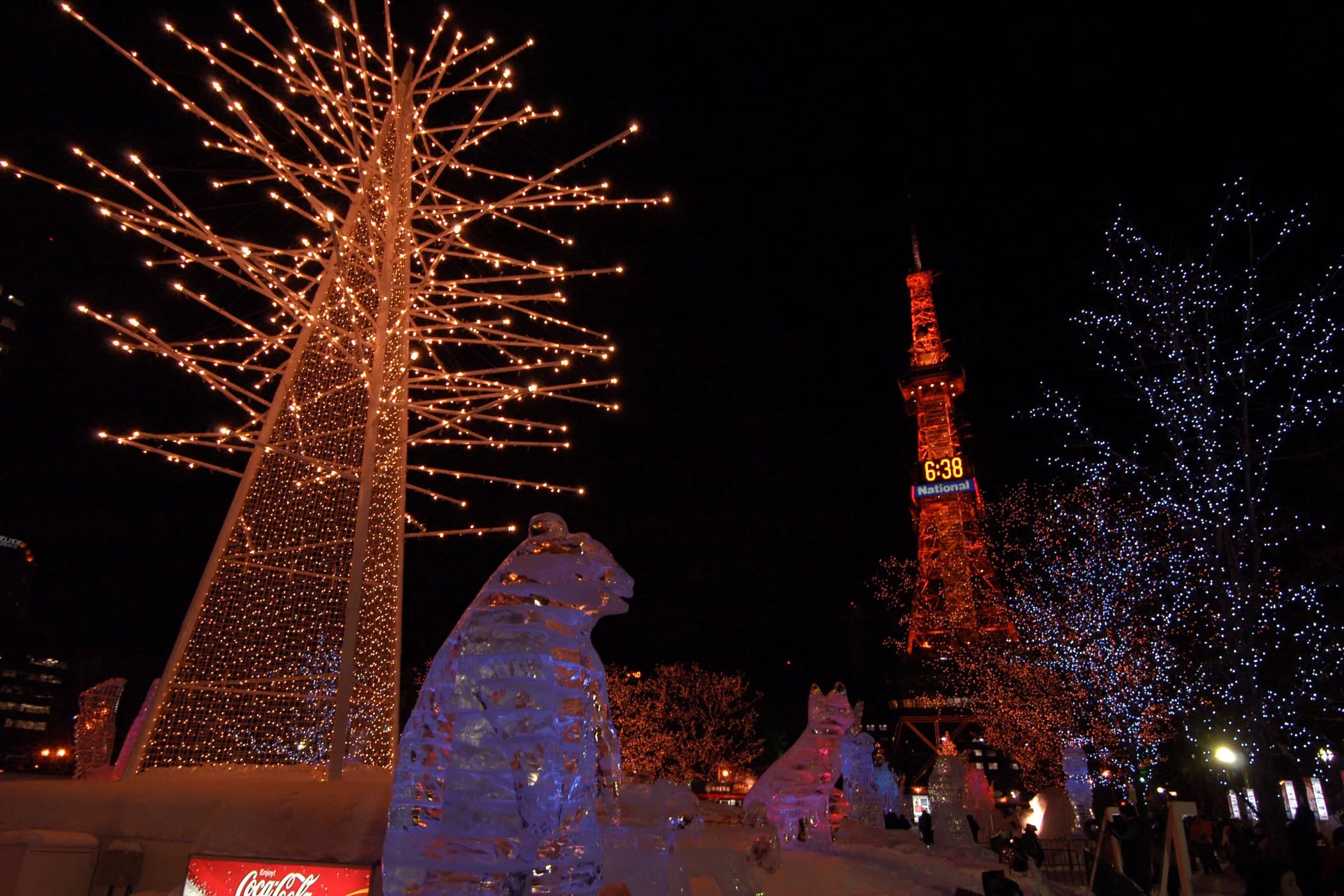
Odori Park is the main site, a long strip of park in the middle of the city, where the giant snow sculptures stand and the crowds are thickest. The Sapporo TV Tower stands at the east end of the park. Walk toward it when you are lost.
Susukino is the second site, a short walk south of Odori in the entertainment district. This is the ice sculpture site, smaller than Odori, all about clear ice instead of snow, and it comes alive after dark.
Tsudome is the third site, a community dome on the edge of the city centre, a short subway ride away. This is the family site, with snow play and slides for children.
You do not need a car. Odori and Susukino are a short walk apart, and the subway reaches all three sites. Plan around that: Odori by day, Susukino after dark, Tsudome when the children need to burn off energy.
Pro Tip: See Odori in daylight first, then come back after dark. The same sculptures look like a different festival when the lights come on.
3. Odori Park: The Giant Sculptures
Odori is the reason most people come. The park is divided into numbered blocks, each holding its own sculptures, from small figures made by local groups to giants that tower over the crowds.
The giants are the ones you will remember. Teams build castles, temples, animals and scenes from films and history, all from packed snow, working for weeks before the festival opens. Walk slowly past them. The detail is the point: the scales on a dragon, the windows on a castle, the folds of a kimono, all carved by hand.
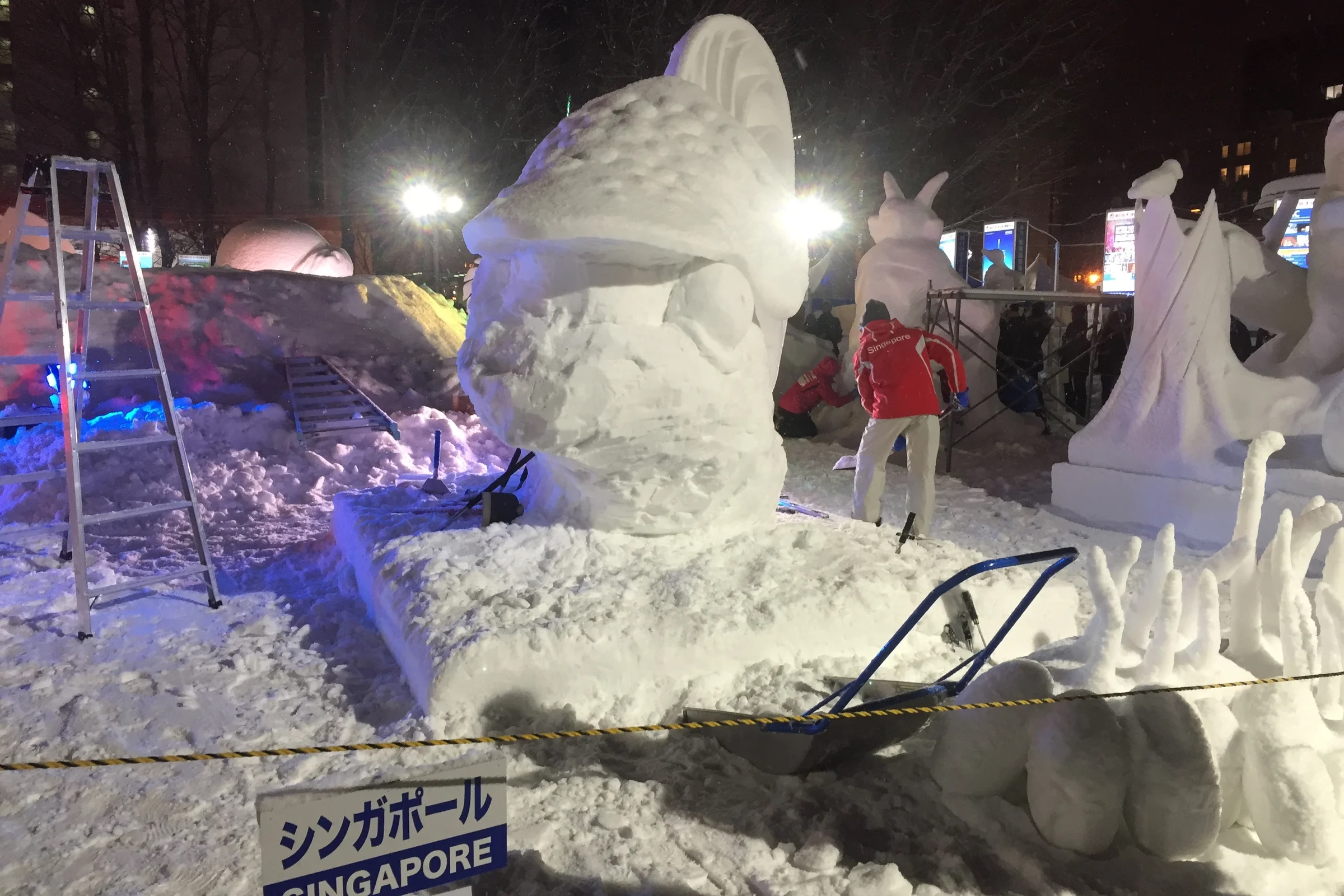
One block of the park belongs to the international teams. Sculptors from around the world carve side by side, and you can watch them work in the evenings while the crowds gather around the ropes. Our hero photo shows Team Macao and their dragon, and the second photo shows Team Singapore still carving as the lights come on.
The TV Tower is your anchor. From its viewing deck you can look down the whole length of Odori and see the festival laid out below you. Go up once in the daytime to get your bearings, then walk the park at ground level, where the sculptures are.
Food stalls line the park. Hot soup, grilled corn, sweet potatoes and hot drinks are all part of the festival.
Pro Tip: Start at the TV Tower end and walk west. You will pass the biggest sculptures first, and the crowds thin out as you go.
4. Susukino After Dark: Ice That Glows
If Odori is the festival by day, Susukino is the festival by night.
The site sits along the main street of the entertainment district, and the sculptures here are ice, not snow. Clear blocks carved into animals, buildings and characters, lit from inside so they glow against the dark street. The carvers compete for prizes here, and the best pieces stop whole crowds in their tracks.
Come after sunset. The ice needs the dark to show its colour. Walk the whole stretch slowly, then duck into a side street for dinner. Susukino is famous for its ramen, and a hot bowl after an hour in the cold is exactly what the evening calls for.
This is also the most grown up of the three sites, with thinner crowds, a quieter mood, and bars and restaurants that stay open late. If you are travelling without children, give Susukino a full evening, not a quick stop.
One warning: the ice is slippery underfoot and the street is crowded. Wear boots with grip and keep your hands free.
Pro Tip: Visit Susukino on your first evening in Sapporo. It is the gentlest introduction to the festival.
5. Tsudome: The Family Site
Tsudome is the site most visitors miss, which is a shame if you have children with you.
The site is a community dome on the edge of the city centre, and the festival turns its grounds into a snow playground, with big snow slides and space for children to run and throw snowballs. Parents can watch from the sidelines with a hot drink.
It is the least crowded and the most relaxed of the three sites. Go in the morning, let the children play until they are tired and cold, then head back into the city for lunch.
If you are travelling without children, you can skip Tsudome and lose very little. But if you have a child under ten with you, Tsudome is the site they will talk about on the flight home.
Pro Tip: Pack a spare pair of gloves for the children. Wet gloves are the fastest way to end a morning at Tsudome early.
6. How to Plan Your Week
Fly into New Chitose Airport, south of Sapporo, and take the JR Rapid Airport train to Sapporo Station, then the subway to Odori. You will not need a car at any point in the week.
Book your hotel months ahead. The festival draws about 2 million visitors, and the rooms in the city centre go first. Stay in one place for the whole week, near Odori or Sapporo Station.
If you are travelling beyond Sapporo, our Japan Rail Pass 2027 guide explains when the pass pays for itself and when single tickets are cheaper, including the 2027 fare rises.
Dress for deep winter. Layers, a warm coat, a hat that covers your ears, gloves, and waterproof boots with grip. You will be outside for hours, standing still in front of sculptures, and standing still is when the cold finds you.
Money is the good news. The festival itself is free, so your budget goes to the room, the food and the trains, not to tickets.
Pro Tip: Arrive a day before the festival opens if you can. You will see the last sculptures being finished, and your first full day will start at the festival, not at the airport.
7. Stretch the Week: Asahikawa and Otaru
Sapporo is not the only winter festival in Hokkaido that week. Two more fit into a day trip each.
The Asahikawa Winter Festival runs from 6 to 11 February 2027, in the same week as Sapporo. Asahikawa is about ninety minutes north of Sapporo by JR, with its own giant snow sculptures and an ice sculpture world. Go for a day and come back to Sapporo for the night.
The Otaru Snow Light Path runs from 6 to 13 February 2027, a few days longer than Sapporo. Otaru is a small port town west of Sapporo, about half an hour by JR, and its festival is the quiet one: snow lanterns and candles along the old canal, best seen after dark.
Give Asahikawa one full day and Otaru one evening, and keep Sapporo as your base: one hotel, three festivals, one week.
Our Japan 2027 travel guide covers the wider Japan trip around a winter visit.
Pro Tip: Do Otaru in the evening and stay for the canal lights. The lanterns only make sense after dark.
8. Frequently Asked Questions
When is the festival in 2027? The festival runs from 4 to 11 February 2027, eight days in total, across three sites in Sapporo: Odori Park, Susukino and Tsudome.
Is entry free? Yes. Entry is free at all three sites. The real cost of the trip is the hotel, the food and the travel to Sapporo.
Which site should I visit first? Start with Odori Park in the daytime, when the giant sculptures are easiest to see. Go to Susukino after dark for the ice sculptures, and save Tsudome for a morning with children.
Can I see the sculptures at night? Yes. The sculptures are lit up after dark, and the festival looks different at night. Check sapporo.travel before you travel for the 2027 lighting times at each site.
Where should I stay? Stay in one hotel in Sapporo for the whole week, near Odori or Sapporo Station, and book months ahead.
Can I combine it with Asahikawa or Otaru? Yes. The Asahikawa Winter Festival runs 6 to 11 February 2027 and the Otaru Snow Light Path runs 6 to 13 February 2027, and both are easy day trips from Sapporo by JR.
What should I wear? Dress for deep winter: layers, a warm coat, a hat that covers your ears, gloves, and waterproof boots with grip. You will be outside for hours.
9. The Bottom Line
Sapporo Snow Festival 2027 is eight free days in a city that knows how to do winter. The sculptures are the reason to come, the lights are the reason to stay out after dark, and it costs nothing to walk in.
Book the room early, dress warm, start at Odori, end at Susukino, and give Otaru one evening. Do that, and February in Hokkaido will give you a week you will still be talking about next winter.