
Some places stay in your chest for years. You close your eyes, and you are back there, barefoot on warm stone, the smell of incense drifting through temple gates, the sound of gamelan music somewhere in the distance. Bali does that to people. It enters into you, quietly, without asking permission, and it does not let go.
I have spoken to travelers who visited Bali for a week and ended up staying three months. I have spoken to couples who went once and went back five times. They all say the same thing: I was unprepared for how much I loved it.
This guide to Bali’s best things to do in 2026 is for first-time and fifth-time visitors. Not a list of tourist traps. This is not the generic stuff you can find on any travel app. This is the honest, practical, human guide to an island that genuinely deserves every word written about it.
Why Bali in 2026 Is Still Worth Every Rupiah
You might have heard that Bali has gotten too crowded, too commercial, and too Instagram-famous to feel real anymore. I want to push back on that gently. Yes, parts of Bali are busy. Canggu on a Saturday afternoon feels like every digital nomad on Earth decided to get a smoothie bowl at the same time. Kuta can be overwhelming if you are expecting peace and quiet.
But Bali is a big island. And the parts of it that still feel genuinely untouched, spiritually alive, and almost impossibly beautiful outnumber the crowded
But Bali is a big island. And the parts of it that still feel genuinely untouched, spiritually alive, and almost impossibly beautiful outnumber the crowded corners by a significant margin. The key lies in understanding the right destination, timing, and movement that honors the unique qualities that make it extraordinary. The key lies in understanding the right destination, timing, and movement that honors the unique qualities that make it extraordinary.
So here are 15 things to do in Bali that will actually matter. The kind that stay with you long after your tan fades and your luggage is unpacked.
15 Things to Do in Bali That Will Stay With You
1. Watch the Sunset at Uluwatu Temple
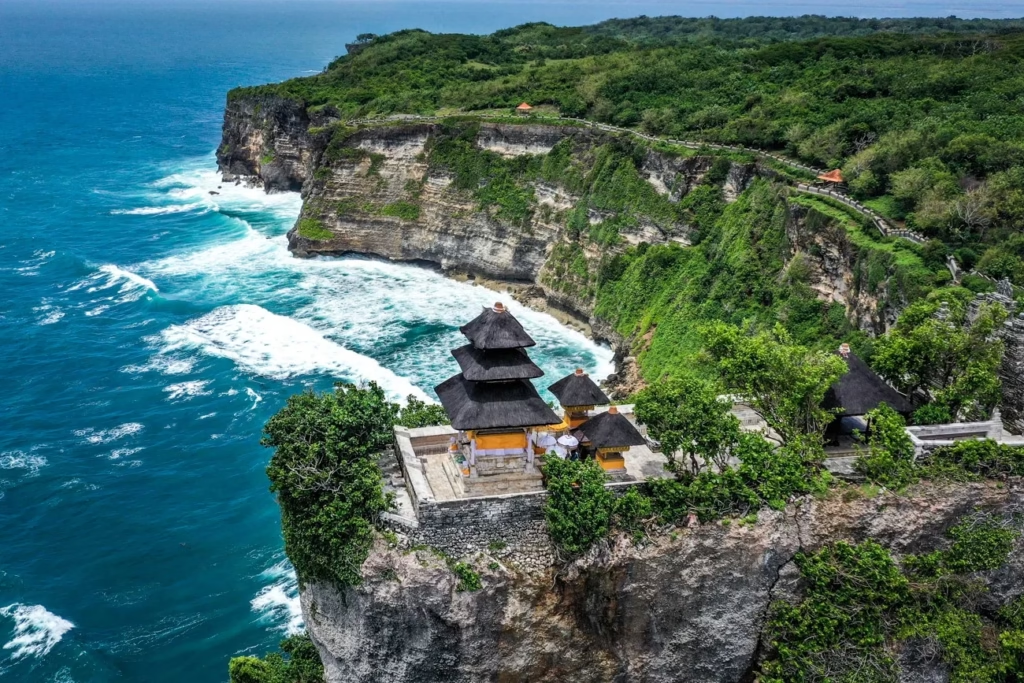
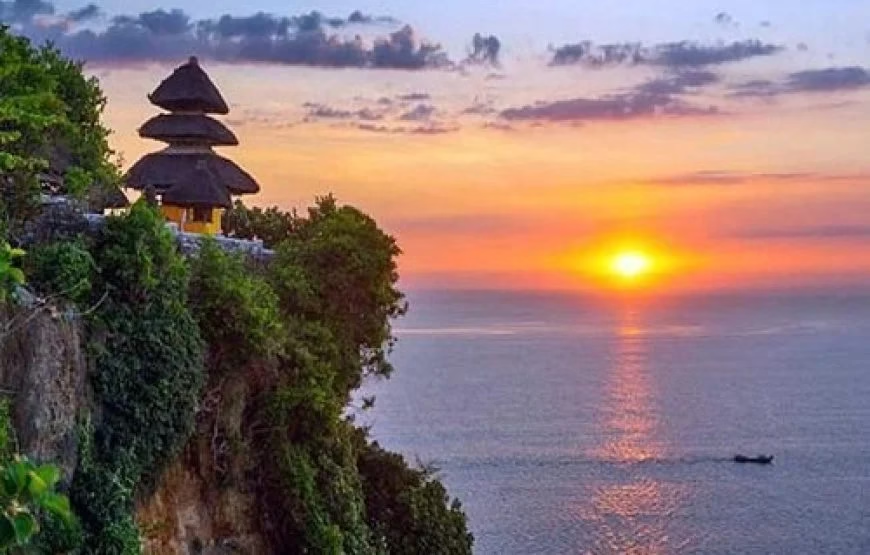
There are sunsets, and then there is Uluwatu. The temple sits on a cliff edge about 70 meters above the Indian Ocean, and when the sky turns orange and gold, the whole thing looks like a painting that should not be real. Get there about an hour before dusk to walk the temple grounds before the crowds arrive.
Stay for the Kecak fire dance performance, which begins just as the sun drops below the horizon. It is one of those experiences that sounds touristy until you are actually sitting there, watching flames leap in the dark while dancers tell an ancient story with their hands.
Practical note: wear a sarong to enter the temple, which you can rent at the gate. Watch your belongings around the monkeys. They are bold, entertaining, and absolutely not to be trusted with sunglasses.
2. Walk Through the Tegallalang Rice Terraces at Dawn
Most people visit Tegallalang around midday when tour buses line the road and the Instagram swings have hour-long queues. Go at 7am. The terraces are wrapped in soft morning mist, the air is cool, and the only sounds you will hear are birds and the gentle trickle of the subak irrigation system that has kept these fields alive for centuries.
Walk down into the valley rather than just photographing from the top. Follow the paths between the paddies. Talk to the farmers if they are working. This is
Living and breathing in agriculture that predates tourism by hundreds of years and experiencing it at ground level is something no guided tour can replicate.
3. Hike Mount Batur for a Sunrise You Will Never Forget
Set your alarm for midnight. I mean that. The hike up Mount Batur takes roughly two hours in the dark, guided by flashlight and the occasional star appearing between clouds. You arrive at the 1,717-metre summit just as the sky
begins to lighten over Lombok and Agung. The active volcano below you releases wisps of steam. The entire island spreads out below you, waking up.
It is genuinely one of the most memorable mornings of most travelers’ lives. Guides are mandatory and easy to arrange in Kintamani or through your accommodation. Bring a warm layer because the summit is cold in a way that will surprise you after days of Bali heat.
4. Explore Ubud’s Sacred Monkey Forest
The Monkey Forest in Ubud is not just a tourist attraction. It is a genuine sacred site, home to over 1,200 long-tailed macaques who live among ancient temples and massive banyan trees. Walk slowly. Keep your hands out of your pockets. Do not bring food. And watch the monkeys closely because they are extraordinarily expressive, endlessly entertaining, and genuinely unbothered by human presence.
Early mornings are best here, too. Before 10 a.m., the forest feels almost mystical. The light filters through the canopy in long golden shafts, and the monkeys are grooming, playing, and doing their morning routines. It is an entirely different experience from the busy afternoon crowds.
5. Take a Cooking Class in Ubud
A cooking class offers a unique experience that no restaurant can. It puts you inside the culture. Most classes start at a local market where your teacher walks you through the spices, herbs, and ingredients that make Balinese food distinct from the rest of Indonesian cuisine. Then you cook together in an open-air kitchen
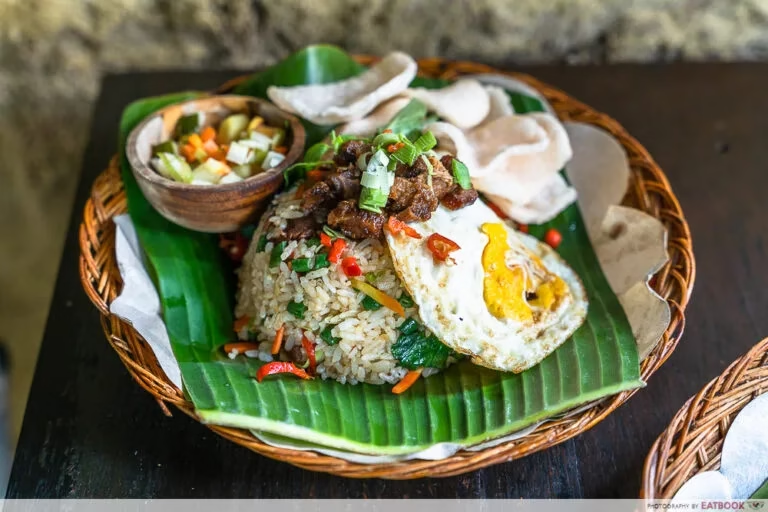
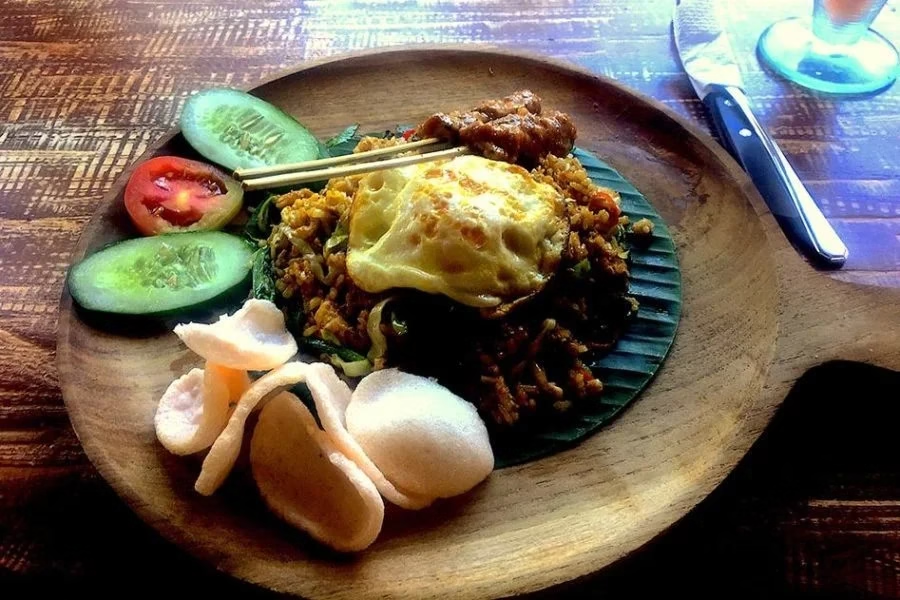
You learn to make nasi goreng, satay, tempeh, and sambal from scratch. You eat what you cook. And you go home with recipes that will make your kitchen smell like Bali for years.
6. Discover the Hidden Waterfalls Around Munduk
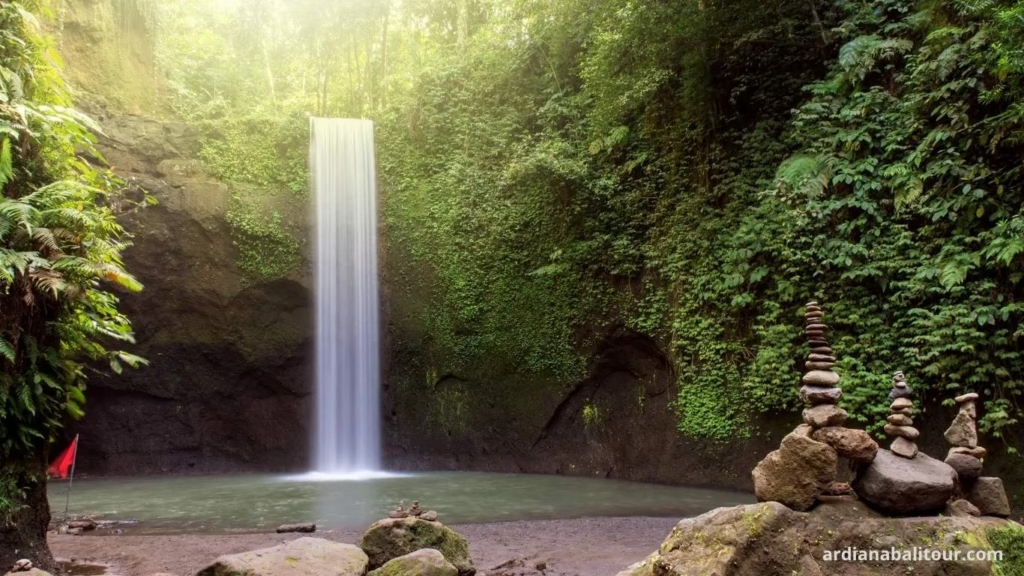
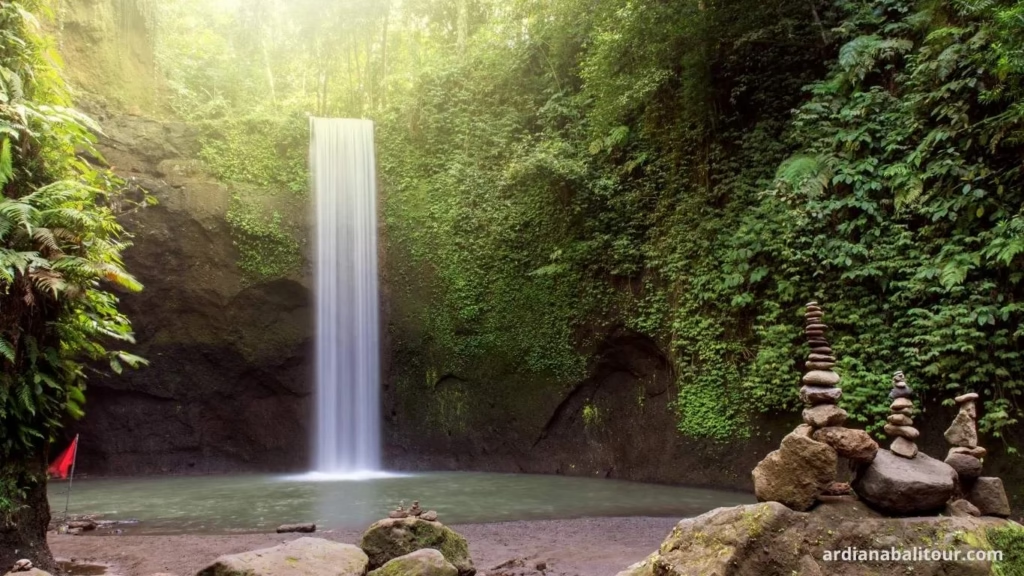
Waterfalls here, including Gitgit, Aling-Aling, and Sekumpul, are genuinely among the most beautiful in Southeast Asia. Sekumpul in particular requires a guide and a descent through jungle paths, but when you arrive and see seven waterfalls dropping into a single pool, you understand immediately why the effort was worth it.
Stay overnight in Munduk if you can. The view over the valley at dusk, with coffee plantations on the hillside and the sea glittering far below, is one of those Bali moments that does not make it onto enough people’s lists.
7. Spend a Morning at Tanah Lot Temple
Tanah Lot is one of Bali’s most photographed spots, and with excellent reason. The ancient sea temple sits on a rocky outcrop just offshore, and at high tide the water surrounds it completely, making it look like it is floating. At low tide, you can walk across the rock and explore its base.
Most travel advice will tell you to go at sunset. Go at sunrise instead. You’ll have the place to yourself, the light will be amazing, and the site’s spiritual vibe will hit you harder than when you’re with tour groups.
8. Visit Pura Tirta Empul for a purification ceremony.
Tirta Empul is a Hindu water temple fed by a holy spring that has been in use for over a thousand years. Balinese Hindus visit this temple to engage in melukat, a ritual cleansing ceremony designed to purify the mind and body. Visitors are welcome to participate respectfully, donning a sarong and moving through the spring pools alongside the local worshippers.
This is not a performance for tourists. It is a living, functioning spiritual practice. Approach it with genuine respect and you will experience something that goes far beyond anything a standard sightseeing stop can offer. The cold
The cold water hits you, prayers surround you, and for a moment, Bali transforms into something more than beautiful. It becomes sacred.
9. Take a Day Trip to Nusa Penida
Nusa Penida sits off the southeastern coast of Bali, and it feels like a different planet. The coastline is dramatic in a way that is almost aggressive—slope limestone cliffs dropping into water that is so brilliantly turquoise it looks altered. Kelingking Beach, with its T-Rex-shaped cliff formation, is one of the most photographed viewpoints in Indonesia. Crystal Bay offers some of the best snorkeling in the region, including occasional manta ray sightings.
Take a quick boat from Sanur, which takes around 45 minutes. Roads on Nusa Penida are steep and rough, so renting a scooter requires confidence. Hiring a local driver for the day is a smarter and safer option.
10. Eat Your Way Through a Local Night Market
The Sindhu Night Market in Sanur and the Gianyar Night Market are two of Bali’s most authentic food experiences. Arrive hungry around 7pm and plan to stay for two hours. You will eat satay grilled over coconut shell charcoal, lawar made from minced meat and fresh coconut, babi guling if you eat pork, and an assortment of jajan pasar, traditional Balinese sweets wrapped in banana leaf.
This spot is where locals eat. The prices are small. The flavors are enormous. And the experience of sitting at a plastic table under fluorescent lights while a
Grandmother fans her grill, and the whole market buzzes around you, which is something no restaurant can replicate, no matter how beautiful its decor.
11. Watch a Traditional Kecak or Legong Dance Performance
Balinese dance is not entertainment in the Western sense. It is a form of prayer, a spiritual offering performed in costume and accompanied by percussion that builds into something that feels ancient and urgent at the same time. The Kecak fire dance at Uluwatu is the most famous, but the Legong and Barong dances in Ubud, performed at multiple venues throughout the week, are arguably more intimate and traditionally pure.
Ask your accommodation which performance they recommend rather than booking through a random online listing. Local knowledge makes a real difference in finding the performances that still carry genuine cultural weight rather than those that have become shows purely for revenue.
12. Rent a Scooter and Get Properly Lost
This one requires comfort on two wheels and a complete willingness to not know exactly where you are going. Rent a scooter for the day, point it toward a village or a coast you have not seen, and just ride. Some of the most extraordinary moments in Bali occur on unmarked roads between rice fields, where you might stumble upon a ceremony in progress, a temple adorned with frangipani offerings, or a breathtaking view.
A word of genuine caution: wear a helmet always. Drive slowly. The roads are narrow, the surface is unpredictable, and Bali traffic follows its own logic. The island rewards the careful and curious.
13. Stay in a Villa in Canggu or Seminyak
Bali villa culture is something the island does better than almost anywhere on Earth. For roughly the price of a mid-range hotel room elsewhere, you can have your own private villa with a plunge pool, an open-air living area, and a staff that prepares breakfast for you each morning. Canggu attracts a younger, surfer-and-nomad crowd. Seminyak is more polished and upscale, with better restaurants and beach clubs right on the doorstep.
Even if budget is a concern, spending just two or three nights in a villa is worth the splurge. Waking up to a private garden with a pool in the Bali morning air is the kind of luxury that resets something in you.
14. Take a Yoga or Meditation Retreat in Ubud
Ubud has been a wellness destination for decades, and the quality of what is available here keeps improving. Whether you want a single sunrise yoga class overlooking the jungle, a weekend silent meditation retreat, a one-on-one session with a traditional Balinese healer, or a full week of Ayurvedic treatment, Ubud has it at every price point.
The Yoga Barn remains one of the most respected studios on the island. But wander down the smaller streets of Ubud and you will find smaller, more intimate offerings that often turn out to be the most transformative. Bali has a way of meeting you exactly where you are, spiritually speaking, if you let it.
15. Attend a Balinese Ceremony or Village Festival
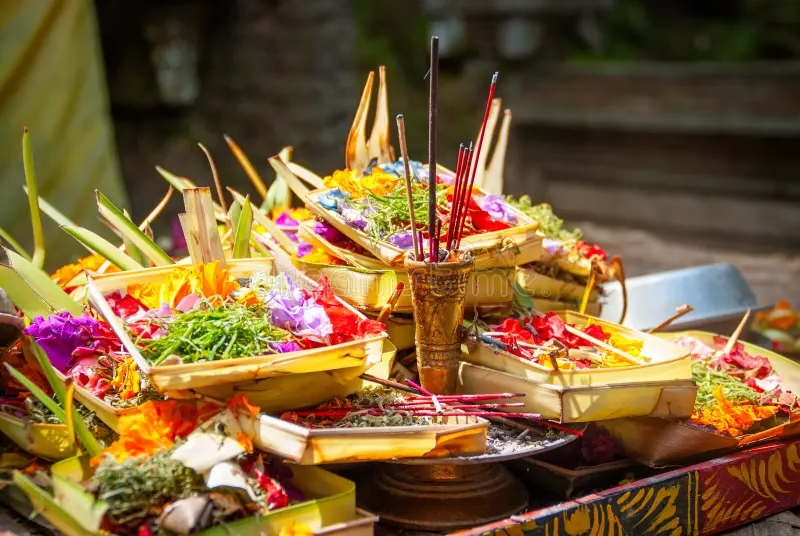
This last one is not something you can book. It is something you are lucky enough to stumble upon or, if you time your visit well and ask your local host or driver, something you can witness up close. Bali has over 20,000 temples, each with its own odalan, an anniversary ceremony that occurs every 210 days.
on the Balinese calendar. Any given week, somewhere on the island, there is a ceremony happening.
The colors are extraordinary. Women carry towering offerings on their heads, stacked with fruit, flowers, rice cakes, and incense. Priests chant and sprinkle holy water. Gamelan orchestras play. And the whole thing feels less like a cultural performance and more like what it actually is: a people keeping a promise to their gods that they have been keeping for centuries.
If you are invited to observe, accept with gratitude. Dress respectfully. Do not point your camera in anyone’s face. And stay quiet enough to actually feel what ‘s happening around you.
Practical Things to Know Before You Go
Best Time to Visit Bali
The dry season runs from May through September, with July and August being peak months. April, May, June, and September hit a sweet spot: dry weather, manageable crowds, and slightly better prices. October through March brings the wet season, but short tropical downpours rarely ruin a full day, and the landscape is greener and more dramatic. Budget travelers who do not mind occasional rain will find November through February offers significantly better value.
Getting Around
Gojek and Grab work well in the south of the island for short rides. For longer day trips, hire a private driver for the day, which typically costs between 400,000 and 600,000 Indonesian Rupiah depending on distance and negotiation. Scooter rental is cheap and gives you maximum freedom but requires care. Taxis outside the app-based services should always agree on a price before you get in.
Money and Budget
Bali is excellent value at almost every budget level. Street food and warung meals cost between 15,000 and 40,000 IDR. Mid-range restaurant meals run 80,000 to 200,000 IDR. Private villa rooms start around 300,000 IDR per night in shoulder season. ATMs are widely available but carry cash for markets, temples, and smaller local businesses. The currency is the Indonesian Rupiah, and as of early 2026, one US dollar buys roughly 16,000 IDR.
Respecting the Culture
Bali, a deeply Hindu island in a Muslim-majority country, genuinely lives its spirituality rather than performing it for visitors. When entering temples, cover your shoulders and legs. Always bring a sarong, available for rent or purchase everywhere. Never step over or on offerings placed on the ground. Do not climb onto temple structures for photographs. Ask before photographing ceremonies. The extraordinary warmth and openness that Balinese people extend to visitors deserves honor.
What Bali Actually Teaches You
I have been contemplating why Bali affects people so deeply. It is not just the beauty, though it is relentless and real. It is not just the food, the beaches, or the price of a villa with a pool.
It is the pace. Bali moves differently. The Balinese relationship with time, with ceremony, with the daily act of making an offering and placing it on
The ground before going about the rest of the day reminds you that most of life can be approached with more intention than we usually manage. You slow down in Bali, not because there’s nothing to do, but because the island seems to breathe more slowly, and your lungs eventually follow.
Take that home with you. That is the part of Bali that outlasts the tan.
Start Planning and Go
The best time to go to Bali was probably ten years ago. The second best time is whenever you can make it happen. Book the flights. Sort the visa. Tell the people you love where you are going.
And when you land and the warm air hits you as you step off the plane and the smell of frangipani reaches you somewhere between the terminal and the taxi rank, just stop for a moment and take it in. You are in one of the most extraordinary places on Earth. The island has been waiting for you with the same unhurried patience it extends to everyone who finds their way here.
Do not waste a single morning sleeping in.
Frequently Asked Questions About Visiting Bali
Do I need a visa to visit Bali in 2026?
Most nationalities, including US, UK, Australian, and EU passport holders, can obtain a visa on arrival at Ngurah Rai International Airport or apply for an e-VOA online at least 48 hours before travel. The visa costs approximately 500,000 IDR (around 31 USD) and is valid for 30 days, extendable once for another 30 days.
What is the best area to stay in Bali?
It depends on what you want. Canggu suits surfers, digital nomads, and people who want a lively cafe and nightlife scene. Seminyak offers upscale restaurants and beach clubs. Ubud is best for cultural experiences, wellness retreats, and rice terrace walks. Uluwatu is perfect for dramatic cliff views and world-class surf. Nusa Dua is ideal for families and resort-style luxury.
How much does a week in Bali cost?
A budget traveler can manage on 40 to 60 USD per day, staying in guesthouses and eating at local warungs. A mid-range traveler spending 100 to 150 USD per day can eat well, stay in comfortable hotels, and do paid activities. A luxury traveler with 250 USD or more per day can access private villas, fine dining, and premium spa experiences.
Is Bali safe for solo travelers?
Bali is generally very safe for solo travelers, including solo women. Petty theft, scams, and traffic accidents are the most common concerns. Use reputable transport, keep valuables secure, and exercise normal urban caution. Travelers consistently describe the Balinese people as among the most hospitable they have ever encountered anywhere in the world.
What should I pack for Bali?
Light, breathable clothing for the heat. A sarong for temple visits, non-negotiable. Good sandals and one pair of closed shoes for hiking. Sunscreen, reef-safe if you are snorkeling. Insect repellent. A light rain jacket for the wet season. A power adapter for Type C and Type F plugs. Cash in IDR, which you can withdraw from ATMs or exchange locally.

